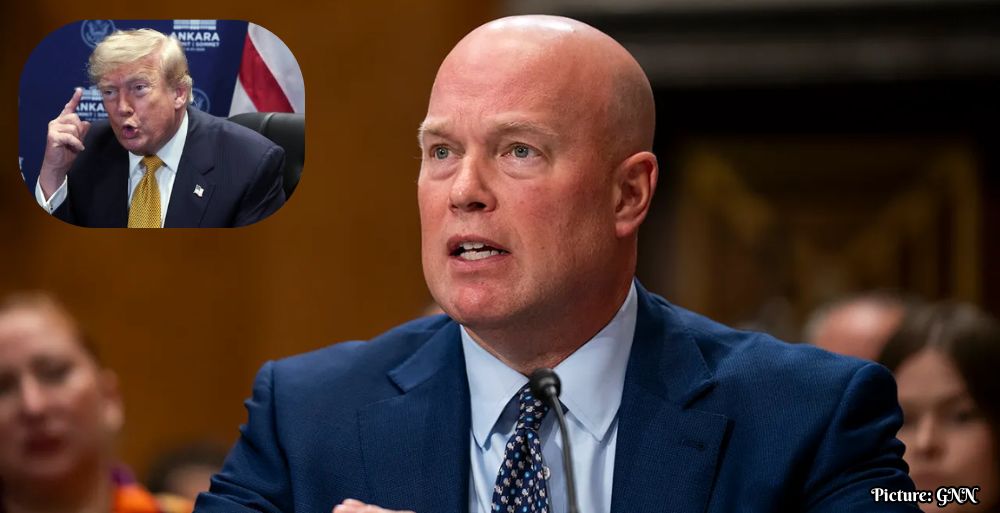
The U.S. Ambassador to NATO, Matthew Whitaker, has publicly criticized Iran’s leadership as tensions between the United States and Iran escalate, impacting global economic stability and stirring public disapproval within the U.S.
On Sunday, U.S. Ambassador to NATO Matthew Whitaker made headlines by condemning the leadership of Iran during an interview on CNN’s “State of the Union” with host Jake Tapper. His stark comments came amid rising military tensions between Washington and Tehran, as the conflict continues to evolve and strain international relations.
Whitaker characterized Iran’s government as being “controlled by a bunch of crazy people,” a statement reflecting a growing sentiment among U.S. officials regarding Iran’s political climate. He emphasized that President Donald Trump is focused on peace and aims to negotiate with Iran to prevent its pursuit of nuclear weapons. “President Trump’s a peacemaker, Jake, and he wants a deal with Iran. He wants to make sure that they never have a nuclear weapon, that they join the world as a contributor and a normalized country,” Whitaker stated. His remarks underscore the administration’s ongoing efforts to diplomatically engage Iran, despite the apparent difficulties posed by its current leadership.
Recent Military Engagements
The conflict between the U.S. and Iran has entered a new phase, nearing the five-month mark of military action, particularly following a series of retaliatory strikes by the U.S. military. The latest round of strikes was launched in response to an Iranian attack on a Cyprus-flagged container ship in the strategically crucial Strait of Hormuz. U.S. Central Command (Centcom) reported that the Iranian military, specifically the Islamic Revolutionary Guard Corps (IRGC), targeted the vessel for allegedly deviating from designated shipping routes.
This incident is part of a broader pattern of escalated military engagement between the two nations, which has raised concerns about maritime security in a region that is vital for global oil transport. The Strait of Hormuz is a critical chokepoint, through which approximately 20% of the world’s oil passes, making stability in this area essential for the global economy.
Following the attack, Centcom indicated that a crew member from the affected ship was reported missing and that significant damage had occurred to the vessel’s engine room. The military command stated, “Iran was provided yet another opportunity to demonstrate adherence to the memorandum of understanding after being held accountable for earlier attacks on commercial vessels but has again failed.” This comment reflects a broader U.S. strategy to hold Iran accountable for its actions in the region and underscores the complexity of navigating U.S.-Iran relations.
Iran’s Strategic Moves and Global Implications
In the aftermath of the military strikes, Iran announced the closure of the Strait of Hormuz, further complicating an already tense situation. The closure not only jeopardizes maritime security but also raises the specter of increased volatility in global oil markets. Analysts warn that any prolonged disruption in this key shipping lane could lead to significant increases in oil prices, affecting consumers and businesses worldwide.
The geopolitical landscape is further complicated by the fact that this conflict comes at a time when the global economy is still grappling with the aftermath of the COVID-19 pandemic, making the stakes even higher. As oil and gas prices continue to rise, public sentiment in the U.S. appears to be shifting, with recent polling indicating that a majority of Americans disapprove of the ongoing military actions against Iran.
Public Sentiment and Political Ramifications
As military operations continue, the potential political consequences are becoming more apparent. The growing disapproval of U.S. military engagement in Iran is likely to influence political discourse, especially as the nation moves closer to pivotal elections. Voters may increasingly scrutinize the administration’s foreign policy, particularly regarding military intervention and its economic impact at home.
Political analysts suggest that this issue could become a focal point in upcoming debates, as candidates are likely to address constituents’ concerns about the ramifications of military actions abroad. The interplay between foreign policy and domestic economic conditions is a critical aspect of the current political landscape, and the administration’s handling of the Iran situation could shape voter sentiment significantly.
Conclusion
In summary, Ambassador Whitaker’s remarks highlight a critical perspective on Iran’s leadership amid escalating tensions that have far-reaching implications for U.S. foreign policy and global stability. The evolving situation continues to pose challenges not only for U.S.-Iran relations but also for the broader international community. As events unfold, the potential for conflict and its repercussions on global markets and public opinion will remain at the forefront of political discussions.