As the United States approaches its 250th anniversary, political scientist Matthew Wilson from Southern Methodist University observes that separate celebrations in Washington, D.C., and Los Angeles illustrate a deeper division within the nation, marked by contrasting visions of American history and identity.
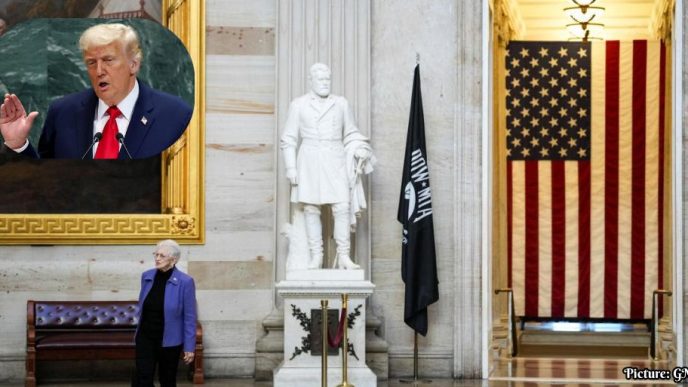
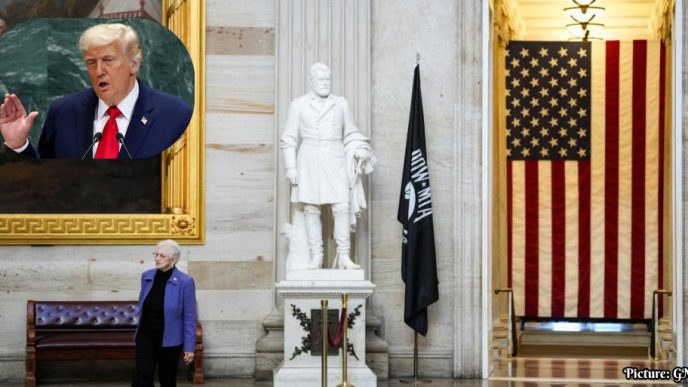
DALLAS – The United States is poised to commemorate its 250th anniversary amid a notable split in how this significant milestone is celebrated. Scheduled events in Washington, D.C., and Los Angeles are set to showcase differing leadership styles and perspectives, underscoring a growing political polarization that has increasingly come to characterize American life.
Matthew Wilson, a political scientist at Southern Methodist University (SMU), argues that the separate celebrations symbolize a lack of a unified national narrative. “The 250th anniversary should have been an opportunity for Americans of different races, religions, social classes, and political parties to come together and celebrate this country’s remarkable ascent from a small backwater at the edge of the world to the wealthiest, most powerful, most culturally influential nation in human history,” Wilson stated. He lamented that this unifying moment has become a point of contention instead of a cause for collective pride.
The Historical Context of National Celebrations
The current situation starkly contrasts the bicentennial celebrations held fifty years ago, often recalled as a moment of national unity. In 1976, Americans came together to mark 200 years of independence through a variety of events, including commemorative coins, banknotes, Revolutionary War re-enactments, public readings of the Declaration of Independence, and widespread displays of patriotism. At that time, national pride transcended partisan lines, with citizens from both sides of the political aisle celebrating a shared history.
“The level of division that we see now is unprecedented,” Wilson notes. “Fifty years ago, national pride was not a Democratic or Republican thing, but an American thing.” Current partisan divides in expressions of patriotism have become increasingly apparent. Research indicates that Republican pride in the nation remains relatively stable, while Democratic pride tends to fluctuate with the party in power. Studies show that Democratic patriotism has been shown to decline during Republican administrations and rise during Democratic ones, illustrating a conditional relationship to national identity.
Implications of Competing Celebrations
The emergence of competing celebrations raises critical questions about their potential impact on civic engagement and national identity. Wilson posits that the likelihood of these events fostering increased civic participation is low. “The odds that these competing America 250 celebrations will strengthen civic engagement are slim to none,” he remarked. Both events appear highly partisan and lack efforts to engage individuals across the political spectrum, which risks further alienating segments of the American populace.
This situation invites reflection on whether significant national milestones should be insulated from the influence of partisan politics. Wilson believes that while it would be ideal for such celebrations to rise above political divides, achieving this goal in today’s climate is increasingly challenging. “A core problem is that both President Trump and his opponents insist on making America 250 about him; both seem to believe that to celebrate the nation is to celebrate Trump,” he explained. This focus on individual leadership tends to overshadow the broader narrative of national pride that is not contingent on any single political figure.
Future Generations and National Reconciliation
Looking beyond the current celebrations, Wilson foresees a potential legacy of missed opportunities for national reconciliation. “I think future generations will look on this as a missed opportunity for much-needed national reconciliation,” he stated. The parallel celebrations could have served as a platform for Americans to identify commonalities in their diverse visions of the nation, fostering dialogue on shared values and goals. Instead, prevailing sentiments suggest that few individuals are interested in pursuing a sense of national commonality.
Wilson’s observations reflect a broader concern among political analysts regarding the implications of continued polarization. The division evident in the 250th-anniversary celebrations underscores a critical moment in American history, as political polarization reaches unprecedented levels. The ongoing struggle over who defines America’s story and what patriotism means may shape the nation’s future interactions, especially as it approaches subsequent milestones.
The Broader Impact of Political Polarization
The impact of political polarization extends beyond the immediate context of these celebrations. As America grapples with deepening divisions, the question of how to celebrate a shared national narrative becomes increasingly complex. Wilson emphasizes that the current political landscape fosters an environment where national pride is often intertwined with party affiliation, complicating efforts to forge a collective identity. The result is a scenario where ideal moments for unity, such as a significant anniversary, instead become platforms for division.
The challenge ahead will be for Americans to navigate these divisions and find common ground. As Wilson points out, it is essential to identify what unites the nation rather than what separates it. “What are the things that we can all be proud of, and what are the things that we all agree the nation needs to address to remain healthy and strong?” he asks. These questions remain vital as America seeks to redefine its identity in a politically charged environment.
In conclusion, as the United States prepares to mark its 250th anniversary, the contrasting celebrations reflect a pivotal moment in the nation’s historical narrative. With political polarization at an all-time high, the country’s ability to unite around a shared national identity remains uncertain. The implications of these events extend well beyond the anniversary itself, raising critical questions about the future of civic engagement and the collective American identity.