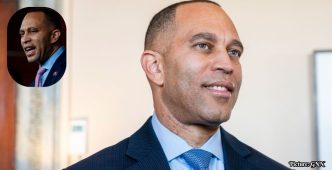
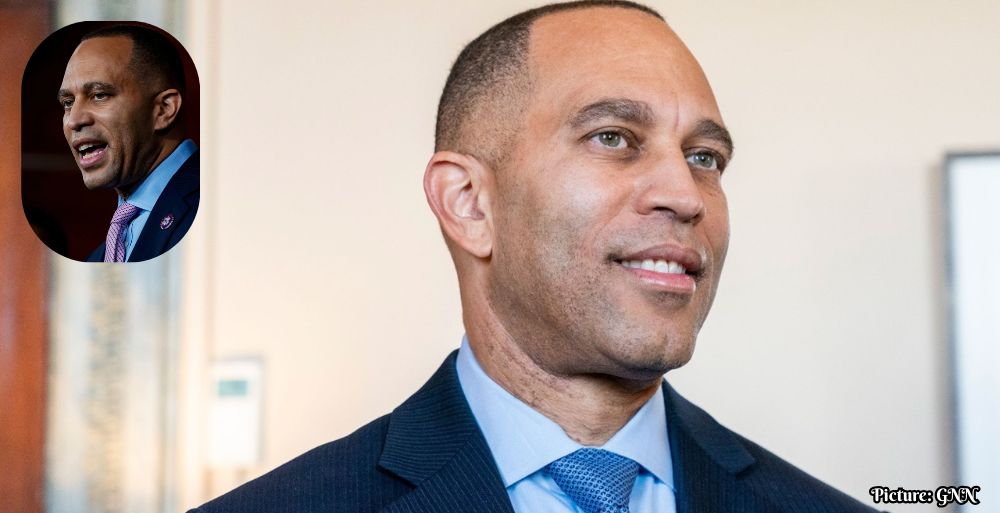
The Congressional Black Caucus has reaffirmed its support for House Minority Leader Hakeem Jeffries, directly challenging Senator Elissa Slotkin’s calls for a new generation of leadership, a move that underscores the complexities of Democratic Party dynamics as they approach the 2024 elections.
The Congressional Black Caucus (CBC) has issued a strong statement endorsing House Minority Leader Hakeem Jeffries while criticizing Senator Elissa Slotkin for her recent calls for a shift in congressional leadership. This public show of support and disagreement highlights the ongoing tensions within the Democratic Party as it navigates critical leadership dynamics ahead of the 2024 elections.
In a statement released on social media on Friday, the CBC, composed entirely of Democratic members, expressed its unwavering backing for Jeffries, who made history as the first Black individual to serve as House Minority Leader. The caucus accused Slotkin, a senator from Michigan, of “posturing for higher office in 2028” and highlighted her past votes supporting several members of former President Donald Trump’s Cabinet, which they labeled as “one of the most corrupt in American history.”
The CBC’s statement included pointed remarks, stating, “House Democrats don’t need a lesson on reading the political moment from someone who handed Donald Trump one of the most corrupt Cabinets in American history.” This critique specifically referenced Slotkin’s votes to confirm various Trump administration officials, including Kristi Noem and Pam Bondi, suggesting a lack of political acumen on her part.
As the Democratic Party gears up for the upcoming elections, the CBC’s endorsement of Jeffries comes at a crucial time. The caucus emphasized the importance of unity among Democrats, especially as they face significant political challenges. They concluded their statement by calling for a focus on substantive issues that impact Americans, as opposed to engaging in distractions that could further divide the party.
Slotkin has articulated a vision for a new generation of leadership, arguing that such a shift is necessary to effectively address contemporary challenges facing the nation. However, her calls for change have faced resistance from established party leaders, including Jeffries, who believe that maintaining stability in leadership is vital during this pivotal time.
Contentious Issues in the House
In addition to the internal dynamics within the Democratic Party, other significant issues are emerging within the House of Representatives. A vote to cut U.S. military aid to Israel is set to be a divisive topic in an upcoming teleconference among House Democrats scheduled for Sunday. This meeting, which has not been publicly announced, will discuss an amendment proposed by Representative Thomas Massie (R-Ky.) to a fiscal 2027 spending bill, which seeks to eliminate aid to Israel and reduce the overall foreign military aid budget by $3.3 billion.
Democrats are expected to be sharply divided over this amendment, reflecting the growing dissent within the party regarding U.S. foreign policy, particularly concerning Israel. These discussions come on the heels of recent primary victories for candidates critical of U.S. aid to Israel, indicating a potential shift in the party’s stance on foreign policy issues.
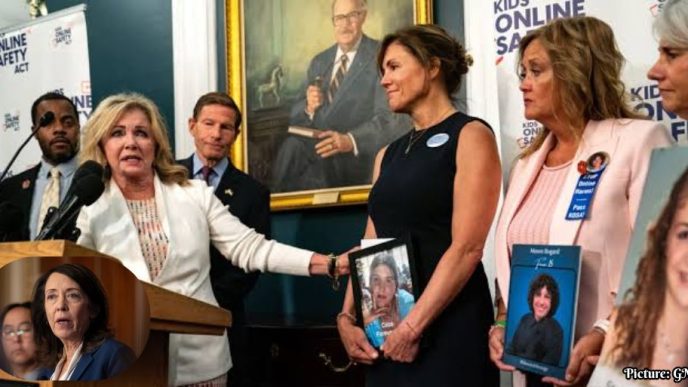
Moreover, a coalition of advocacy groups focused on children’s safety has urged House leaders to reject what they call a weakened bipartisan compromise on online safety legislation, arguing that it undermines protections for minors and allows tech companies to evade accountability. The coalition, which includes organizations such as Design It For Us and ParentsTogether, expressed concerns about the absence of a “duty of care” provision that would require tech companies to mitigate harms they are aware of regarding their products.
The proposed legislation, known as the KIDS Act, is set for a potential House vote next week, but it has faced significant criticism for allowing technology companies to evade responsibility for the adverse effects their products may have on young users. Advocacy groups contend that the current version of the bill fails to adequately protect children and undermines years of bipartisan efforts aimed at improving online safety.
Republican Party Dynamics
Meanwhile, House Republicans are grappling with their own internal divisions as they attempt to advance key pieces of legislation before the upcoming Independence Day recess. Former President Donald Trump recently urged GOP members to lift procedural blocks that have stalled House business. However, some hard-liners within the party remain resistant, complicating the legislative agenda.
One such hard-liner, Representative Anna Paulina Luna, who played a pivotal role in the recent procedural impasse, indicated that if party leaders want her support to advance legislation next week, they would need to attach the SAVE America Act to the defense policy bill. Senior House Republicans have expressed concerns that merging these two bills could jeopardize the must-pass defense legislation, which typically garners bipartisan support.
Majority Leader John Thune stated that combining the two measures would likely also hinder the defense bill’s progress in the Senate. Another hard-liner, Representative Chip Roy, has responded to Trump’s call to resolve the House gridlock by presenting a new list of legislative demands for House leaders.
In light of these dynamics, Speaker Mike Johnson has focused on the positive aspects of his discussions with Trump, stating that he and the former president are “on exactly the same page” about preventing any further blockade in the House. Johnson also indicated that Congress would be transmitting the housing affordability bill recently cleared to the White House, following Trump’s abrupt reversal on a signing ceremony for the bill.
Conclusion
In summary, the Congressional Black Caucus’s strong support for Jeffries, juxtaposed with Slotkin’s calls for a change in leadership, underscores a critical moment for the Democratic Party as it gears up for the challenges ahead. Concurrently, the debates surrounding military aid to Israel and children’s online safety legislation mirror the broader ideological rifts and priorities within Congress, setting the stage for a complex and contentious legislative session.