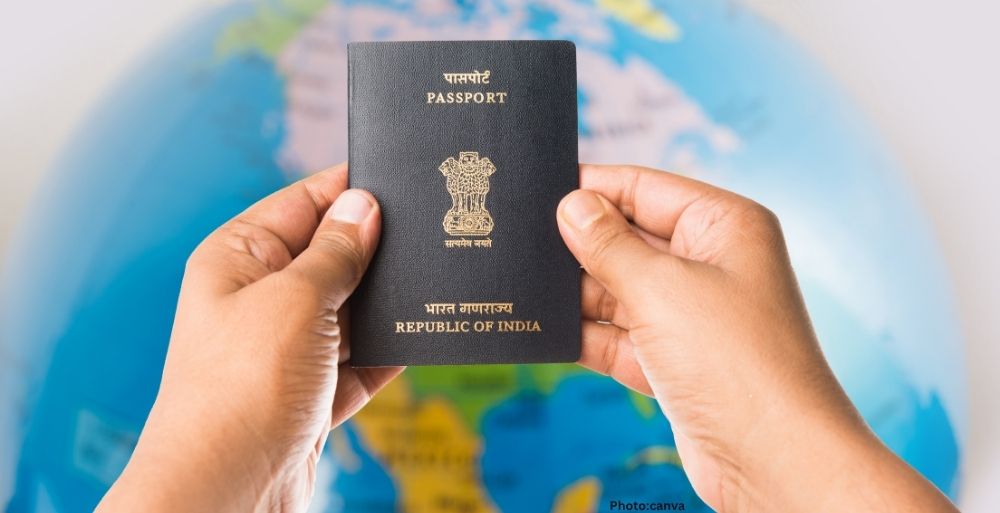
A recent clarification from India’s Ministry of External Affairs emphasizes that an Indian passport, while a travel document, does not serve as legal proof of Indian citizenship, raising critical considerations for non-resident Indians and Overseas Citizens of India.
NEW DELHI — A statement from India’s Ministry of External Affairs (MEA) has underscored an essential legal distinction regarding Indian passports and their relation to citizenship. The clarification, issued during the 14th Passport Seva Divas event on June 24, 2026, indicates that, while an Indian passport is a vital travel document, it does not, on its own, confirm an individual’s Indian citizenship.
This statement was made in response to inquiries concerning whether an Indian passport could be employed to dispute exclusion from electoral rolls amid the ongoing special intensive revision process in several Indian states. However, the implications of this clarification extend beyond electoral participation, affecting non-resident Indians (NRIs), Overseas Citizens of India (OCI) cardholders, and the wider Indian diaspora.
Legal Framework Governing Citizenship
Under Article 9 of the Indian Constitution and Section 9 of the Citizenship Act of 1955, India prohibits dual citizenship. Individuals who voluntarily acquire citizenship of another country automatically lose their Indian citizenship and are obligated to surrender their Indian passports. The MEA’s clarification reinforces that possession of a foreign passport is seen as evidence of having voluntarily accepted citizenship in another country. Consequently, citizenship status is determined through formal legal records rather than merely through possession of a passport.
The legal framework is critical because it delineates the boundaries of citizenship rights for Indians abroad. The necessity of surrendering Indian citizenship upon acquiring foreign nationality has profound implications for individuals and families, particularly those with ties to multiple countries.
Practical Implications for Indians Living Abroad
The MEA’s distinction presents practical ramifications for Indians residing outside the country. A peer-reviewed study published in the SAGE Journal in 2025 highlights that citizenship status can significantly influence access to consular services, rights to inheritance, property ownership, and various legal entitlements associated with India. The study emphasizes that clarity regarding citizenship is particularly important in familial matters related to property, residency abroad, or immigration issues.
For OCI cardholders, this clarification serves as a reminder that while the OCI scheme provides lifelong visa and residency benefits in India, it does not equate to Indian citizenship. Therefore, OCI holders lack essential political rights, such as the ability to vote or run for public office in India. This legal distinction could affect the political engagement of the Indian diaspora, which remains an important constituency in Indian politics.
Challenges in Establishing Citizenship Status
Establishing Indian citizenship or origin without a valid Indian passport may necessitate the submission of additional documentation. Applicants may be required to present birth certificates, domicile records, and other documents that trace their lineage to Indian ancestry. Such requirements can create obstacles for certain segments of the diaspora, particularly for later generations who were born and raised outside of India and may lack comprehensive documentation of their Indian heritage.
Moreover, Indian diplomatic missions abroad caution that holding onto or using an Indian passport after acquiring foreign citizenship might be considered an offense under Indian law, exposing individuals to potential legal penalties. This aspect highlights the importance of understanding the legal obligations that come with dual nationality considerations.
Official Remarks and Future Directions
During the same event where the MEA’s clarification was released, External Affairs Minister S. Jaishankar addressed recent advancements in India’s passport services. Among the developments discussed were the expansion of Passport Seva Kendras, aimed at improving accessibility for Indian citizens, and the introduction of e-passports designed to streamline the passport issuance process. These initiatives are part of the government’s broader effort to modernize and enhance the efficiency of its consular services.
As India continues to navigate the complexities of citizenship law and its implications for its diaspora, the MEA’s recent statement serves as a crucial reminder for NRIs and OCIs to stay informed about their legal status and rights. The distinction between possessing a passport and being recognized as a citizen is pivotal for understanding the legal landscape that governs the lives of Indians abroad.
In conclusion, the MEA’s clarification that an Indian passport does not serve as definitive proof of citizenship sheds light on the legal ramifications for NRIs and OCIs. As the Indian government takes steps to modernize its passport services, it is essential for the diaspora to comprehend the legal framework surrounding their citizenship status and the implications it has on their rights and responsibilities. This knowledge is vital not just for individual cases but also for the collective engagement of the Indian diaspora with their home country.