Raising Rainbows is a celebration of the extraordinary journeys unfolding inside ordinary homes, stories of resilience, advocacy, acceptance, and unconditional love. Through conversations with parents, caregivers, educators, and change-makers, this series looks beyond diagnoses and labels to explore the courage, wisdom, and joy that emerge when every child is given the freedom to thrive as their authentic self.
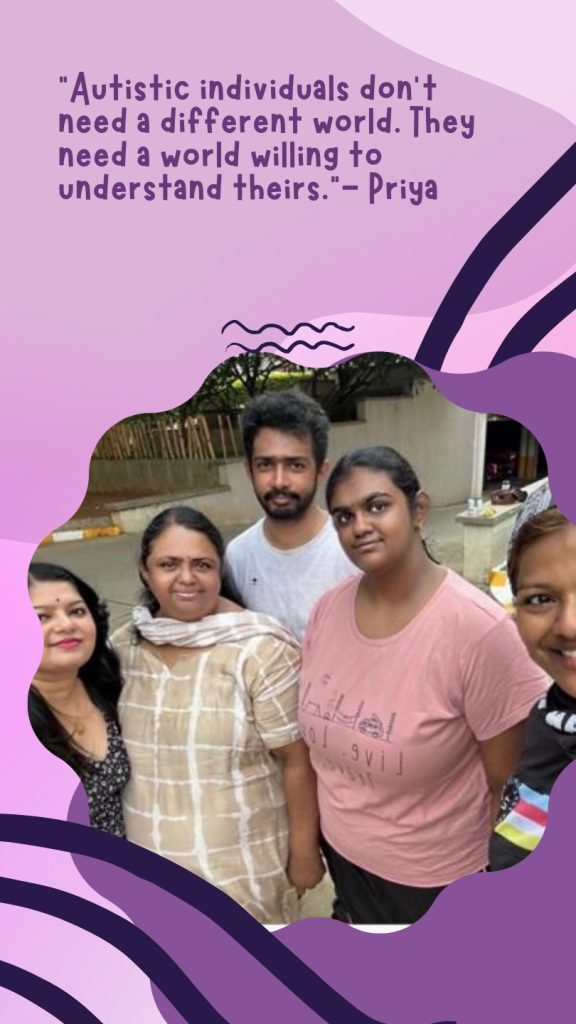
In this edition of Raising Rainbows, Priya Kannan, Parent Advocate and a Champion for Neuro-diversity, opens the doors to her family’s journey with her daughter, Latika, offering an intimate glimpse into a life shaped by love, neuro-diversity, resilience, and countless moments of unexpected joy.
For Priya and her family, raising Latika has been more than a parenting journey—it has become a mission to promote awareness, acceptance, and inclusion for children on the autism spectrum. Their story is a powerful reminder that when we look beyond labels, we discover not limitations, but new ways of understanding, connecting, and celebrating what makes each child uniquely extraordinary.
Ancy: When you think about your child, what are the first things that come to mind beyond any diagnosis? What brings them the greatest joy?
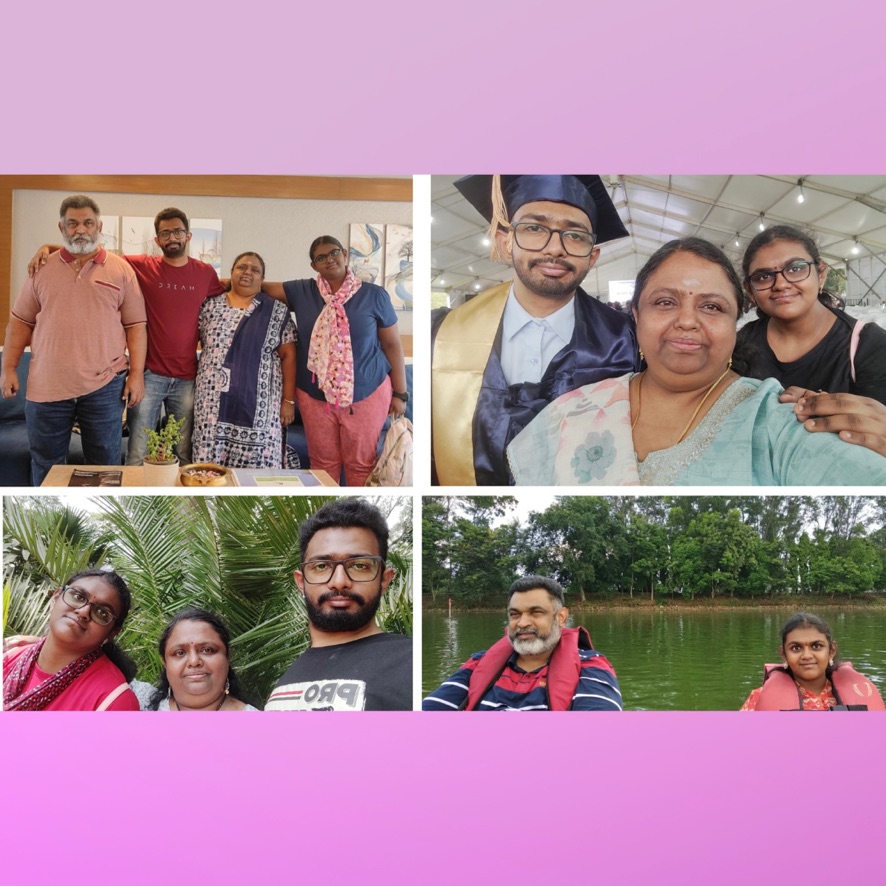
Priya: Latika is a keen observer, an energetic performer, and a creative, multi-talented young adult. She enjoys performing, singing, dancing, and Drama and loves traveling with family and friends.
Ancy: What is one assumption people often make about autistic individuals or those with Down syndrome that you wish would change?
Priya: They are often misunderstood, with their behaviours being attributed to poor parenting or bad behaviour. In reality, these behaviours may stem from challenges with communication and social skills. Sensory overload can also be a significant cause of behaviours that others may perceive as inappropriate.
Ancy: Has there been a moment with your child that completely shifted your understanding of love, patience, or what it means to be human?
Priya: One of the turning points in my journey came when I stopped focusing on expectations and started accepting Latika with love and patience. During her early therapy years, progress was very slow because she resisted therapy. After attending a personality development course, I changed my approach and created a more accepting space for her. Soon after, she began progressing beautifully and even learned to write alphabets and words within three months. This experience taught me the true power of love, patience, and acceptance.
Ancy: What gifts, talents, or qualities does Latika possess that deserve to be seen and celebrated more often?
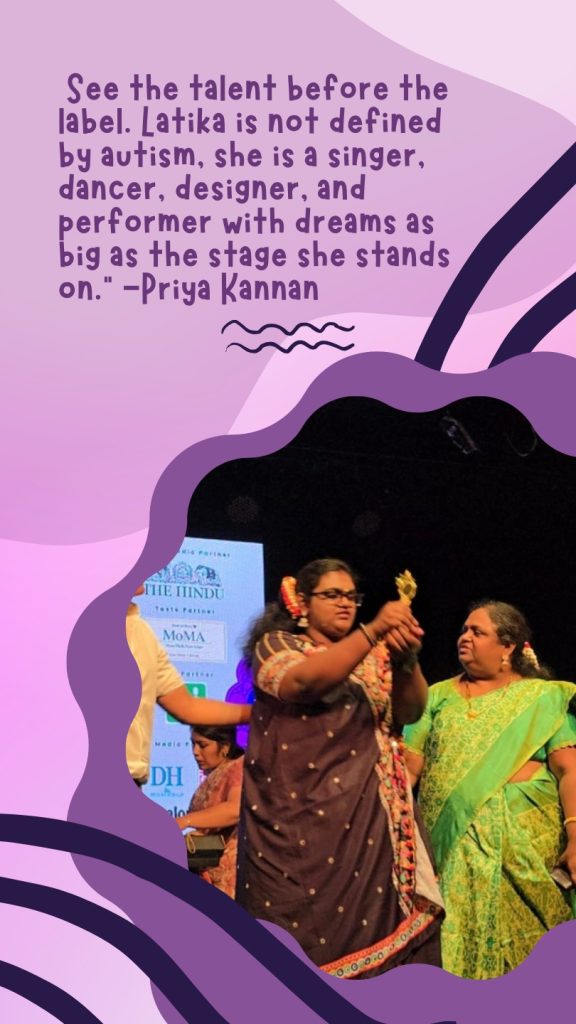
Priya: Her strengths lie in music, dance, graphic design, video editing, and Theatre / Drama.
Ancy: What does happiness look like in your household on an ordinary day?
Priya: A good day in our home is one in which Latika feels peaceful, calm, and happy within herself. It is also a day when she can sleep peacefully at night without anxiety about the past or the future.
Ancy: Looking back, what was going through your mind and heart when you first heard the diagnosis?
Priya: One of the hardest moments in our journey was when we first came across the term autism. We were deeply scared and heartbroken after reading it described as a mental illness in a dictionary. For many days, I cried and struggled to accept the reality.
At that time, my guide and mentor, Nalini Menon, gave me a powerful piece of advice:
“Your child needs you for 28 hours, but we only have 24. So stop crying and focus on training the child.”
Those words changed my perspective completely. They helped me stop worrying about the future and start focusing on supporting, training, and understanding my child with strength and purpose.
Ancy: What helped you find strength when the journey felt particularly overwhelming?
Priya: During the hardest seasons, I would take a break, organise myself, and then return to working with my child. As someone passionate about mathematics, I often solved maths problems to relax and refocus.
I also made time for myself by listening to music and singing. I love playing with children, so I spent a lot of time playing with my child and participating in inclusive playgroups.
I attended several personality development courses to ground myself and connect with my inner self. This helped me build a deeper bond with my children and connect with them more naturally.
Ancy: If you could go back in time, what support would you have wished for during those early years?
Priya: Families need support from extended family members who accept the child as they are and stand by both the child and the parents during the developmental journey.
Support from neighbours is equally important. Communities can create opportunities for inclusion without judgement or unrealistic expectations.
Schools, colleges, teachers, and lecturers play a vital role by accepting and supporting the inclusion of autistic children and young adults in mainstream educational settings.
We also need greater public awareness through information boards and awareness campaigns, as well as more employment opportunities that enable autistic individuals to earn an income and live independently.
Ancy: In what ways has your child shaped who you are today?
Priya: Parenting our child has transformed us into confident speakers and advocates. It has taught us the meaning of unconditional love and inspired us to support and empower many parents raising autistic children.
We have created autism awareness materials to educate the wider community and founded a non-profit organisation, Wiztara for Autism, to promote autism awareness, create opportunities for children and adolescents on the spectrum, and empower parents through workshops.
Our long-term vision is to build an inclusive society that provides equal opportunities for people with autism.
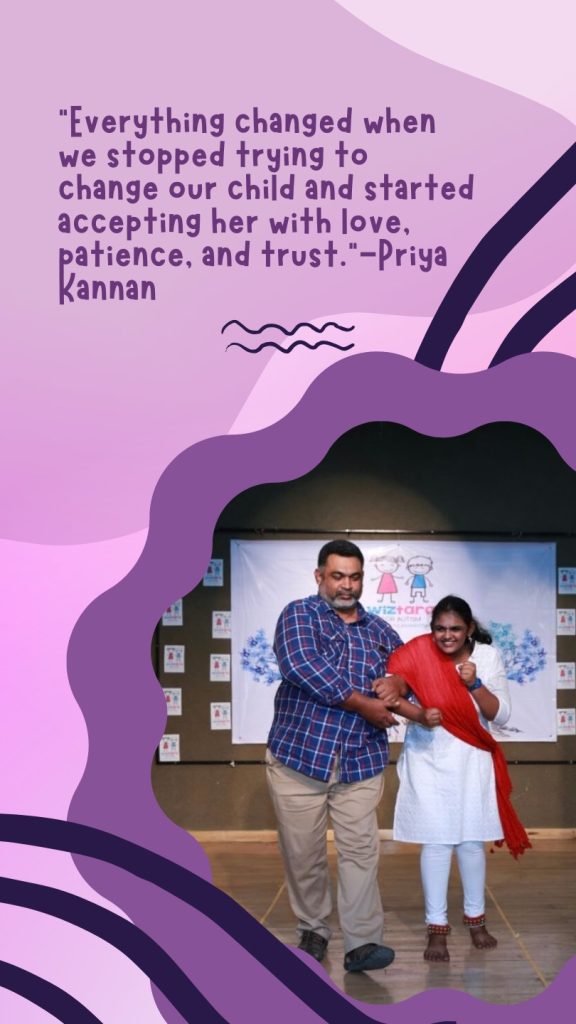
Ancy: What are some of the invisible sacrifices families like yours make that often go unnoticed?
Priya: We rarely have time for ourselves and often miss family functions and social gatherings. In many families, one parent sacrifices career opportunities and personal aspirations to support and train the child, while the other focuses on meeting the family’s financial needs. The lack of respite care means that even during hospital visits or emergency situations, parents have little opportunity to take a break. Financially, many families carry a significant burden, making it difficult to save for the future or build assets for their child’s long-term security.
Ancy: What challenges does your family navigate most frequently, whether at home, in school, socially, emotionally, or financially?
Priya: One of our biggest challenges is the lack of an education system that truly works on the strengths of children and adolescents on the autism spectrum. As a result, many parents are forced to choose homeschooling, which often requires one parent to stay home and engage the child meaningfully throughout the day.
Personally, I have very little time for myself, as much of my day revolves around supporting and engaging my daughter productively. I also need to accompany her wherever she goes.
Another challenge is managing sudden emotional outbursts caused by anxiety or sensory overload in public places. These behaviours can appear unusual or difficult for others to understand. While we accept and understand them as parents, handling such situations can still be emotionally demanding.
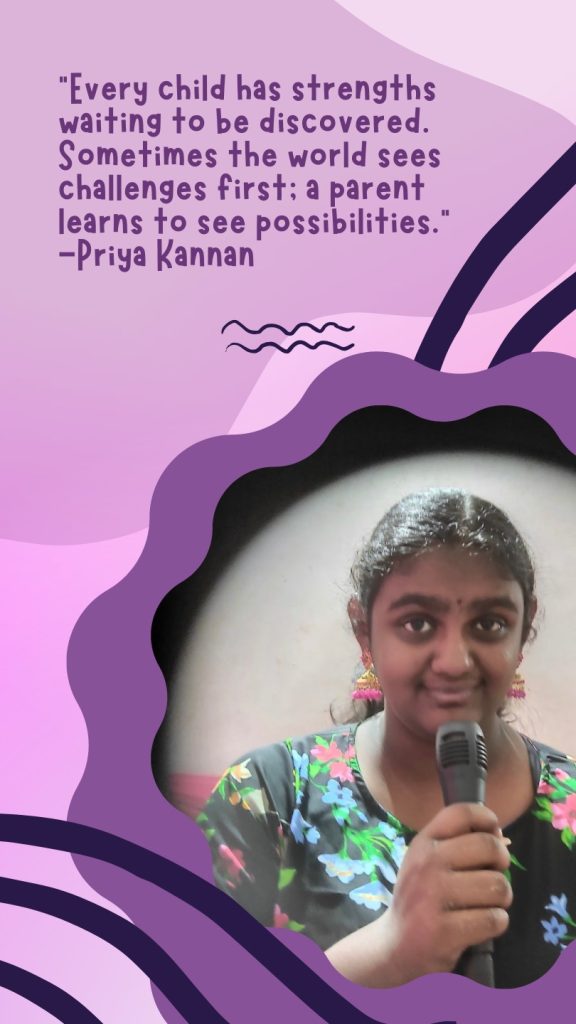
Ancy: How do you care for your child while also caring for your relationships, responsibilities, and your own well-being?
Priya: Balancing all areas of life is never easy. Many times, parents have to sacrifice their own needs, health, and aspirations. It can also be difficult to give equal time and attention to siblings, which sometimes creates strain within relationships.
To stay grounded, I regularly attend personality development courses, workshops, and webinars related to autism. Learning new skills keeps me motivated and engaged. Meditation and physical activity help me remain mindful, positive, and energetic throughout the day.
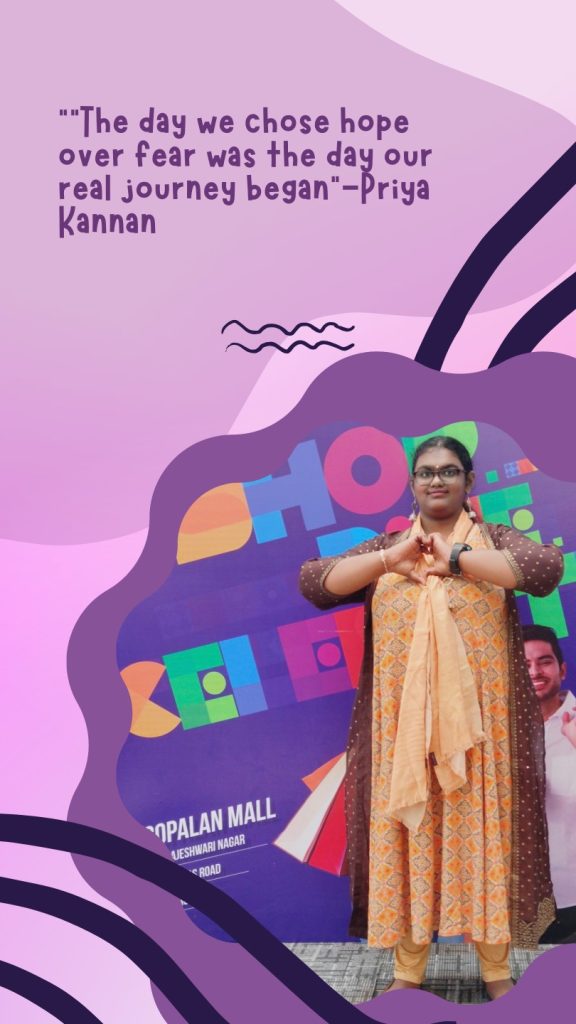
Ancy: Are there routines, activities, or approaches that have helped your child flourish over the years?
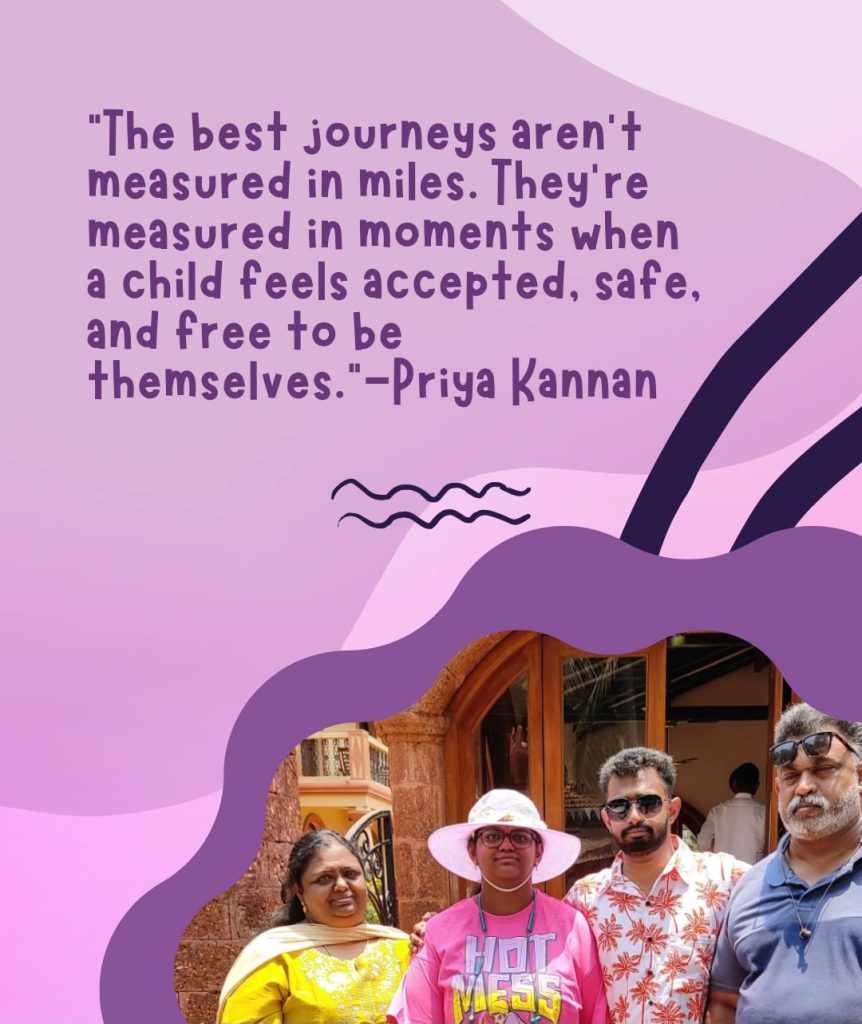
Priya: My daughter thrives when she is engaged in creative, active, and hands-on experiences. She enjoys expressing herself through singing, drama, dance, and various art activities, while also exploring her creativity through multimedia design, including photo editing, illustration, and video creation. She loves learning new skills independently, whether it’s trying recipes in the kitchen or following dance tutorials online. Travelling to new places, going on long drives, taking daily walks, and staying physically active through workouts help keep her energized and curious about the world around her. Together, these activities nurture her confidence, creativity, independence, and overall sense of happiness and fulfillment.
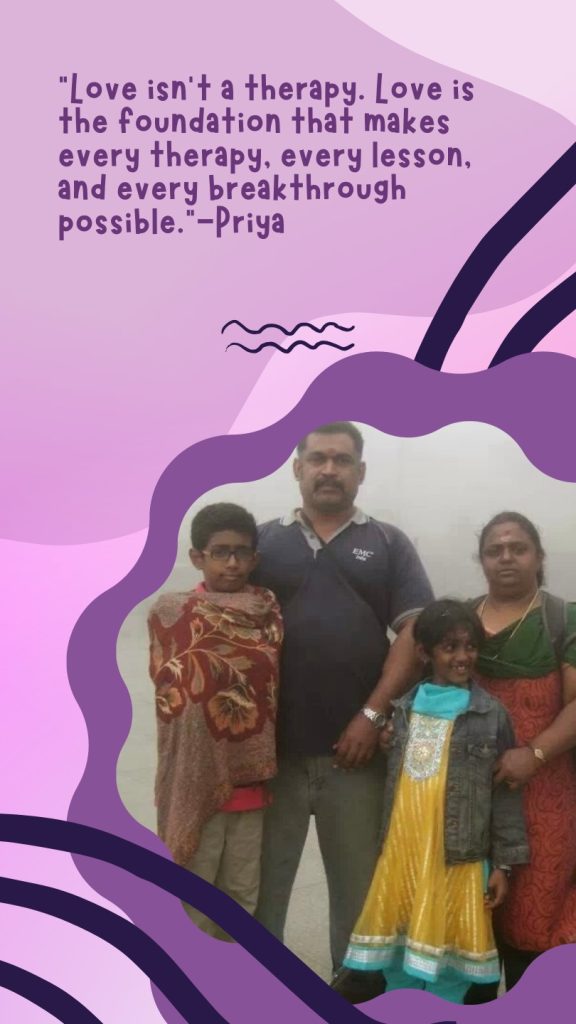
Ancy: What have your experiences of inclusion and belonging been like in schools, community spaces, celebrations, and everyday life?
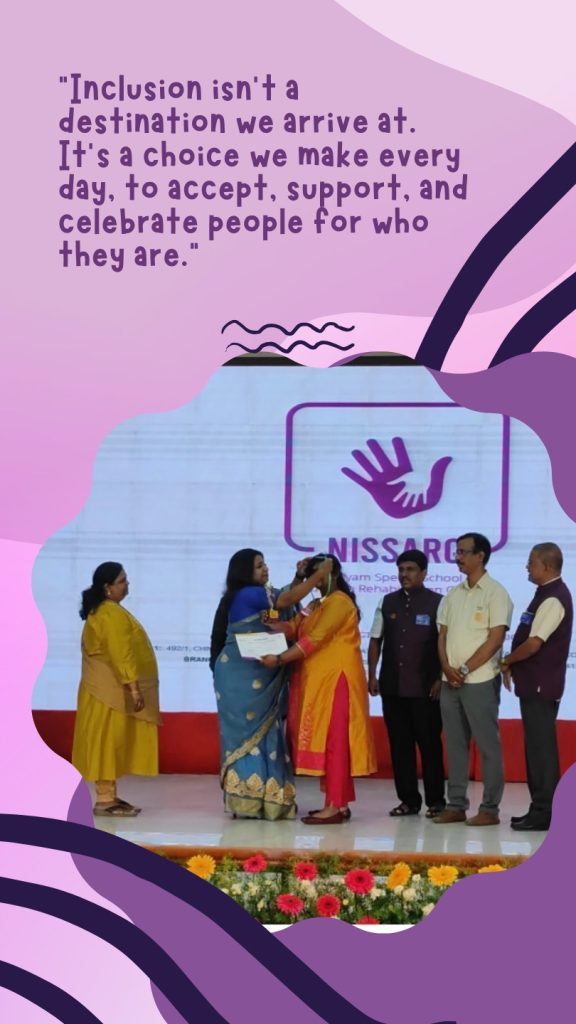
Priya: While awareness is growing, there are still many challenges when it comes to inclusion. In schools, playgrounds, birthday parties, and public spaces, only a small number of people truly accept autistic individuals as they are.
Many assume autistic children are difficult to manage because of their behaviours. However, every child is unique. Just as we say, “Don’t judge a book by its cover,” we should not judge a person by a diagnosis. Acceptance, support, and inclusion are the first steps toward building an inclusive society. During moments of sensory overload or meltdowns, families often need understanding, patience, and space rather than judgement.
Ancy: If you could redesign one aspect of public life to better support neurodiverse individuals and their families, what would it be?
Priya: Crowded places and long queues can be extremely challenging for many autistic children and young adults. Priority access or dedicated queues would make a significant difference.
Calming sensory rooms in public spaces would also help reduce anxiety and sensory overload. Dedicated seating arrangements on public transport, greater public awareness campaigns, and education about autism would improve understanding and acceptance.
Respite care services are equally important, as they provide parents and siblings with much-needed support and breathing space.
Ancy: Are there policies, services, or rights you believe deserve greater awareness and advocacy?
Priya: I would like to see stronger implementation of the Right to Education for autistic children and young adults in schools and colleges. Housing communities should be more empathetic and accommodating.
Insurance policies should cover therapy costs. We need government-supported therapy centres, early intervention programmes, vocational training opportunities, and self-employment initiatives for autistic young adults. There should also be stronger regulation of therapy and rehabilitation centres to ensure quality, safety, and affordability. Schools and colleges should have trained psychologists, special educators, occupational therapists, and staff experienced in supporting autistic students.
Ancy: When you think about equality, what does true inclusion look like for your child across education, healthcare, employment, and society?
Priya: Equal rights mean equal access to education, healthcare, employment, and participation in society.
In education, it means schools welcoming autistic students, providing trained professionals, flexible curriculam, vocational training, and pathways to higher education.
In healthcare, it means access to appropriate insurance coverage, therapy support, priority appointments when needed, and sensory-friendly environments.
In employment, it means creating training opportunities, vocational programmes, self-employment support, and jobs based on individual strengths and interests.
Most importantly, equal rights mean acceptance, respect, and meaningful inclusion in society.
Ancy: If policymakers, educators, employers, and community leaders were all listening today, what would you most want them to understand?
Priya: I would ask them to first understand what autism truly is.
We need flexible systems that recognise different abilities rather than measuring everyone by the same standards. Just as we would not judge a fish by its ability to climb a tree, we should not judge individuals solely by conventional expectations.
I would encourage policymakers to ensure existing policies are implemented effectively, create safeguards for autistic individuals throughout their lives, and expand opportunities for education, employment, and independent living.
Most importantly, I would ask society to show empathy rather than sympathy and to embrace diversity as a strength.
Ancy: What hopes and dreams do you hold for your child’s future, regardless of society’s expectations?
Priya: My dreams are simple. I hope she can live independently, earn her own income, manage her finances, pursue her interests, travel, and continue growing into her authentic self.
Most of all, I hope she has the freedom to build a happy, meaningful life and, if she chooses, a family of her own.
Ancy: What would you say to a parent who has just begun this journey and may be feeling uncertain or afraid?
Priya: Every child is unique, with their own strengths, challenges, and pace of development. One approach does not fit every child.
For some families, the journey may feel like a short sprint. For others, it may feel like a marathon. Whatever the journey looks like, never give up on your child. Keep learning, keep growing, seek support, and take one step at a time. Every small effort matters.
As Dr. A.P.J. Abdul Kalam said, “Dream, dream, dream. Dreams transform into thoughts and thoughts result in action.” Believe in your child, believe in yourself, and keep moving forward with hope.
Ancy: What is something you wish people would stop assuming about your child?
Priya: I wish people would stop assuming that autistic individuals with anxiety are incapable of learning, achieving, or pursuing their dreams.
My daughter is much more than a diagnosis. She is a singer, dancer, theatre artist, graphic designer, and energetic performer. She enjoys painting, DIY projects, and has an extraordinary ability to identify the day of the week for any given date.
Like every young adult, she has dreams, aspirations, and goals. She wants to travel, work, earn an income, and live independently.
Let us look beyond labels, celebrate strengths, and recognise people for who they truly are.
Ancy: What kind of world are you hoping to help create, not only for your child, but for future generations of Neuro-diverse individuals?
Priya: Our Vision is to help build the world rooted in acceptance, unconditional love, support, and understanding, a world where people are not judged by labels or expectations.
That world is still under construction, but we are building it one conversation at a time through autism awareness, education, and advocacy.
We believe that when society understands both the strengths and challenges of autistic individuals, it creates endless possibilities for children, young adults, and families living with autism.
ABOUT
Ancy James
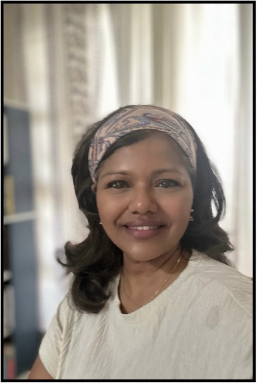
Ancy James is a writer, creative entrepreneur, and former television professional at NDTV with over 17 years of experience, where storytelling, human connection, and meaningful conversations formed the foundation of her work. Based in Bengaluru, she now channels that experience into independent creative ventures, writing, and long-form human-interest storytelling that centers compassion, resilience, and real life.
As the creator of the “Raising Rainbows” interview series, Ancy brings together her background in journalism with her deeply personal belief that some of the world’s most powerful stories are often the quietest ones. Through intimate conversations with families raising neuro-divergent and differently abled children, she hopes to create a body of work that is honest, hopeful, and transformative.
What began as interviews soon became friendships. Listening to parents speak about love, grief, advocacy, inclusion, and joy reshaped her understanding of humanity itself. Her writing aims not to sensationalise disability, but to humanise it, moving beyond labels and inviting readers to see the beauty, individuality, and dignity within every child and family.
Alongside her work as a writer, Ancy also runs her own creative business in Bengaluru, balancing entrepreneurship, motherhood, creativity, and advocacy with warmth and authenticity. Her voice is deeply rooted in empathy and emotional honesty, qualities that shine through both in her storytelling and in the communities she hopes to build through her work.
Through “Raising Rainbows,” Ancy hopes to use the power of storytelling as a catalyst for awareness, inclusion, and change, creating conversations that help families feel seen, understood, and celebrated.