India’s performance in the QS World University Rankings 2027 signifies a shift toward a more diversified higher education landscape, with significant gains across both traditional institutions and emerging universities.
NEW DELHI: The QS World University Rankings 2027, released today, reveal a remarkable transformation in the Indian higher education sector, as the nation recorded its strongest performance in recent history. This year, a total of 52 Indian universities made it to the global rankings, marking a significant expansion beyond the traditional strongholds of the Indian Institutes of Technology (IITs).
Notably, the rankings indicate a diversification in the types of institutions gaining recognition, with increases in both private and state universities. This trend is reflective of a broader strategy outlined in the National Education Policy (NEP) introduced in 2020, which aims to enhance the quality and accessibility of higher education across India.
Record Rankings and Key Institutions
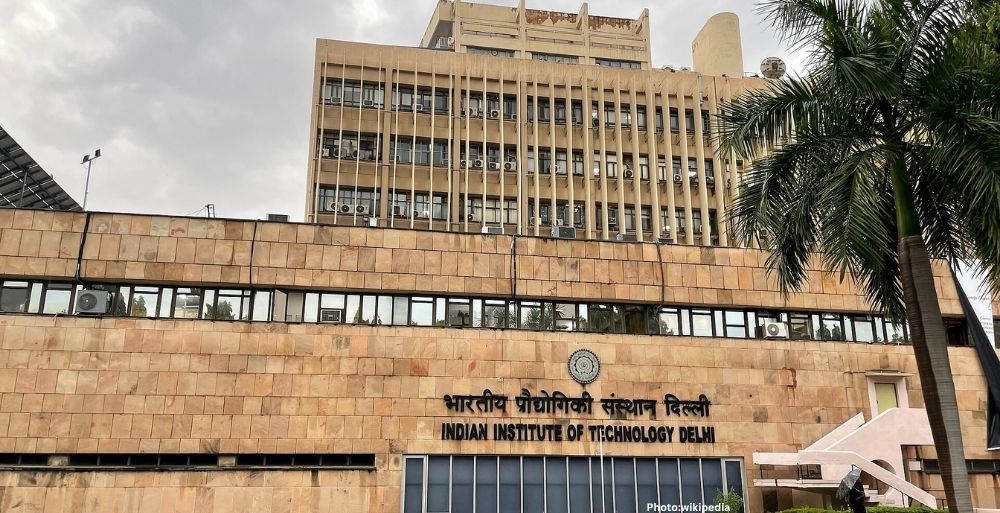
The flagship Indian Institute of Technology, Delhi (IIT-Delhi), climbed five spots to rank 118th globally, tying the highest rank previously achieved by an Indian institution, which was first set by IIT-Bombay in the 2026 rankings. Following IIT-Delhi, IIT-Bombay fell to 134th place after a decline of five positions. Meanwhile, IIT-Madras rose to 170th, and IIT-Kharagpur improved to 205th. The Indian Institute of Science (IISc) in Bangalore secured the 221st position, further highlighting the competitive nature of Indian institutions on the world stage.
The rankings also underscored a significant breadth of improvement among Indian universities. Out of the 52 institutions listed, 26 saw improvements in their positions, while 15 experienced declines, and nine maintained their rankings. Additionally, two universities entered the rankings for the first time, illustrating a positive trend in the quality of higher education in India.
Noteworthy Institutional Gains
Among the standout performers, the Vellore Institute of Technology achieved an impressive jump of 94 places, landing at 597th, while BITS Pilani climbed 93 spots to reach 575th. IIT-Hyderabad experienced a substantial rise of 76 places, and Jamia Millia Islamia advanced over 75 spots to secure the 686th position. Shoolini University also made significant strides, improving by 51 places to rank 452nd, entering the top 10 universities in India.
This year’s rankings also reflect a broader focus on research impact and employer recognition, two areas where Indian institutions have made notable gains. Specifically, 11 Indian universities are now among the world’s top 100 for citations per faculty, with IISc leading at 21st place, followed closely by IIT-Roorkee at 50th. Moreover, six institutions are recognized within the top 100 for employer reputation, with IIT-Bombay leading the list at 32nd.
The University of Mumbai experienced a remarkable improvement, climbing 70 places to rank 25th globally for employment outcomes, underscoring the growing alignment between higher education institutions and the job market demands.
Global Context and Comparisons
In the global context, the Massachusetts Institute of Technology (MIT) retained its position as the world’s top university for the 15th consecutive year, followed by Imperial College London and Stanford University, which are both ranked joint second. This context highlights the competitive landscape that Indian institutions are striving to navigate as they seek to enhance their global standing.
The QS rankings serve as an essential tool for assessing the overall health of a country’s higher education system. India’s performance, characterized by a 52% improvement rate among its ranked institutions, positions it among the leading higher education systems worldwide. This rate of improvement not only emphasizes the progress made by individual universities but also signals encouraging trends within the broader educational landscape.
Implications for the Future of Indian Higher Education
The outcomes of the QS World University Rankings 2027 reflect both the individual achievements of universities and the evolving landscape of higher education in India. The increasing representation of diverse institutions, including private and state universities, suggests a democratization of higher education, where a wider array of institutions are recognized for their contributions to research and academic excellence.
This diversification aligns with the goals set forth in the National Education Policy, which aims to improve educational outcomes and foster a culture of research and innovation across various fields. The emphasis on improving research impact and employer recognition is particularly significant, as it resonates with global trends that prioritize the employability of graduates.
As India continues to enhance its higher education framework, the QS rankings provide a valuable benchmark for measuring progress and identifying areas for further development. The growing visibility and recognition of Indian universities in global rankings are positive indicators of the country’s commitment to educational excellence and its aspirations to emerge as a leader in higher education.