A comprehensive national inquiry conducted by a coalition of civil society organizations has revealed a systematic escalation of violence, economic boycotts, and denial of fundamental constitutional rights targeting Christian minorities across six Indian states. Drawing from extensive field investigations in Chhattisgarh, Odisha, and Madhya Pradesh, the newly concluded People’s Tribunal on Violence Against Christians documented widespread institutional complicity, detailing instances where state police forces allegedly failed to protect victims, registered retaliatory cases against survivors, and weaponized anti-conversion statutes. Beyond physical assaults on house churches and rural pastors, the tribunal’s findings highlight a disturbing rise in social exclusion mechanisms, notably the systematic denial of traditional burial rights to Christian Adivasi and Dalit populations, which legal experts characterize as an unprecedented assault on basic human dignity and equal citizenship.
Introduction: The Delhi Proceedings and Scope of Inquiry
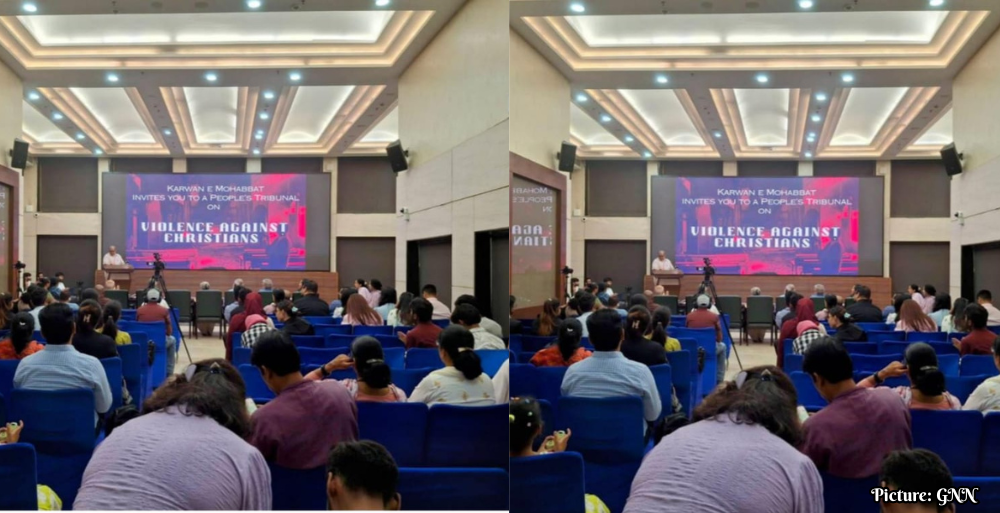
NEW DELHI — Gathering amid a palpable atmosphere of anxiety and determination at the Constitution Club in the nation’s capital, a national panel of legal experts, historians, and human rights defenders convened on June 1, 2026, to present a damning indictment of religious persecution in contemporary India. Organized by Karwan-e-Mohabbat alongside a collective of concerned citizen groups, the People’s Tribunal on Violence Against Christians in India marked the culmination of a rigorous, multi-month fact-finding mission. The tribunal presented extensive testimonies, data repositories, and investigative audio-visual evidence detailing a highly coordinated campaign of violence, social ostracization, and institutional bias targeting Christian communities across six major states: Uttar Pradesh, Rajasthan, Madhya Pradesh, Chhattisgarh, Gujarat, and Odisha.
The proceedings represented the synthesis of exhaustive regional inquiries, following localized field deployments and formal hearings in Chhattisgarh during April 2026 and Odisha in May 2026. Over the course of the day-long session, panel members cross-examined dozens of survivors, community pastors, independent researchers, and human rights attorneys. The documented evidence established that contemporary anti-Christian hostility has moved beyond spontaneous, localized altercations. Instead, it has evolved into a structural phenomenon characterized by targeted attacks on rural places of worship, severe economic and social boycotts, the denial of traditional burial grounds, and a pattern of state machinery either standing by or actively facilitating the persecution.
Historical Continuities and the Geography of Hostility
Opening the tribunal’s formal testimonies, veteran journalist and human rights advocate John Dayal provided a critical historical framework to contextualize the current crisis. Dayal directly linked the contemporary surge in violence to foundational precursors of majoritarian violence in India, citing the state-sanctioned communal experiments in Gujarat during the late 1990s, the brutal 1999 murder of Australian missionary Graham Staines and his two young sons by right-wing extremists in Odisha, and the large-scale 2008 anti-Christian pogroms in Kandhamal, which resulted in dozens of deaths and the displacement of over 50,000 individuals.
“What we are witnessing today is not a series of disconnected, random outbursts of anger,” Dayal stated, his voice steady before a quiet, packed auditorium. “It is the institutionalization of a long-gestating political project. The constitutional guarantees enshrined in Article 25—the absolute freedom of conscience and the right to freely profess, practice, and propagate religion—are being systematically dismantled, not just by vigilante mobs on the ground, but with the passive nod of the state.”
To illustrate the ground reality, Karwan-e-Mohabbat screened an investigative documentary film compiled during a mid-May 2026 fact-finding mission across six vulnerable districts of Madhya Pradesh: Jhabua, Burhanpur, Indore, Dhar, Khandwa, and Sehore. The documentary featured first-hand testimonies from approximately fifteen affected families and local pastors. The footage vividly captured the aftermath of ransacked house churches, shattered alter spaces, and the pervasive climate of fear that defines daily life for religious minorities in these regions. The narratives detailed a standardized script: right-wing activists, often affiliated with Hindutva organizations, disrupt peaceful Sunday prayer services inside private residences, accuse the congregants of engaging in fraudulent or coercive religious conversions, and subsequently call in local law enforcement to arrest the victims under the state’s stringent anti-conversion laws.
Data and Trends: A Decade of Rising Persecution
Presenting a statistical overview compiled by monitoring networks and legal aid groups, prominent Christian community leader Vijayesh Lal demonstrated a sharp, uninterrupted upward trajectory in reported incidents of anti-Christian violence over the past decade. Lal noted that the strategic utilization of the “forced conversion” narrative has become a ubiquitous, highly effective pretext to legitimize unlawful physical assaults and community intimidation.
According to data discussed at the tribunal, the weaponization of these allegations has expanded exponentially alongside the legislative tightening of Freedom of Religion Acts—commonly referred to as anti-conversion laws—across multiple state assemblies.
The tribunal’s data specialists emphasized that these laws effectively shift the burden of proof onto the accused, making bail exceedingly difficult to obtain for pastors and church elders. A.C. Michael, a prominent human rights defender, addressed the broader societal implications of this legal environment, highlighting how peaceful, private acts of worship are increasingly reframed by local administrations as inherent threats to public order, communal harmony, and the national interest. Michael expressed deep concern over the systematic erasure of minority voices from state apparatuses, pointing specifically to the deliberate vacancy or lack of genuine Christian representation within statutory bodies such as the National and State Commissions for Minorities.
Social Exclusion, Economic Boycotts, and the Weaponization of Tribal Law
Beyond physical violence and legal maneuvers, the tribunal dedicated significant attention to the invisible, everyday forms of coercion used against Christian converts, particularly within Adivasi (indigenous) and Dalit communities. Human rights researcher Siju Thomas presented a detailed breakdown of social and economic boycotts operating in rural sectors. In these scenarios, newly converted families or independent evangelical congregations are completely cut off from village life.
Thomas described instances where Christian villagers were denied access to shared community resources, including public water wells, government-subsidized ration shops, and collective grazing lands. In several extreme cases documented in Chhattisgarh and Rajasthan, Christian families were forcibly expelled from their ancestral villages, or faced severe financial penalties levied by informal village councils if they refused to participate in reconversion ceremonies known as ghar wapsi (homecoming).
Crucially, Thomas noted a highly sophisticated legal distortion occurring in tribal belts: the deliberate misuse of laws originally enacted to protect indigenous autonomy. Specifically, the Panchayats (Extension to Scheduled Areas) Act (PESA) of 1996—designed to empower tribal village councils (Gram Sabhas) to safeguard their cultural identity and natural resources—is being manipulated by majoritarian political actors. Informal or co-opted Gram Sabhas are passing unlawful resolutions banning the entry of Christian pastors into tribal villages, prohibiting the practice of non-Hindu faiths, and categorizing Christian Adivasis as non-tribals to strip them of their statutory land rights and affirmative action benefits.
Degradation in Death: The Denial of Burial Rights
One of the most emotionally charged and legally severe segments of the tribunal involved testimonies regarding the systematic denial of burial rights. Father Ajay Singh, an activist and priest from Odisha, brought forward extensive documentation showing that denying Christians a dignified burial has become a primary instrument of psychological and social coercion across Odisha, Chhattisgarh, and Madhya Pradesh.
Singh recounted multiple verified incidents where traditional funeral processions were physically blocked by organized mobs. Christian families were forbidden from burying their deceased loved ones in ancestral village graveyards under the claim that the ground belongs exclusively to the dominant religious community. The tribunal heard horrifying accounts of bodies being held for days inside homes while families desperately negotiated with hostile local authorities, and even instances where the bodies of deceased Christians were forcibly exhumed by mobs or local officials and subjected to Hindu cremation rites against the explicit wishes of the grieving family.
“This is not merely a denial of a religious ritual,” Father Ajay Singh stated, visibly moved as he addressed the panel. “This is a calculated effort to erase our very presence from the soil. It tells a community that even in death, you do not belong to this land; your body is an pollution to the village.”
Institutional Complicity and Failure of the Rule of Law
A critical consensus among all presenters at the tribunal was the systemic failure of state institutions to uphold the rule of law. Degree Chouhan, a human rights defender from Chhattisgarh, presented comparative data highlighting the vast chasm between the actual scale of ground-level violence and the official judicial response. Chouhan pointed out that out of hundreds of documented physical assaults, disruptions of worship, and cases of criminal intimidation reported annually to the police, only a small fraction result in the formal registration of a First Information Report (FIR).
The tribunal heard repeated survivor testimonies describing a standard pattern of police behavior:
- Delayed Response: Police arrival at a scene of violence is routinely delayed until after a prayer hall has been vandalized or victims have been assaulted.
- Retaliatory Charging: Rather than arresting the perpetrators of the violence, law enforcement officers frequently detain the pastors or victims under anti-conversion statutes, citing the “provocation” of holding a prayer meeting.
- Coerced Compromises: Police officials regularly pressure vulnerable Christian families into signing “compromise agreements” wherein the victims agree not to hold future prayer services in exchange for the drop of arbitrary criminal charges or the cessation of physical threats by local majoritarian groups.
Panel Reflections and a Call for Citizen Action
In the concluding sessions, the distinguished members of the tribunal panel offered their final assessments of the evidence. Senior journalist and public intellectual Pamela Philipose described the hours of survivor testimonies as painful but necessary markers of a deeply compromised democracy. She stressed that confronting this escalating hatred requires an immediate end to public apathy, urging the secular majority to forge new forms of active, cross-community solidarity.
Irfan Ali Engineer praised the extraordinary courage of the rural survivors who traveled to New Delhi to testify, noting that they did so at immense personal risk of retaliation upon their return. Engineer emphasized that the political narratives surrounding ghar wapsi and demographic threats are manufactured tools used to legitimize structural discrimination, reiterating that true freedom of conscience must remain the bedrock of India’s constitutional identity.
Prominent activist Vidya Dinker turned her focus inward, issuing a sharp critique of established mainline church structures. Dinker argued that the mainstream ecclesiastical leadership and wealthy urban Christian institutions have largely failed to stand in active solidarity with vulnerable, independent rural believers and indigenous congregations who bear the brunt of the persecution. She called upon church hierarchies to shed their institutional timidity and deploy their legal and material resources to defend targeted communities.
Human rights advocate Syeda Hameed focused her remarks on the degradation of burial rights, calling it an absolute collapse of basic human decency that should shock the conscience of any civilized society. Historian Tanika Sarkar warned that the trends documented by the tribunal signal a dangerous narrowing of democratic citizenship, where minoritarian belonging is increasingly conditioned on total submission to majoritarian norms.
Closing the tribunal, human rights leader Harsh Mander delivered a solemn warning. He emphasized that the thousands of incidents documented across the six states cannot be dismissed as isolated acts of prejudice or spontaneous communal friction.
“What this tribunal has laid bare is a systematic, politically incentivized campaign designed to relegate an entire community to the status of second-class citizens,” Mander concluded. “When the police, the local administration, and even segments of the judiciary fail to defend the vulnerable, the constitutional promise of equal citizenship is broken. This is an urgent crisis not just for Christians, but for the very soul of India’s democracy. We cannot afford to remain silent.”