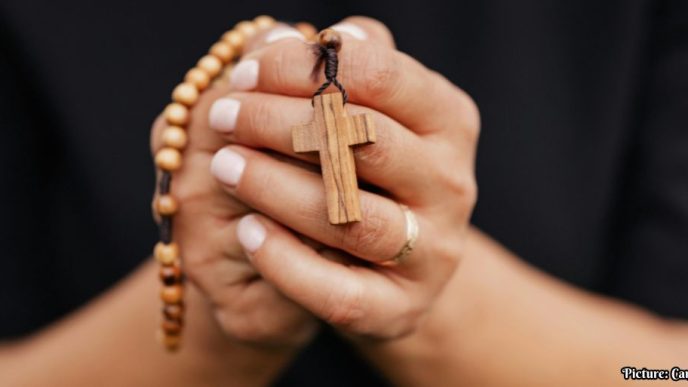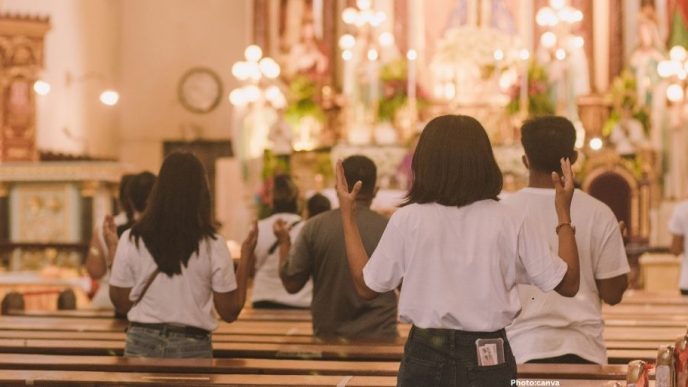
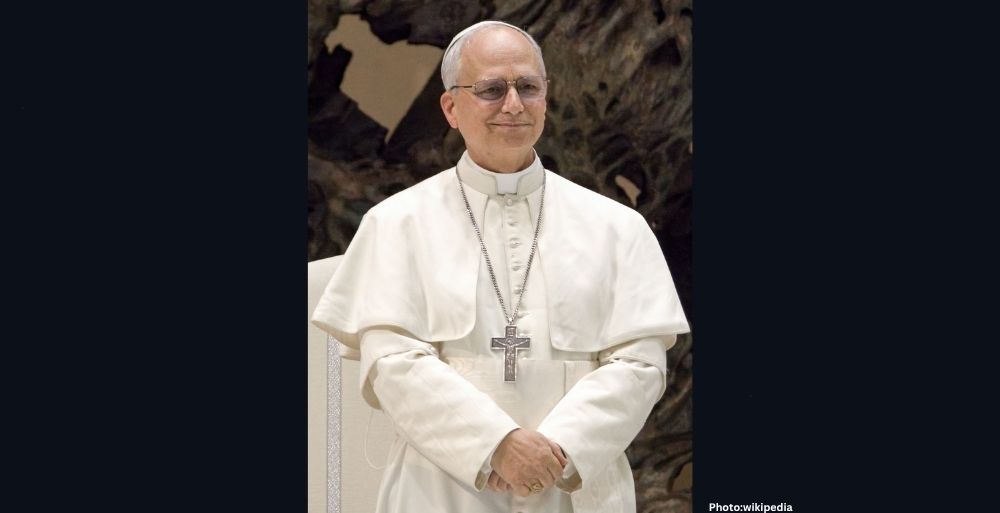
Pope Leo XIV will preside over a live-streamed, worldwide recitation of the Holy Rosary from the Grotto of Our Lady of Lourdes in the Vatican Gardens to mark the conclusion of the traditional Marian month of devotion. Coordinated directly by the Vatican’s Dicastery for Evangelization, the high-profile spiritual event is explicitly structured around five specific geopolitical and humanitarian intentions. Each decade of the Joyful Mysteries will be offered to aid civilians, medical workers, prisoners, and displaced populations currently impacted by active armed conflicts globally. By linking major international sanctuaries—from war-torn Ukraine to the United States and the Philippines—via a real-time digital broadcast network, the Holy See aims to convert a standard seasonal liturgy into a synchronized transnational demonstration for diplomatic de-escalation and global peace.
VATICAN CITY— Pope Leo XIV will lead an international congregation of millions in a synchronized recitation of the Holy Rosary tonight at 7:00 p.m. Rome time, transforming a traditional end-of-May Catholic liturgy into an expansive digital appeal for an end to global warfare.
The service, held at the historic Grotto of Our Lady of Lourdes within the secure perimeter of the Vatican Gardens, will bring together a network of major international shrines spanning multiple continents via live broadcast feeds. In an effort to address escalating geopolitical hostilities across Europe, the Middle East, and Africa, the Pontiff has designated the Joyful Mysteries of the Rosary exclusively to the victims, humanitarian workers, and political prisoners caught within modern conflict zones.
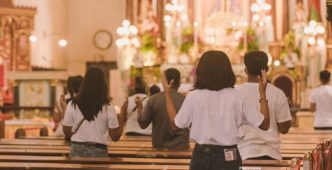
For the general public gathered in Rome, the event will expand outward into St. Peter’s Square, where the Vatican’s Dicastery for Communication has deployed large-screen television monitors to accommodate thousands of local pilgrims who were unable to secure the limited tickets distributed for the garden grotto itself.
Diplomatic Continuity and the Architecture of Modern Papal Appeals
The global prayer initiative, formally organized by the Section for Fundamental Questions regarding Evangelization in the World under the Dicastery for Evangelization, represents a structured continuation of Pope Leo XIV’s diplomatic platform. Since his historic election to the Chair of Saint Peter in May 2025 as the first American-born pontiff, the former Augustinian friar—born Robert Francis Prevost—has consistently leveraged the spiritual machinery of the Holy See to challenge nationalistic trends and industrial militarization.
Vatican officials note that this specific global broadcast marks a significant escalation in Leo’s “unarmed and disarming” diplomatic strategy, following more than 400 distinct verbal and written appeals for peace delivered during his first year in office. By requiring participating global parishes to log their involvement via official digital registers, the Vatican is actively attempting to establish a measurable, grassroots constituency focused on humanitarian non-violence.
The timing of the event carries notable institutional weight. Occurring on May 30, the liturgy serves as the solemn closure of the Catholic Church’s traditional Marian month, a 31-day period structurally dedicated to the Virgin Mary. Historically, popes have utilized the final days of May to make profound geopolitical declarations; notably, during the heights of the First World War and the Cold War, successive pontiffs similarly gathered at the Lourdes Grotto to invoke the title of “Mary, Queen of Peace” as a theological counterweight to state-sponsored aggression.
A Transnational Network of Participating Sanctuaries
To establish a continuous, simultaneous wave of prayer, the Dicastery for Evangelization has coordinated real-time satellite and internet streams with several of the most heavily visited pilgrimage destinations on Earth. The institutional diversity of the confirmed participants underscores the direct impact of current global instability:
- The Sanctuary of the Mother of God (Zarvanytsia, Ukraine): Situated within a nation entering its fifth year of intense conventional warfare, this Eastern European Greek-Catholic sanctuary serves as a focal point for thousands of internally displaced families.
- The Shrine of Saint Charbel Annaya (Byblos, Lebanon): Operating amid severe economic volatility and regional cross-border military exchanges in the Levant, this Maronite Catholic site represents the fractured communities of the Middle East.
- The Basilica of the National Shrine of the Immaculate Conception (Washington, D.C.): Serving as the patronal church of the United States, the largest basilica in North America will join the broadcast live at 1:00 p.m. Eastern Time, bridging the transatlantic diplomatic corridor.
- The International Shrine of Our Lady of Peace and Good Voyage (Antipolo, Philippines): Representing Southeast Asia, this recently elevated international shrine highlights the church’s shifting demographic weight toward the Global South.
- European Historic Shrines: The network is anchored by foundational European centers of Marian devotion, including the Shrine of Our Lady of the Rosary in Fátima, Portugal; the Sanctuary of Our Lady of Lourdes in France; the Pontifical Shrine of the Holy House in Loreto, Italy; and the Sanctuary of Our Lady Queen of Peace in Medjugorje, Bosnia and Herzegovina.
The Five Decades: A Detailed Humanitarian Breakdown
Rather than adhering to generalized liturgical formulas, Pope Leo XIV has systematically paired each of the five conventional Joyful Mysteries with an explicit socio-political intent, mapping spiritual themes onto concrete international crises.
The first decade, meditating on the Annunciation, will be offered for the immediate protection and relief of the absolute victims of armed conflict, specifically targeting resources toward vulnerable children, elderly populations, and displaced refugees who lack state protection. The second decade, tracking the Visitation, shifts focus toward pastoral and secular aid workers, invoking support for those who risk physical safety to deliver spiritual counsel, psychological aid, and messages of baseline human hope to isolated populations trapped behind active front lines.
The third decade, honoring the Nativity, will explicitly commemorate the global medical apparatus. This section is dedicated to doctors, paramedics, nurses, and field volunteers operating under the auspices of neutral bodies like the International Committee of the Red Cross (ICRC) and Médecins Sans Frontières, who manage overwhelmed field hospitals under daily threat of kinetic bombardment.
The fourth decade, focusing on the Presentation in the Temple, enters deeply sensitive diplomatic territory by offering prayers for prisoners of war, arbitrarily detained civilians, and individuals enduring systematic torture or loss of human dignity within state-run or paramilitary detention camps. Finally, the fifth decade, representing the Finding in the Temple, concludes with a direct structural plea to secular political leaders, demanding an immediate cessation of hostilities, the abandonment of offensive arms manufacturing, and the formal implementation of permanent bilateral peace agreements.
Institutional Framings and the Rhetoric of Love over Power
During a private introductory briefing held for the Vatican press corps at the Palace of the Holy Office, administrative coordinators emphasized that the papacy views these synchronized events as necessary alternative interventions in a deadlocked international system.
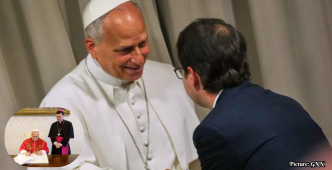
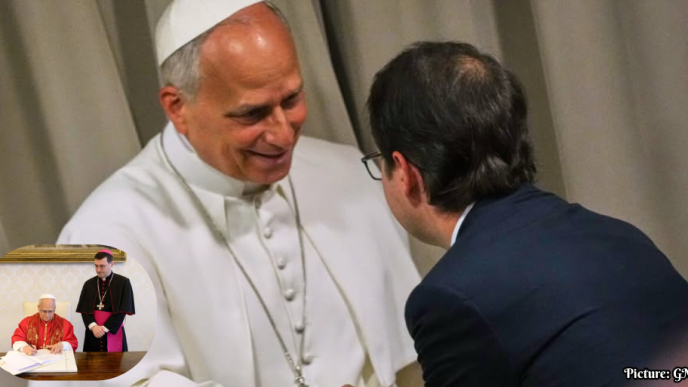
Monsignor Walter R. Rossi, speaking from a closely aligned coordinating position, reiterated that the gathering should not be viewed as a passive ritual, but rather as an assertive exercise in spiritual solidarity. This perspective aligns closely with Pope Leo XIV’s recent Pentecost homily, delivered earlier this month, where he explicitly warned world leaders that the compounding horrors of modern warfare could “be overcome not by a geopolitical superpower, but only by the total omnipotence of love and self-restraint.”
As twilight falls over the Vatican hills, the physical setting of the Lourdes Grotto—a precise replica of the French rock formation built in the late 19th century under Pope Leo XIII—will host a tightly controlled assembly of cardinals, diplomats, and local Roman citizens. For independent geopolitical analysts, the massive digital mobilization serves as a clear indication that under Pope Leo XIV, the Holy See continues to reject isolationism, preferring to utilize its unique transnational infrastructure to maintain constant, uncomfortable focus on the human costs of global statecraft.