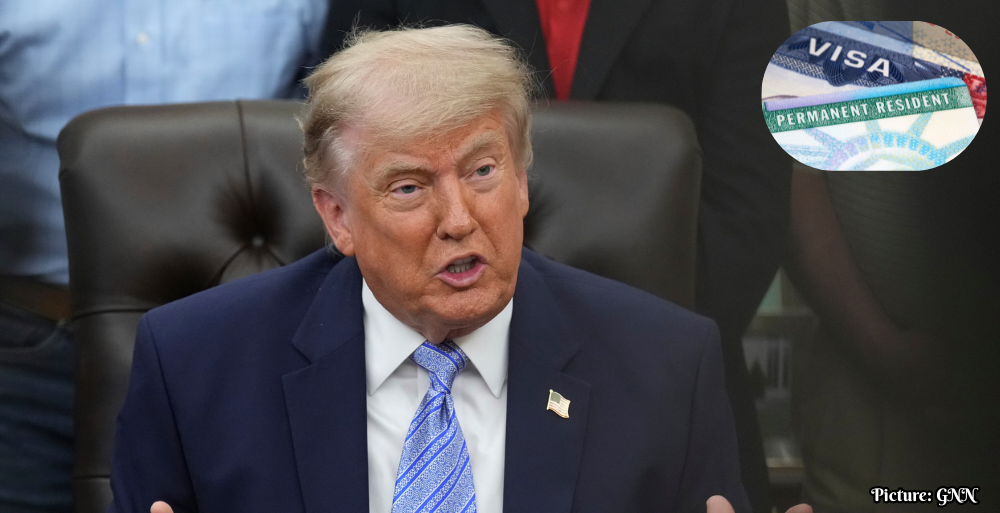
The Trump administration’s recent directive requires most foreigners seeking green cards to return to their home countries for application processing, a change that could significantly impact hundreds of thousands of individuals pursuing permanent residency in the United States.
On May 22, 2026, the Trump administration announced a significant shift in immigration policy, stating that most foreigners applying for green cards will now be required to leave the United States to complete their applications. This directive from the U.S. Citizenship and Immigration Services (USCIS) represents a notable change in the legal immigration landscape, which could complicate the process for many individuals seeking permanent residency.
According to a memo released by USCIS, only individuals who meet “extraordinary circumstances” will be permitted to apply for green cards while remaining in the U.S. Instead, applicants will now need to undergo consular processing from their home countries. This policy aims to address concerns regarding individuals overstaying their visas or remaining illegally in the U.S. while waiting for residency decisions.
Rationale Behind the New Policy
USCIS spokesperson Zach Kahler explained that the new policy is designed to align the immigration system more closely with existing laws. He stated, “When aliens apply from their home country, it reduces the need to find and remove those who decide to slip into the shadows and remain in the U.S. illegally after being denied residency.” The administration asserts that this change is intended to close perceived loopholes in the immigration process.
However, the implications of this policy shift are profound, particularly for individuals who entered the U.S. legally on temporary visas. This group includes students, spouses of U.S. citizens, and various foreign workers who may now face the prospect of returning to their home countries during the lengthy green card application process. Immigration lawyers have raised alarms about the potential for extended family separations as applicants wait for decisions on their cases.
Immediate Reactions and Confusion
The announcement has led to immediate confusion and concern among immigration attorneys and their clients. Many attorneys are working to interpret the new memo and its implications for ongoing cases. The lack of clarity regarding which groups would qualify for exceptions has further exacerbated the uncertainty. For instance, while the memo suggests that refugees will not be affected, it remains unclear whether skilled workers on H-1B visas or others deemed to provide economic benefits will be exempt from this requirement.
Sarah Pierce, a former policy analyst at USCIS and current director of social policy at the think tank Third Way, noted the strain on the consular processing system, which is already overwhelmed. “Our consular processing system through which they would have to apply is already overburdened,” she remarked, indicating that this could lead to significant delays and further family separations lasting months or even years.
Historical Context and Processing Trends
Historically, the process of obtaining a green card has included various pathways for applicants. Data from the Department of Homeland Security indicates that approximately 1.4 million green cards were issued in 2024, with over 820,000 approved through the adjustment of status process. This method allows individuals already in the U.S. to apply for permanent residency without leaving the country, a route that has been utilized by many, particularly those married to U.S. citizens.
In fact, over 70 percent of individuals who received green cards through marriage in 2024 did so via adjustment of status, accounting for about 250,000 applications. The new policy could dramatically alter these statistics, as applicants now face the necessity of leaving the U.S. to fulfill the requirements of the green card process.
Concerns from Immigration Attorneys
The reaction from immigration attorneys following the announcement has been one of alarm and concern. Many reported a surge in inquiries from clients worried about how the new policy will affect their green card applications. Robert O’Malley, an immigration attorney based in Grand Rapids, Michigan, shared that his office was inundated with calls from clients anxious about whether their spouses would need to leave the U.S. or if they could remain together during the application process. “I’ve done my best to assuage those fears,” O’Malley stated. “But I’m really just trying to digest this six-page memo and wait for further guidance so that we know how to best advise our clients.”
As immigration lawyers continue to navigate this complex and evolving situation, many anticipate that the new policy will face legal challenges. The ambiguity regarding potential exceptions for certain groups adds an additional layer of complexity for both applicants and their legal representatives.
Broader Implications for Immigration Policy
The implications of this policy change extend beyond the immediate effects on applicants. It reflects a broader trend in the Trump administration’s approach to immigration, which has increasingly focused on curbing legal immigration and enforcing stricter regulations. Recent actions have included attempts to review the status of naturalized citizens and conduct audits of green card holders to identify individuals for potential deportation.
This new directive may not only alter the lives of individuals and families navigating the immigration system but could also have repercussions for the U.S. labor market and economy. Many sectors rely on foreign workers, including technology and healthcare, and this policy could deter skilled talent from seeking opportunities in the U.S.
As the situation develops, the repercussions of this policy will likely resonate throughout the immigration landscape, affecting legal practices and the lives of families striving for a better future in the United States.