India is home to numerous architectural treasures beyond its famous landmarks, with several lesser-known sites offering rich historical narratives and unique designs that warrant exploration in 2026.
As India approaches 2026, the nation’s architectural landscape reveals numerous lesser-known sites that have significant historical and cultural importance. While the Taj Mahal and the palaces of Rajasthan often garner international attention, several other structures quietly narrate the rich tapestry of Indian history and architecture. These sites have not only stood the test of time but have also become integral to the understanding of India’s diverse heritage. This article highlights seven such architectural wonders that merit a visit in 2026.
Rabdentse Ruins, Sikkim
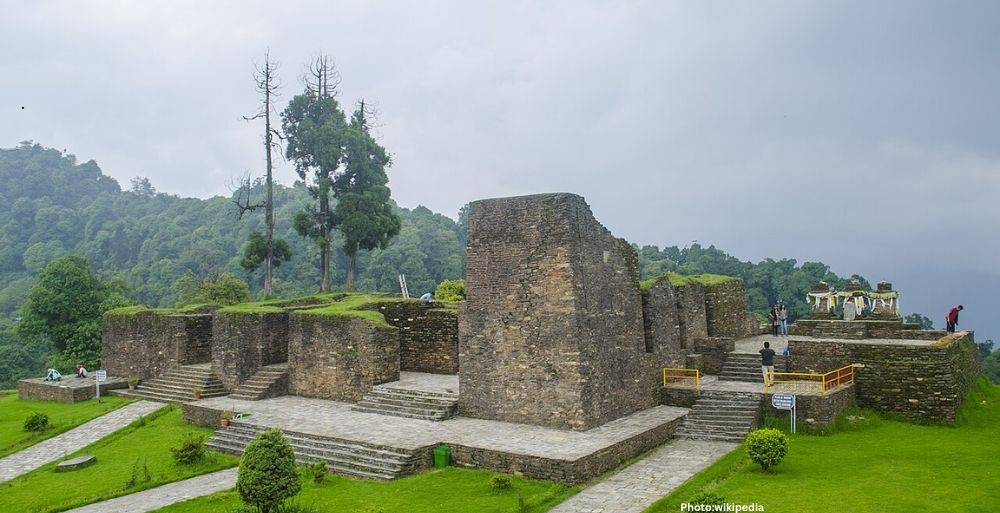
Located near the town of Pelling in Sikkim, the Rabdentse Ruins, often referred to as the Machu Picchu of India, date back to the 1670s. This site served as the second capital of the Kingdom of Sikkim, established by Tensung Namgyal, the son of Phunstog Namgyal, the first Chogyal (king) of Sikkim. The ruins provide insight into the royal past of the region, though much of the site was destroyed by the Gurkha army in the 18th century. The Archaeological Survey of India later restored the site, adding landscaped gardens and pathways that enhance its accessibility. The highlight of the ruins includes a 7-foot-long white marble slab believed to be associated with a monastery called Risum Gompa. Visitors can engage in a two-kilometer hike from the Pemayangtse Monastery, which is an essential stop on the Buddhist pilgrimage circuit.
Unakoti, Tripura
The Unakoti site in Tripura is famous for its intricate rock carvings, believed to be the result of divine intervention or the work of an artisan named Kallu Kumhar, who carved these figures in a single night on Lord Shiva’s orders. The site contains numerous carvings, including a notable 30-foot representation of Lord Shiva. The name Unakoti translates to “one less than a crore,” highlighting the vast number of carvings that were intended to be created. In 2022, these sculptures were included in the UNESCO World Heritage Site tentative list, recognizing their cultural and historical significance. Unakoti is approximately a four-hour drive from Agartala, making it a worthy destination for those interested in both mythology and ancient artistry.
Masrur Temples, Himachal Pradesh
Dating back to the 8th century, the Masrur Temples in Himachal Pradesh are a complex of rock-cut Hindu temples carved from a single rock. The site is steeped in legend, believed to be a location where the Pandavas constructed a stairway to heaven during their exile. The temples are arranged symmetrically on a square grid, with the main temple at the center. Although much of the intended construction remains incomplete, the site offers a captivating glimpse into the architectural ambitions of its time. A visit to the Masrur Temples provides insights into the spiritual practices of ancient India and the natural beauty of the surrounding landscape.
Champaner-Pavagadh Archaeological Park, Gujarat
The Champaner-Pavagadh Archaeological Park, a UNESCO World Heritage Site, spans 3,280 acres and showcases a blend of Hindu and Islamic architecture. Established as a Hindu capital in the early 14th century, the site was later conquered by Sultan Mehmud Begda, reflecting the diverse cultural influences in the region. The park features a range of structures, including palaces, temples, mosques, and tombs, with the Jama Masjid serving as a model for later mosque architecture in India. The Kalikamata Temple atop Pavagadh Hill attracts numerous pilgrims annually, making it not only a site of historical importance but also a living cultural center.
Murud Janjira Fort, Maharashtra
Murud Janjira Fort, situated off the coast of Maharashtra, is renowned for its impressive architecture and historical significance. Believed to be impregnable, the fort features large granaries and freshwater wells that historically supported the families residing within its walls. The fort is accessible by boat, allowing visitors to experience its formidable walls and rich history. The fort’s location and construction by the Siddis, who were known as adept architects, highlight the strategic importance of the site during its operational years. Today, it serves as a popular day-trip destination for tourists from Mumbai and Pune.
Shalimar Bagh, Kashmir
Constructed in 1619 by Emperor Jahangir for his wife Nur Jahan, Shalimar Bagh is a striking example of Mughal garden design. This terraced garden, located along the banks of Dal Lake, features a central water channel that enhances its aesthetic appeal. The garden is a testament to the Mughal era’s artistic sensibilities, with numerous fountains and carefully orchestrated landscaping. Currently, the site is undergoing restoration efforts by the JSW Foundation to preserve its architectural features and improve visitor amenities, ensuring that future generations can appreciate its beauty.
Dhanushkodi, Tamil Nadu
At the southeastern tip of Pamban Island lies Dhanushkodi, a town that remains a haunting reminder of the devastation wrought by a cyclone in 1964. Once a bustling transit point connected to mainland India by railway, Dhanushkodi today is characterized by its skeletal structures and sandy beaches. The site is intertwined with local mythology, as it is believed to be where Lord Rama constructed a bridge to Lanka. Recent infrastructure developments have improved access to this desolate but evocative location, allowing visitors to witness the remnants of a once-thriving community.
These seven architectural wonders, each with its unique narrative and significance, represent just a fraction of India’s rich historical and cultural heritage. As 2026 approaches, they offer visitors not only a chance to explore India’s architectural diversity but also to engage with the historical contexts that shaped these remarkable sites.