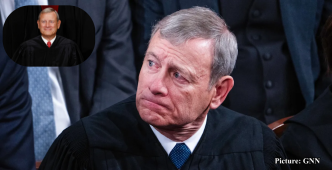
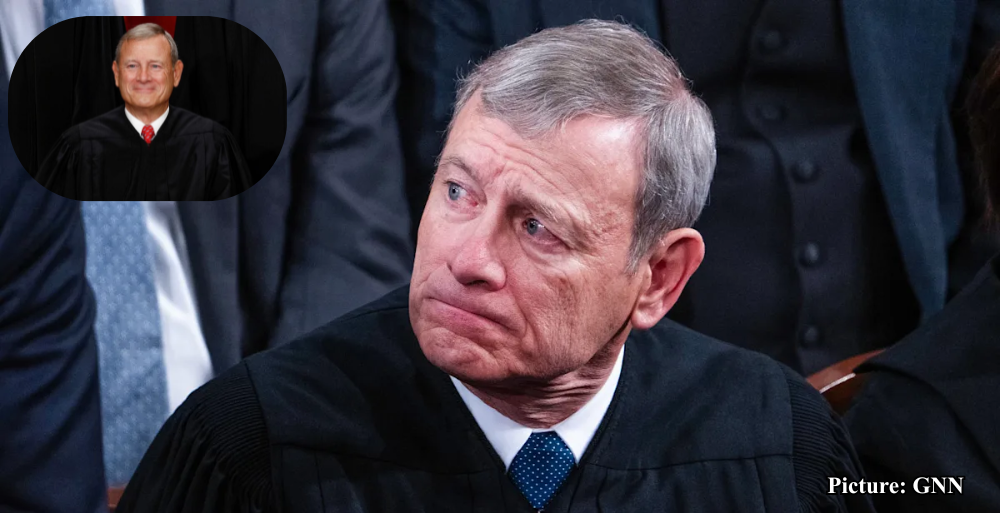
In recent remarks at a legal conference in Hershey, Pennsylvania, Chief Justice John Roberts emphasized the Supreme Court’s role as an impartial interpreter of law, countering perceptions that justices operate as political actors.
HERSHEY, Pa. — Chief Justice John Roberts delivered a strong defense of the Supreme Court’s integrity on Wednesday, asserting that the justices are not political actors and that their decisions are grounded in law and constitutional interpretation rather than policy preferences. Speaking at a conference for lawyers and judges, Roberts addressed ongoing misconceptions held by the public regarding the court’s operations and the nature of its rulings.
Roberts articulated that many Americans mistakenly view the Supreme Court as a body that makes policy decisions. He stated, “I think at a very basic level, people think we’re making policy decisions, [that] we’re saying we think this is what things should be as opposed to this is what the law provides.” This statement reflects his concern that such misconceptions could undermine the public’s understanding of the judiciary’s role in a democratic society.
The Nature of Judicial Decisions
During his address, Roberts emphasized that the court is often required to make decisions that are unpopular, reinforcing the principle that judicial rulings must prioritize the Constitution over public sentiment. “One of the things we have to do is issue decisions that are unpopular,” he noted, explaining that the court’s purpose is to apply constitutional principles faithfully, even when such applications do not align with the prevailing political climate. “Those rulings are based on our best effort to figure out what the Constitution means and how it applies,” he added.
Roberts’ comments come against the backdrop of heightened scrutiny of the Supreme Court, particularly following significant rulings that have shifted federal law on issues like abortion and gun rights. The court’s recent decision to invalidate parts of the Voting Rights Act of 1965 has drawn widespread criticism, particularly from progressive groups and advocates, who view it as a direct threat to voting rights in America. Last week’s ruling sparked outrage among left-leaning factions, highlighting the increasing polarization surrounding the court’s decisions.
Judicial Independence and Public Perception
The Chief Justice’s remarks touch on a critical ongoing debate regarding the balance between judicial independence and accountability to the public. Critics of the current court, which holds a 6-3 conservative majority, argue that recent rulings reflect a departure from the will of the majority of Americans on social issues. This perception of the court as a political entity has implications for its authority and legitimacy, prompting calls for reform and increased scrutiny of the justices.
While Roberts acknowledged the public’s right to critique the court’s decisions, he cautioned against personal attacks on justices, emphasizing the importance of focusing criticism on the substance of rulings rather than on individual judges. He remarked, “As soon as that happens, that’s not appropriate, and it can lead to very serious problems.” This statement reflects the growing concern among judicial leaders regarding threats to the safety and security of judges, a concern that has been amplified in recent years amidst rising political tensions.
Historical Context and Implications
The Supreme Court’s role as an independent arbiter of law has historically placed it at the center of significant societal shifts. Landmark decisions during pivotal moments in American history, such as the Civil Rights Movement and the Vietnam War, elicited strong reactions from both supporters and opponents of the court’s rulings. The present context, characterized by sharp partisan divisions and a polarized electorate, mirrors these historical challenges and raises questions about the court’s ability to function effectively as a nonpartisan institution.
As the court continues to navigate complex legal questions, it remains crucial for the justices to maintain a commitment to the principles of law and justice. Roberts’ insistence on differentiating between legal interpretation and political ideology serves as a reminder of the judiciary’s intended role in safeguarding democracy and upholding constitutional rights.
Conclusion
As Chief Justice Roberts reiterated the Supreme Court’s dedication to legal principles over political considerations, the challenge remains for the court to uphold its integrity in an increasingly polarized political landscape. The dialogue surrounding the court’s role and the perception of its justices is likely to persist, especially as the Supreme Court continues to make pivotal decisions that shape American law and society. The ongoing scrutiny of the judiciary underscores the importance of public understanding regarding the court’s functions and the necessity of preserving judicial independence in a democratic framework.