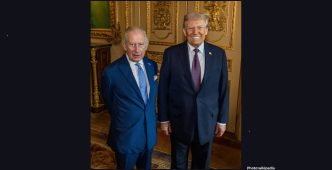
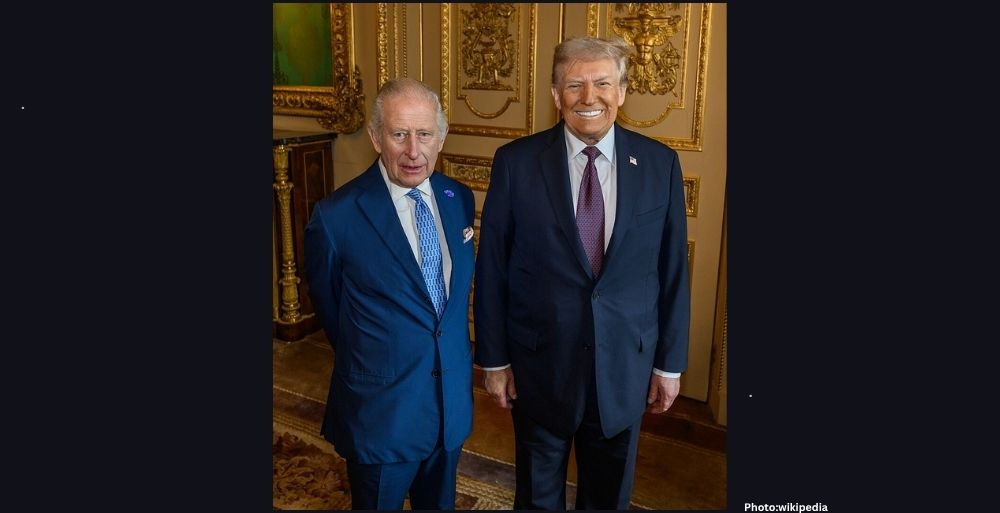
King Charles III has arrived in Washington, D.C., for a pivotal four-day state visit, marking the 250th anniversary of American independence while navigating a fractured “Special Relationship” and heightened security following a weekend shooting at the White House Correspondents’ Dinner. The visit, the first by a British monarch in 35 years to address a joint meeting of Congress, serves as a delicate diplomatic bridge between a Republican administration critical of U.K. military policy and a British government seeking to maintain transatlantic stability. Beyond the political friction, the King faces the shadow of the Andrew Mountbatten-Windsor scandal and a radical shift in White House infrastructure under President Donald Trump’s second term.
WASHINGTON, D.C. — In a moment of profound historical irony, King Charles III touched down at Joint Base Andrews on Monday to celebrate the 250th anniversary of the American Revolution—a rebellion against his five-times great-grandfather, King George III. However, the monarch’s mission is focused less on the grievances of 1776 and more on the diplomatic tremors of 2026.
The King’s arrival follows a traumatic weekend in the capital. On Saturday night, a gunman identified as 31-year-old Cole Tomas Allen allegedly attempted to assassinate administration officials at the Washington Hilton, shooting a Secret Service agent before being apprehended. Buckingham Palace confirmed that the King and Queen Camilla reached out privately to the Trump family to express their relief following the incident. Despite “minor operational adjustments,” the state visit will proceed with the full weight of British “soft power” intended to soothe a relationship that President Donald Trump recently described as “not good at all.”
A “Special Relationship” Under Strain
The current friction centers on a sharp divergence in foreign policy. President Trump has publicly lambasted British Prime Minister Keir Starmer, labeling him a “loser” and comparing his refusal to commit British troops to the ongoing U.S. conflict with Iran to the appeasement policies of Neville Chamberlain. Trump has further criticized the Royal Navy’s capabilities, dismissing the U.K.’s aircraft carriers as “toys” and suggesting Britain is no longer the “Rolls-Royce of allies.”
While the King is constitutionally bound to remain above political fray, his visit is widely viewed as a strategic deployment by 10 Downing Street. Prime Minister Starmer has sought to utilize the King’s rapport with Trump—who has often spoken of his “great love” for the British monarchy and his late mother’s Scottish heritage—to bypass the current diplomatic impasse.
“The King provides an opportunity for private conversations on really important issues,” noted Peter Westmacott, former British ambassador to the United States. These conversations are expected to touch upon security and trade, even as the two leaders hold diametrically opposed views on issues like climate change and environmental conservation.
Pageantry and the “Bulletproof” White House
The visit will feature a level of formal pageantry rarely seen in Washington. Tuesday evening’s state dinner is designated as a “white tie” affair, the highest level of formal dress. President Trump has reportedly taken a direct role in the planning, overseeing the guest list and menu selection personally.
This attention to detail comes as the White House itself undergoes a radical architectural transformation. In late 2025, the administration began the demolition of the East Wing to make way for a $400 million, “missile-resistant” ballroom. The project, which currently includes a massive underground military complex, has been the subject of intense litigation by historic preservation groups. Trump has defended the construction as a necessary national security upgrade, featuring “bullet, ballistic, and blast-proof glass.”
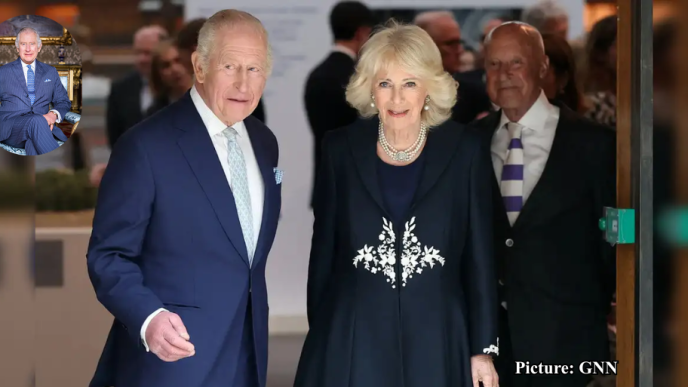
While the President focuses on the construction of his “super grand” ballroom, Queen Camilla will engage in a separate itinerary with First Lady Melania Trump. The pair are scheduled to attend an educational event utilizing virtual reality and AI-enabled glasses, highlighting American innovation in special education.
Addressing the Shadows of Scandal
The royal visit is not without its complications from the U.K. side. The monarch arrived just months after the February 18 arrest of his brother, Andrew Mountbatten-Windsor (formerly Prince Andrew). The arrest followed the release of millions of documents from the Jeffrey Epstein files, which allegedly showed the former prince sharing confidential trade envoy reports with the convicted sex offender.
In a move that signaled a departure from the “never explain” mantra of his mother, King Charles issued a direct statement at the time of the arrest, stating: “The law must take its course.” While the King will not address the scandal directly during his U.S. tour, the royal couple’s schedule includes meetings with survivors of domestic violence and abuse, a move interpreted as a subtle acknowledgment of the need for accountability and support for survivors.
A Legacy Beyond the Presidency
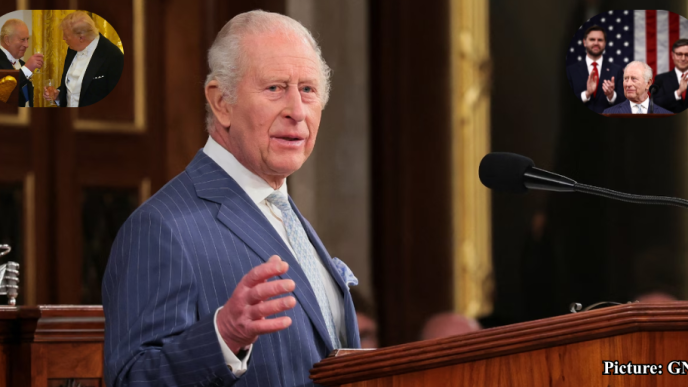
The highlight of the week will be the King’s address to a joint meeting of Congress on Tuesday. He is expected to focus on shared values and a common history that “transcends the presidency.”
A U.K. source familiar with the arrangements emphasized that the U.S.-U.K. bond is rooted in deep security and economic arrangements that predate current administrations. “Things don’t always have to be ‘rosy,'” the source explained, citing past disagreements over the Suez Crisis and Vietnam.
Following his Washington engagements, the King will travel to Virginia to meet with indigenous communities to discuss conservation and land rights—topics that may contrast with the Trump administration’s “drill, baby, drill” energy policies—before concluding his trip in New York City with 9/11 first responders.