In 2026, Asia’s wealthiest families continue to dominate the economic landscape, showcasing the enduring legacy of family-run enterprises across various industries, including technology, finance, real estate, and manufacturing. This report examines the top 20 richest families in Asia, highlighting their business origins, wealth, and the generational shifts within these influential dynasties.
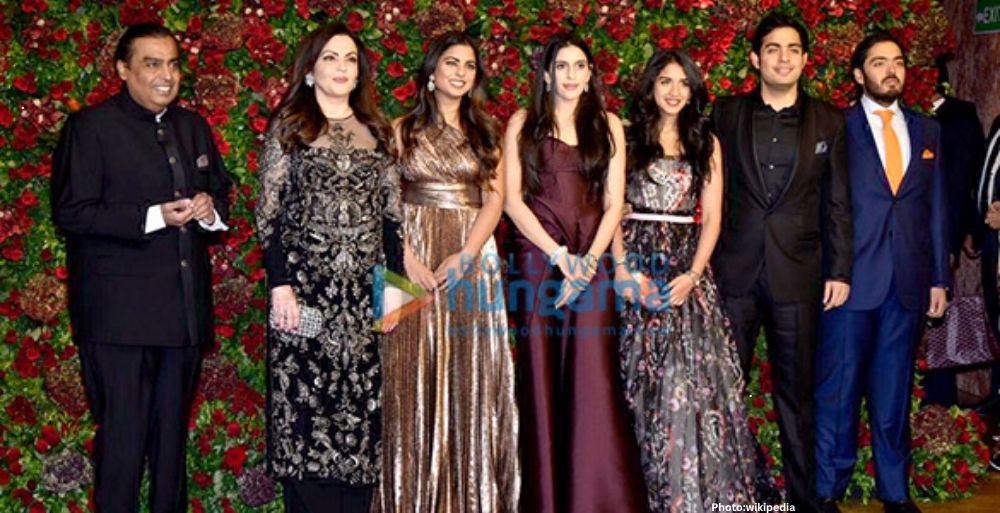
As of 2026, Asia is home to some of the world’s wealthiest families, with conglomerates that have shaped the economic fabric of their respective nations. The Ambani family in India leads the list with a staggering net worth of $89.7 billion, primarily through Reliance Industries and Jio Financial Services. Mukesh Ambani, the current head of the family business, has strategically expanded the conglomerate into various sectors, including technology, retail, and green energy, while the family legacy dates back to the late 1950s when Dhirubhai Ambani founded the precursor to Reliance Industries.
Following the Ambanis is the Kwok family in Hong Kong, with a fortune of $50.2 billion, stemming from their ownership of Sun Hung Kai Properties, one of the largest real estate developers in Hong Kong. This family’s wealth began with Kwok Tak-seng, who established the company in 1972. Their current leadership structure has seen a shift due to familial disputes, with Raymond Kwok now at the helm.
The Lee family, associated with Samsung in South Korea, ranks third with a wealth of $45.5 billion. Samsung’s origins trace back to 1938 when Lee Byung-chul founded it as a trading company. The company has undergone significant transformations and expansions over the decades, particularly under the leadership of Lee Kun-hee and currently Jay Y. Lee. Despite facing legal challenges, including a bribery conviction, Lee has been pivotal in steering Samsung towards advancements in technology and artificial intelligence.
Legacy and Expansion
In Thailand, the Chearavanont family, with a net worth of $44.8 billion, oversees Charoen Pokphand Group, a conglomerate founded in 1921. The family’s journey began with a seed-trading business, which has now evolved into a global enterprise with a strong presence in agriculture, retail, and telecommunications. The recent $580 million expansion plan for their retail arm underscores their ongoing commitment to growth.
The Zhang family in China has amassed a wealth of $44.7 billion through their ventures in aluminum and textiles, primarily with China Hongqiao and Shandong Weiqiao Textile. This family’s fortunes are linked to the economic reforms initiated by Deng Xiaoping in the late 20th century, which opened up opportunities for private enterprises.
In Taiwan, the Tsai family, with a wealth of $34.3 billion, has a significant stake in Cathay Financial and Fubon Financial. Their financial journey began with the founding of Cathay Life Insurance in 1962, and they have since diversified into real estate and telecommunications.
Food and Beverage Giants
The Yoovidhya family, known for their creation of the Red Bull energy drink, holds a net worth of $32.9 billion through TCP Group. Chaleo Yoovidhya’s initial venture into pharmaceuticals in 1956 paved the way for one of the most recognizable global brands in the beverage industry.
In Indonesia, the Hartono family, with a fortune of $30.2 billion, has made its mark through Djarum, one of the largest tobacco companies in the country, and Bank Central Asia. The family’s involvement in diverse sectors highlights their adaptability in the ever-evolving market.
Construction and Infrastructure
The Mistry family, controlling the Shapoorji Pallonji Group, has a wealth of $29.5 billion, with their business origins dating back to 1865. This long-standing family has diversified into various sectors, including real estate and infrastructure, and is significantly tied to Tata Sons.
Similarly, the Jindal family in India, with a net worth of $29.4 billion through OP Jindal Group, has established a robust presence in steel and energy, showcasing the impact of family legacies in contributing to the country’s industrial landscape.
Jewelry and Real Estate
The Cheng family, with a wealth of $28.0 billion, has its roots in the jewelry industry with Chow Tai Fook and has expanded into real estate with New World Development. Their strategic acquisitions have bolstered their financial standing in the competitive Hong Kong market.
In Hong Kong, Lee Shau-kee’s Henderson Land Development, valued at $26.1 billion, illustrates the intersection of real estate and legacy, as the company has grown significantly since its establishment in 1976.
Energy and Diversification
The Kadoorie family, with a net worth of $19.2 billion, has expanded across various sectors, including energy supply with CLP Holdings and hospitality, reflecting a diverse investment strategy that has stood the test of time.
Finally, the Bajaj Group, founded in 1926, has evolved into a conglomerate with a wealth of $17.0 billion, reflecting the family’s adaptability and forward-thinking approach in a rapidly changing economic landscape.
These families exemplify the intricate interplay between legacy, innovation, and adaptation in the Asian economic sphere, with their businesses not only contributing significantly to their countries’ GDPs but also influencing global markets.