
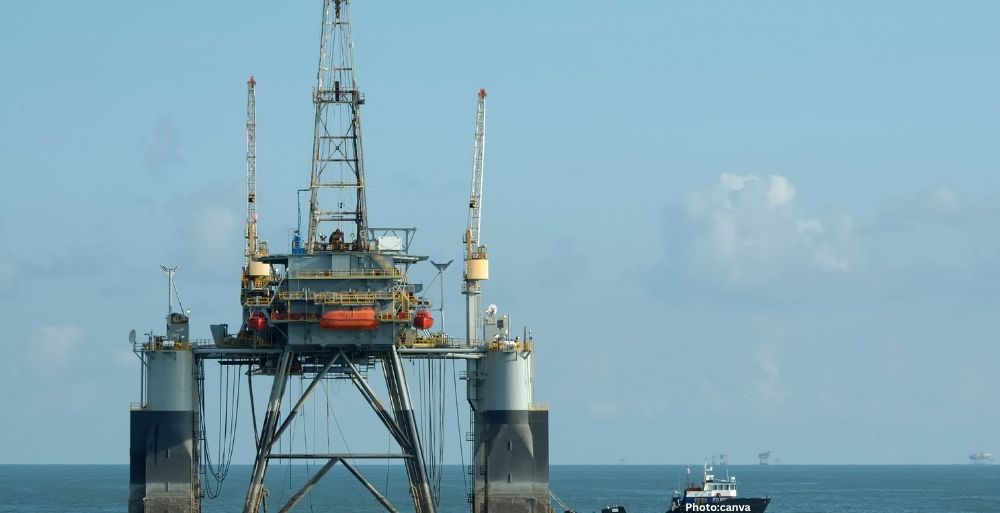
The ongoing conflict involving Iran has moved beyond the immediate theater of military engagement, creating a sophisticated ripple effect throughout the global supply chain. While consumers first felt the impact at the gasoline pump, the volatility of crude oil prices—now hovering near critical thresholds—is beginning to inflate the production costs of over 6,000 everyday items, from synthetic textiles and medical supplies to children’s toys. As manufacturers face double-digit increases in raw material costs, the economic burden is shifting from industrial refineries to the retail shelf, signaling a prolonged period of inflationary pressure on non-fuel consumer goods.
FORT LAUDERDALE, FL — While the geopolitical focus of the current Middle East conflict remains centered on military maneuvers and diplomatic negotiations, a quieter economic crisis is unfolding within the manufacturing sector. The war, now entering its eighth week of disrupted oil supplies, has exposed the profound reliance of the global consumer economy on petrochemicals. From the polyester fibers in children’s plush toys to the adhesives in medical bandages, the rising cost of crude oil is no longer just a transportation issue—it has become a fundamental production crisis.
The Hidden Oil in Everyday Life
The connection between a geopolitical conflict in the Persian Gulf and a stuffed toy in a Florida warehouse may seem tenuous to the casual observer, but for industry veterans like Ricardo Venegas, the link is direct and punishing. Venegas, the CEO of Aleni Brands, recently received notice from his suppliers in China that the materials for his “Snuggle Glove” and “Bizzikins” lines now cost between 10% and 15% more than they did before the outbreak of hostilities.
“I think this situation demonstrates how much oil permeates throughout our system, and we can’t get away from it,” Venegas stated during an interview at his distribution center, where the atmosphere was one of calculated concern. “Who would have thought that the price of a toy would have a direct relationship with oil?”
The reality is that crude oil is the primary feedstock for a vast array of synthetic materials. According to the U.S. Department of Energy, more than 6,000 consumer products rely on petrochemical derivatives. While 85% of global oil consumption is burned as fuel, the remaining 15% provides the chemical scaffolding for modern life.
The Chemistry of Modern Manufacturing
To understand why a conflict in the Middle East raises the price of a button-down shirt or a pair of sneakers, one must look at the molecular level of production. Crude oil is a complex mixture of hydrocarbons. Refineries break these down into six foundational petrochemicals: ethylene, propylene, butylene, benzene, toluene, and xylenes.
These chemicals are the building blocks for:
- Polyester and Nylon: Used in 60% of global apparel.
- Polyvinyl Chloride (PVC): Essential for construction and household plumbing.
- Synthetic Rubber: Critical for the automotive and footwear industries.
- Adhesives and Resins: Found in everything from scotch tape to high-tech medical dressings.
Andrew Walberer, a partner at the global consultancy Kearney, notes that for many manufacturers, raw materials account for 27% to 30% of total production costs. “When the base feedstock—oil—sees a sustained price hike, there is very little room for manufacturers to maneuver without adjusting their final wholesale prices,” Walberer explained.
The $90 Barrel Threshold and Retail Impact
Economists and industry analysts are closely monitoring the $90 per barrel mark. Experts suggest that if oil remains above this threshold for several months, the “temporary” surcharges currently being absorbed by manufacturers will inevitably be passed on to consumers.
The footwear industry is particularly vulnerable. Matt Priest, CEO of the Footwear Distributors and Retailers of America (FDRA), released a report indicating that 70% of the materials in synthetic shoes are petrochemical-based. The FDRA analysis suggests that current oil price swings could translate into a 1.5% to 3% increase in retail shoe prices by the fall shopping season.
The timing is particularly perilous for the apparel sector. Nate Herman, executive vice president of the American Apparel & Footwear Association, noted that April is the traditional month for signing supplier contracts for the holiday season. The price of polyester staple fiber has surged from a pre-conflict average of 90 cents per kilogram to approximately $1.33 per kilogram. This 47% increase in raw material costs is expected to add 10 to 15 cents to the production cost of every individual garment.
Strategies of Survival: Stockpiling and Price Hikes
Individual business owners are adopting various strategies to hedge against further volatility. Lisa Lane, founder of the pet-care company Rinseroo, recently made the high-stakes decision to triple her monthly order of slip-on hoses. After being warned of a 30% price hike from her Chinese manufacturer, Lane purchased 240,000 units instead of her standard 80,000.
“We want to stay at that sweet spot where people want to continue to buy from us,” Lane said, noting that her products utilize PVC, a direct petroleum derivative. Having already raised prices last year due to tariffs, she expressed a deep reluctance to pass further costs onto her customers, though she admitted that her “cushion” is thinning.
In the medical sector, the pressure is even more acute. David Navazio, CEO of Gentell, a Pennsylvania-based manufacturer of wound care products, announced plans to raise prices by 15% within weeks. His products—including bandages and surgical dressings—rely heavily on petroleum-based adhesives.
“In the past, I’ve seen transportation costs come down, but I’ve never seen prices of raw material come down,” Navazio remarked with a tone of grim pragmatism. Because medical supplies are non-discretionary necessities, he anticipates that while his costs have risen by 20%, the market will have no choice but to accept the higher price points.
Long-term Economic Outlook
As the conflict continues, the “ripple effect” described by analysts is turning into a steady tide of inflation. The geopolitical instability in the Middle East has created a dual-threat environment: higher costs to move goods (via diesel and jet fuel) and higher costs to create them (via petrochemicals).
While the Federal Reserve and international monitoring bodies continue to watch the Consumer Price Index (CPI), these “hidden” oil costs in non-energy goods may prove more persistent than the fluctuations at the gas station. For the average consumer, the cost of the war may soon be measured not just in liters and gallons, but in the price of a toothbrush, a pair of running shoes, or a child’s toy.