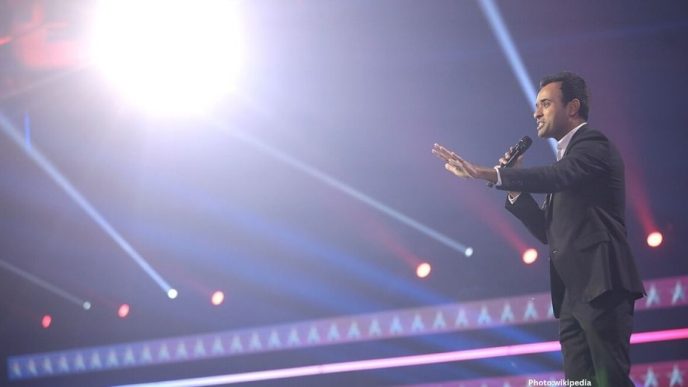
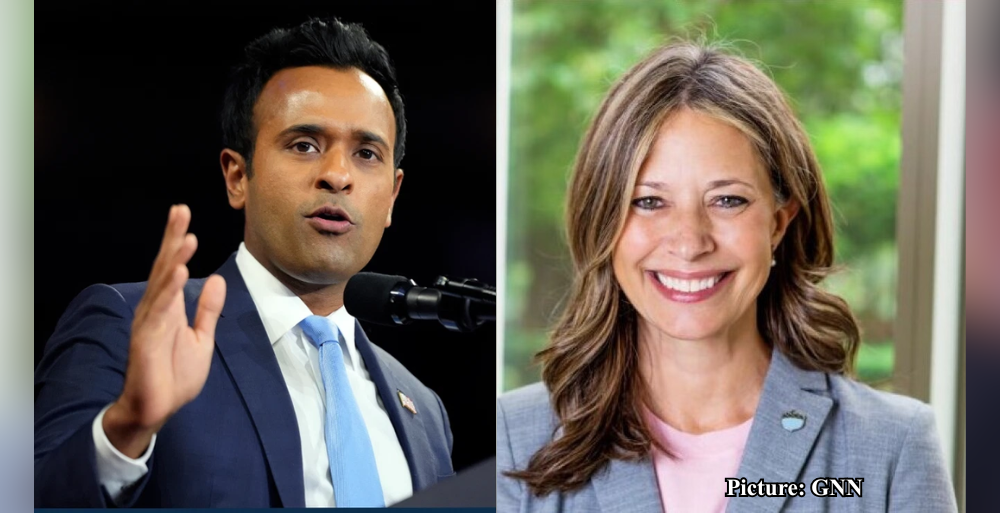
A recent poll indicates a competitive landscape in the Ohio gubernatorial race as Republican Vivek Ramaswamy and Democrat Amy Acton are nearly tied, reflecting significant voter sentiment as Election Day approaches.
A newly released poll from Bowling Green State University (BGSU) has highlighted the intense competition in the Ohio gubernatorial race, revealing that Republican frontrunner Vivek Ramaswamy is in a statistical dead heat with presumed Democratic nominee Amy Acton. The survey, conducted among 1,000 registered voters in Ohio, shows Ramaswamy receiving 48 percent of support compared to Acton’s 47 percent, with a margin of error of 3.9 percentage points. This close contest underscores the significance of voter preference as the election approaches in November.
Ramaswamy, a businessman and former candidate for the 2024 Republican presidential nomination, is also positioned as the clear favorite in the Republican primary. According to the poll, more than three-quarters of 383 GOP respondents indicated their preference for him as the party’s nominee. In contrast, support for his primary competitors, businessman Casey Putsch and former Morgan Local School District Board President Heather Hill, each stands at 12 percent.
Candidate Profiles and Campaign Strategies
Amy Acton, who previously served as the director of the Ohio Department of Health under Governor Mike DeWine, is running unopposed in the upcoming Democratic primary scheduled for May 5. Early in-person voting commenced on April 7 and will continue until May 3, as confirmed by Ohio Secretary of State Frank LaRose. Acton’s campaign focuses heavily on addressing rising living costs and combating corruption in state governance, emphasizing a platform aimed at supporting hardworking Ohioans. She recently expressed her commitment on social media, stating, “As governor, it will be my mission to bring down rising costs and end the corruption in Columbus so that hardworking Ohioans can get ahead again.”
Ramaswamy, on the other hand, has centered his campaign around economic issues, advocating for policies that promise lower costs, increased wages, and enhanced educational standards. In a recent appearance on Fox News’s “Jesse Watters Primetime,” he articulated his vision for Ohio’s future: “What can we deliver? Continually lower costs, bigger paychecks, better schools. A revival of that American dream, on this 250th anniversary of our Declaration of Independence.” Such statements reflect a broader narrative of economic revival that Ramaswamy seeks to associate with his candidacy.
Voter Sentiment and Trends
The BGSU poll also revealed that 5 percent of respondents are considering backing other candidates, indicating a potential fragmentation of voter support as Election Day approaches. Particularly noteworthy is the response from Putsch’s supporters; of the 47 respondents who indicated support for him, 23 percent would still write his name on their ballot in November, even if he does not secure the GOP nomination. Among this group, over half expressed a willingness to support Ramaswamy, while 13 percent indicated they would vote for Acton. This dynamic suggests that Ramaswamy may benefit from Putsch’s supporters if he secures the nomination.
The current political climate in Ohio was further illuminated by the polling data. A mere 7 percent of respondents expressed strong approval of Governor DeWine’s performance, while one-third somewhat approved, and over half conveyed varying degrees of disapproval. This sentiment may create an opening for both Ramaswamy and Acton to capitalize on voter dissatisfaction with the incumbent administration.
Moreover, 46 percent of voters believe Ohio is on the wrong track, contrasting sharply with the 35 percent who feel the state is moving in the right direction, while 18 percent remained uncertain. Such perceptions could be crucial in shaping voter decisions, as dissatisfaction with current leadership often influences electoral outcomes.
Economic Context and Implications
Ohio’s economic landscape plays a significant role in the gubernatorial race. The Missouri Economic Research and Information Center recently reported that in 2025, Ohio had the 23rd-lowest cost of living among all 50 states, Puerto Rico, and Washington, D.C. Comparatively, Ohio’s cost of living was lower than that of neighboring Pennsylvania but higher than that of Michigan, Indiana, Kentucky, and West Virginia. This economic backdrop may significantly influence voter concerns and priorities, particularly regarding affordability and job opportunities.
Looking Ahead: The Road to Election Day
The upcoming gubernatorial election in Ohio is poised to be a pivotal moment in the state’s political landscape, especially given the close polling numbers and the dissatisfaction with the current administration. The winner will succeed Mike DeWine, a two-term incumbent whose leadership has been a focal point in the race. As both Ramaswamy and Acton ramp up their campaigns leading into the primary and general elections, voter engagement and sentiment will be critical. The candidates’ ability to address the pressing concerns of Ohioans—particularly regarding economic issues and governance integrity—will likely determine the outcome of this closely watched race.