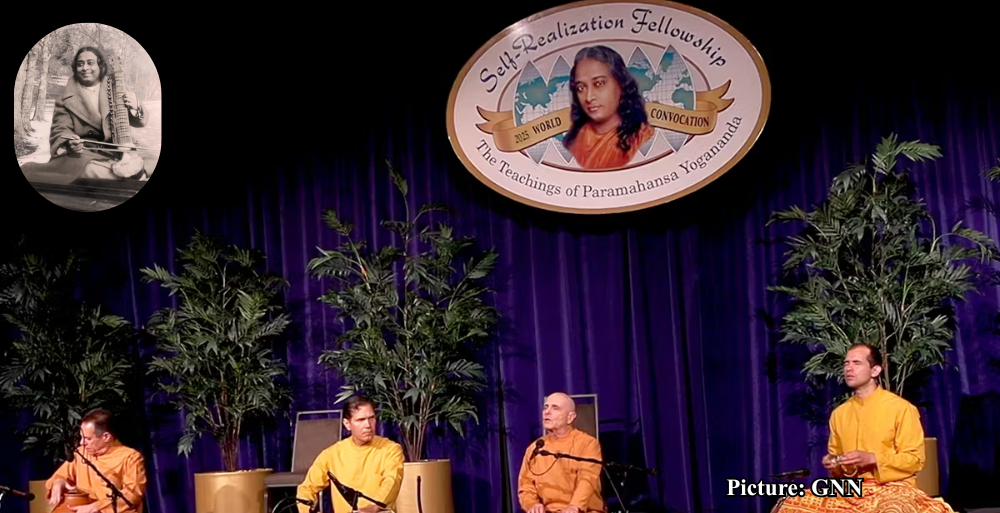
A concert at Carnegie Hall on April 18 will commemorate the legacy of Paramahansa Yogananda, featuring kirtan, a devotional music form that has gained popularity in the West over the past century.
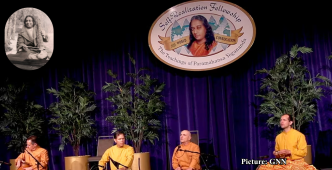
NEW YORK (RNS) — On April 18, 2026, Carnegie Hall will host a concert titled “The Divine Art of Music,” commemorating the 100th anniversary of a historic event where Indian Hindu monk Paramahansa Yogananda addressed nearly 3,000 attendees at the iconic venue. This moment in 1926 marked a pivotal introduction of Eastern spiritual practices to a Western audience, as Yogananda led the crowd in a kirtan, a form of devotional singing that has since become a significant element in promoting Indian spirituality in the West.
Yogananda, author of the influential book “Autobiography of a Yogi,” is recognized for paving the way for the acceptance of yoga and Eastern philosophy in America. During his original performance, he captivated the audience for an hour and 25 minutes with chants, including an English rendition of the sacred hymn “O God Beautiful,” attributed to Sikh Guru Nanak. Despite being advised by his companions that the audience might not connect with Eastern music, the event proved to be a profound success, resonating deeply with those present.
Yogananda’s Influence on American Spirituality
“In 1926, the consciousness of people was different; they were unfamiliar with Indian teachers and gurus,” said Brother Devananda, a monk in Yogananda’s Self-Realization Fellowship (SRF). “But to draw in thousands and engage them in chant held special significance.” The upcoming concert aims to replicate this experience, emphasizing the “art and science” of kirtan and acknowledging Yogananda’s role in introducing this form of mantra meditation to the West.
Over the past century, music has emerged as a vital portal for many individuals exploring Indian spirituality, with the Self-Realization Fellowship witnessing a notable increase in interest from younger generations. “Many of these tunes and words are ancient,” Devananda emphasized. “Chanting transforms consciousness and prepares us for deep meditation.”
Music as a Spiritual Practice
Paramahansa Yogananda, born in 1893, was dispatched to the United States by his guru at the age of 27 to disseminate yogic teachings. His impact was significant enough that he became the first prominent Indian to be received at the White House and was referred to by the Los Angeles Times as the “20th century’s first superstar guru.” Many consider him a foundational figure in the modern American yoga movement, particularly in Los Angeles, where he established a lasting influence.
Guy Beck, a religion professor at Tulane University, noted that the tradition of devotional singing, including kirtan and bhajan, functions as a form of liturgy within Hinduism. “The collective energy derived from singing together is powerful,” Beck explained. “In the West, congregational singing achieves a similar result, where participants are unified by the music and lyrics.” Beck’s research demonstrates that communal singing fosters a shared spiritual experience, enhancing both emotional and communal bonds among participants.
Generational Shifts in Spiritual Engagement
For many within the Dharmic traditions, kirtans serve as a method to evoke spiritual imagery, allowing participants to envision the Divine through repetitive melodies and lyrics. “Even if you don’t fully grasp the meaning, the melody holds spiritual value,” Beck added. His observations indicate that kirtans often attract diverse audiences, uniting individuals of various ages and backgrounds in shared spiritual expression.
Abhita Austin, a Long Island native and member of the Self-Realization Fellowship, shared her personal connection to kirtan. Initially less engaged with her family’s spiritual practices, she found that kirtan became her “first touchpoint” with Yogananda’s teachings. “It was the first time in a group setting I felt peace and love,” Austin recalled, emphasizing the accessibility of kirtan for people of all ages. Now, as a volunteer for the upcoming Carnegie Hall concert, she reflects on how the world’s current challenges have heightened a collective yearning for inner tranquility.
“The world is a hot mess,” Austin stated candidly. “There’s a lot of instability and insecurity with various political events affecting our lives. People are increasingly looking for inner peace.” She articulated that Yogananda’s teachings resonate more than ever, suggesting that the guru’s philosophy is emerging as a guiding light in today’s tumultuous times.
As the concert approaches, the Self-Realization Fellowship continues to foster a community dedicated to exploring the spiritual and transformative power of kirtan, reinforcing Yogananda’s lasting legacy a century after his groundbreaking arrival in the West.