The Indo-American Community Federation (IACF) commemorated its 25th anniversary of the Unity Dinner on April 3, 2023, at the India Community Center, highlighting the transformative potential of artificial intelligence (AI) in local communities.
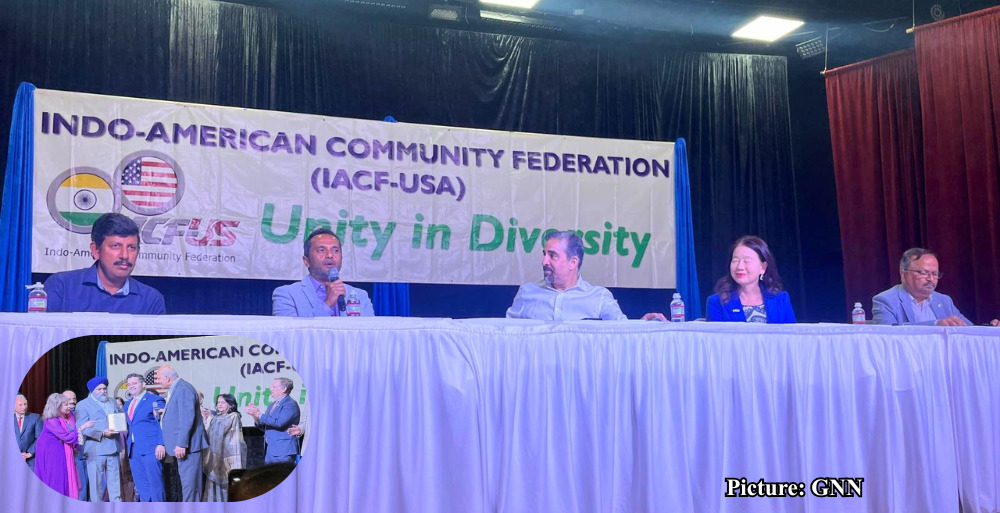
The Indo-American Community Federation marked its 25th anniversary of the Unity Dinner on April 3, 2023, at the India Community Center in Milpitas, California. The event brought together technology and civic leaders to discuss the theme “The Future of AI and Its Impact on Our Communities,” emphasizing the organization’s commitment to cultural exchange and community empowerment. Founded 32 years ago by Jeevan Zutshi, the IACF has focused on fostering a sense of unity among diverse communities.
Panel Discussion on AI Governance
A central feature of the evening was a panel discussion led by Tasawar Jalali, the author of “Applied AI Governance.” Jalali facilitated a conversation with experts from various fields, including cybersecurity, healthcare, government, and enterprise technology. He expressed concerns about the rapid advancement of AI technology potentially outpacing necessary institutional oversight. According to Jalali, effective governance will play a critical role in determining the societal impact of AI.
“We serve not just the technology, but the trust, the jobs, and the governance gaps that come with it,” Jalali stated, highlighting the multifaceted implications of AI in urban services, healthcare decision-making, and enterprise operations. He cautioned that the effectiveness of AI will depend less on the technology itself and more on the responsibility with which institutions govern its use.
Jalali further elaborated on the complexities faced by public agencies in adopting AI, citing regulatory hurdles and a general aversion to risk as significant barriers. He remarked, “Moving fast without governance is not innovation; it is unmanaged risk,” underscoring the need for a balanced approach to innovation.
Accountability and Ethical Considerations
During the discussion, the issue of accountability in AI systems was raised, particularly regarding liability when automated decisions cause harm. Jalali questioned existing legal frameworks, which are primarily designed for human decision-makers, asking, “When an AI system takes an action that causes harm to a resident, who is liable?” He emphasized the importance of using AI to strengthen public trust rather than undermine it.
Lily Mei, former mayor of Fremont, California, and a panelist, echoed Jalali’s concerns about trust within communities. “Trust is the foundation of any strong community, yet right now that foundation is under real strain,” she commented, noting that many individuals feel excluded from the decision-making process. Mei underscored the importance of leadership in addressing these issues and fostering inclusivity.
Navigating the ‘Gray Areas’ of AI
Jalali also pointed out the existence of “gray areas” within AI operations, where systems may function correctly yet still lead to unintended consequences such as financial loss or regulatory violations. He stated, “The gray areas are where AI systems can authenticate correctly, call the right APIs, and still cause financial loss or privacy violations.” This highlights the need for ongoing monitoring and accountability in AI applications.
In discussing the evolving role of Chief Information Security Officers (CISOs), Jalali noted that their responsibilities are expanding to include the governance of AI systems in real-time rather than focusing solely on external threats. “The CISO is the only executive positioned to close that gap,” he remarked.
Optimism Amid Job Security Concerns
Panelist Krishnan Chellakarai addressed prevalent concerns about job security due to rapid AI adoption and recent layoffs in the technology sector, offering a more optimistic perspective. “I think AI is going to actually help,” he stated, suggesting that AI will necessitate a shift in the workforce toward higher-level skills, emphasizing system design and architecture over mere task execution.
Chellakarai acknowledged that while AI can assist with coding and automation, human expertise will remain essential for integrating and guiding these systems. “People will have to really upskill themselves and think like an architect,” he advised, noting that AI’s influence extends beyond technology, impacting various sectors across the economy. He stressed the crucial need for human oversight as automation continues to expand.
The Role of Education and Community Support
Highlighting the educational implications of AI, Chellakarai asserted that traditional educational frameworks must evolve to incorporate AI-specific skills and promote continuous learning. “AI is changing every two to three months,” he stated, emphasizing the importance of adapting to rapid technological advancements.
He also noted that nonprofit organizations and community platforms could play a pivotal role in facilitating ongoing training and development opportunities for workers in this evolving landscape. “While AI may automate tasks, it cannot automate vision,” Chellakarai concluded, reinforcing the necessity for human creativity and oversight.
Cybersecurity Challenges in the AI Era
Another panelist, Moinul Khan, CEO and co-founder of Aurascape, focused on the implications of AI for cybersecurity. “AI is going to disrupt the way we think about cybersecurity; the entire paradigm is changing,” he stated. Khan explained that traditional security approaches, which were designed for static environments, are ill-equipped to handle the dynamic nature of AI systems that evolve in real-time.
He pointed out that the treatment of AI agents within digital systems is changing, as they increasingly function like non-human employees, creating new challenges for authentication and accountability. “If one of the AI agents misbehaves and spends money improperly, the bank is responsible,” he noted, indicating a shift in how organizations perceive AI security—from a cost center to an enabler of new opportunities.
Khan called for new security architectures tailored specifically for AI-driven environments, arguing that legacy tools are insufficient in the face of evolving threats. “Traditional security tools were built for a different era; AI breaks those assumptions,” he articulated, urging startups and technologists to focus on solving complex problems rather than seeking quick wins.