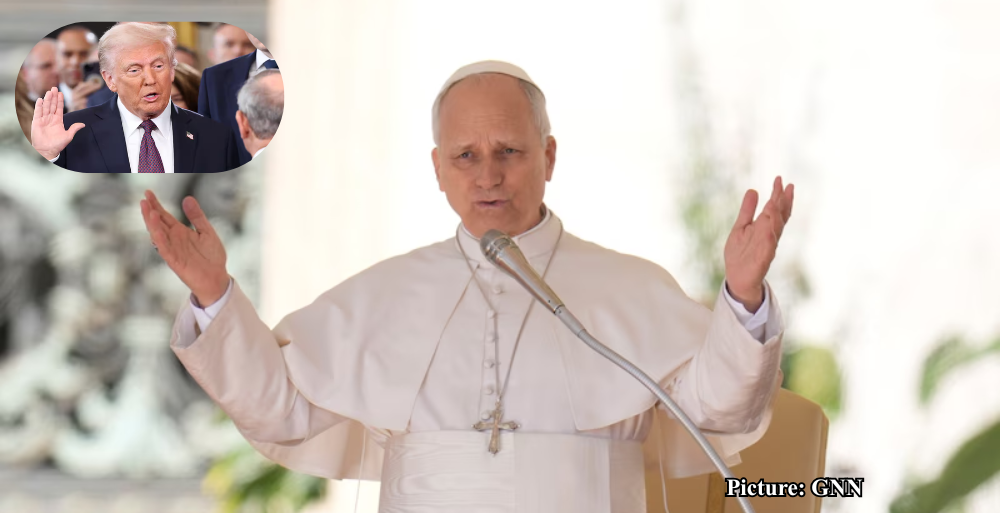
A rare and significant clash between Pope Leo XIV and President Donald Trump highlights diverging views on the ongoing conflict in Iran, reflecting a broader cultural and political divide.
In an unprecedented development, Pope Leo XIV has openly criticized U.S. President Donald Trump regarding the conflict in Iran, marking a notable moment in the relationship between the Vatican and Washington. This confrontation comes as a fragile ceasefire was announced in the region, with the pontiff describing Trump’s aggressive stance as “truly unacceptable.” This situation raises questions about the implications of such high-profile criticism from the leader of the Catholic Church, particularly as both figures represent contrasting facets of American identity.
Historical Context of Papal Criticism
Traditionally, popes have refrained from directly criticizing U.S. leaders, but Pope Leo’s remarks signal a shift in this dynamic. In his comments during Palm Sunday services, Leo addressed the impact of warfare, asserting that God does not listen to the prayers of those who wage war, referencing a passage from Isaiah that underscores the moral dimensions of conflict. This critique aligns with a long-standing tradition within the Catholic Church advocating for peace and the development of international norms, a perspective articulated by Catholic University professor William Barbieri, who emphasized the church’s historical role in shaping humanitarian laws.
Contrasting Perspectives on Iran
The U.S. administration, bolstered by a coalition of conservative evangelical leaders, has framed its military actions in Iran as divinely sanctioned. Defense Secretary Pete Hegseth called upon Americans to pray for victory “in the name of Jesus Christ,” while Trump has expressed his belief that God supports the war effort. The Rev. Franklin Graham, a prominent evangelical leader, echoed this sentiment, suggesting that Trump was “raised up for such a time as this” to lead the nation in this conflict.
In stark contrast, Leo’s statements reflect a deep-seated theological opposition to violent conflict, emphasizing the need for compassion and understanding. His direct comments regarding Trump’s threats to Iranian infrastructure were particularly pointed, labeling them as a “threat against the entire people of Iran” and reinforcing the notion that such aggressive rhetoric is incompatible with Christian values.
The Personal Dynamics at Play
The relationship between Trump and Leo is particularly nuanced, as both men share generational and cultural backgrounds yet embody vastly different ideologies and life experiences. Theology professor Natalia Imperatori-Lee from Fordham University noted that while both are white males from the baby boomer generation, their divergent values and approaches to leadership present a stark contrast. This divergence may represent a critical moment for American Christianity, with implications extending beyond their personal interactions.
Trump had previously welcomed Leo’s election to the papacy as a “great honor” for the United States, but the recent criticisms have not elicited a response from the White House. Experts suggest that the polarization surrounding this relationship poses risks for both the pope and the president, especially as public sentiment shifts. While Trump may face declining support among Catholic voters, the reasons behind this shift may not directly correlate with the church’s teachings.
Implications for American Politics
The conflict between Trump and Leo also highlights broader issues within American society, particularly the tendency for partisan loyalties to overshadow religious commitments. Steven Millies, a professor at Chicago’s Catholic Theological Union, emphasized that many Catholics may prioritize political affiliations over ecclesiastical guidance in shaping their views on contentious issues. This phenomenon creates a disconnect between church leaders and the laity, complicating the effectiveness of papal messages in influencing political behavior.
The Vatican’s response to reports of tension between Pentagon officials and church representatives further illustrates the complexities at play. Following allegations of a contentious meeting, the Vatican issued a statement rejecting the characterization of the encounter, asserting that it did not reflect the truth. The U.S. Embassy to the Holy See echoed these sentiments, suggesting that misrepresentations could exacerbate divisions.
Global and Domestic Perspectives
Pope Leo XIV, having spent significant time abroad, particularly in regions impacted by U.S. foreign policy, brings a unique perspective to his role as pontiff. His experiences in Latin America and as a canon lawyer provide him with insights into the ramifications of U.S. military and economic interventions. This background contrasts sharply with Trump’s more transactional approach to international relations, which often emphasizes binary distinctions between allies and adversaries.
As both leaders navigate their respective spheres of influence, the implications of their clash over Iran will likely resonate within the broader context of U.S. foreign policy and domestic politics. The ongoing dialogue—or lack thereof—between the Vatican and the White House may redefine not only their relationship but also the role of faith in American political life.