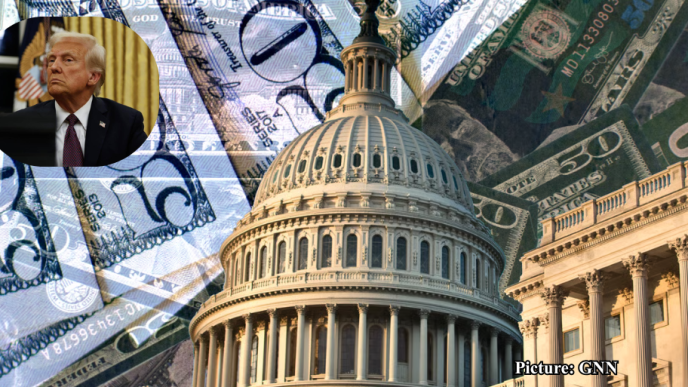

The U.S. government is currently spending approximately $88 billion each month on interest payments for its national debt, a figure that rivals federal expenditures on defense and education, raising concerns about fiscal sustainability.
As of October 2023, the financial burden of the United States national debt has escalated to a staggering $31 trillion, with monthly interest payments reaching $88 billion. This significant figure aligns closely with federal spending in key areas such as defense and education, prompting urgent discussions among policymakers, economists, and the public regarding the sustainability of such financial commitments.
Current Financial Landscape
The national debt of the United States has been a growing concern for decades, particularly as it has recently crossed the $31 trillion mark. According to data from the U.S. Treasury Department, the interest payments on this debt now consume an alarming portion of the federal budget. The $88 billion spent monthly translates to over $1 trillion annually, which is nearly equivalent to the total federal expenditures on defense, projected at approximately $773 billion for fiscal year 2022, and education, which accounted for about $76 billion in the same period.
These escalating costs are largely attributed to rising interest rates, driven by the Federal Reserve’s recent monetary policy aimed at curbing inflation. As the Federal Reserve has implemented successive rate hikes, the cost of borrowing has increased, compounding the financial obligations of the federal government. The Congressional Budget Office (CBO) has indicated that interest payments are expected to rise significantly in the coming years, with projections suggesting that by fiscal year 2025, interest payments could exceed $800 billion annually.
Comparative Spending Analysis
The juxtaposition of monthly interest payments to essential federal spending categories has raised alarms among economists and policymakers alike. In fiscal year 2022, for instance, defense spending dwarfed education expenditures, yet the monthly interest payments on the national debt nearly equal the combined totals of these two critical areas. The implications of such spending are profound; economists warn that sustained high levels of interest payments could severely restrict the government’s ability to fund vital initiatives in infrastructure, healthcare, and education.
“When interest payments consume such a substantial part of the budget, it inevitably affects the funds available for other essential services,” noted Sara Johnson, an economist at a prominent economic think tank. “This trend is troubling as it could hinder economic growth and affect public welfare in the long run.” Her insights highlight a growing concern that the government may face difficult choices between servicing debt and funding critical services that support the American populace.
Political Reactions and Future Implications
The ongoing rise in interest payments has ignited debates among political leaders regarding fiscal policy and budgetary priorities. Some lawmakers are advocating for measures to reduce the national deficit, arguing that a balanced budget would ease the pressure of interest payments. Conversely, others warn that cuts to essential services to manage the debt could negatively impact vulnerable populations and hinder economic growth.
The Biden administration has emphasized the importance of a balanced approach to economic recovery, advocating for significant investments in infrastructure and education while simultaneously managing the national debt. In a recent statement, President Biden acknowledged the challenges posed by rising interest payments but expressed optimism that robust economic growth could help mitigate some of these fiscal pressures. “We need to ensure that we are not just focusing on cutting spending, but also on creating jobs and fostering growth,” Biden remarked, underlining the dual objective of promoting economic expansion while addressing the national debt.
The complexities surrounding the national debt and interest payments are not new; they have been a persistent part of the American political narrative for decades. The debt ceiling has often been a contentious issue within Congress, with negotiations leading to temporary solutions rather than sustainable resolutions. This bipartisan debate reflects a collective concern about fiscal responsibility while highlighting the divergent opinions on the best pathways to achieve it.
Historical Context and Broader Implications
Historically, the management of the national debt has been a balancing act for U.S. policymakers. The post-World War II era saw the national debt grow significantly, with various administrations implementing measures to manage and reduce it. However, the trend of increasing debt has accelerated in recent years, influenced by factors such as tax cuts, increased spending on social programs, and the financial implications of the COVID-19 pandemic.
As the U.S. confronts these pressing financial challenges, the ramifications of high interest payments on the national debt are likely to extend into both economic and political realms. The necessity for policymakers to strike a balance between maintaining fiscal responsibility and investing in the nation’s future remains a crucial challenge. The dialogue surrounding these issues is expected to shape budgetary priorities and fiscal policy decisions in the years to come, with significant implications for American society and the economy.
As the national debt crisis continues to loom, the need for informed discussions about fiscal management and budget allocations has never been more pressing. The trajectory of U.S. economic policy will be closely monitored, as the outcomes will not only affect government operations but also the everyday lives of millions of Americans who rely on federal services and support.