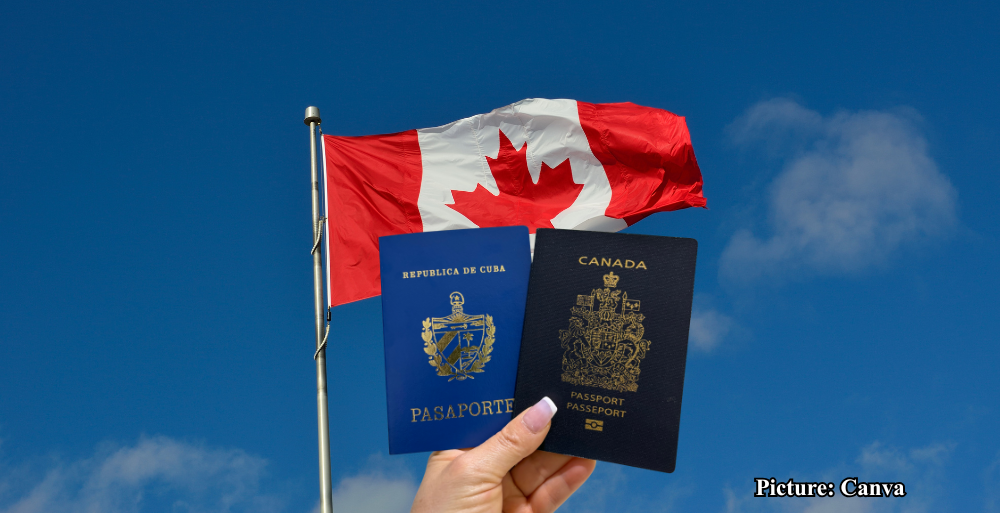
A recent update to Canada’s Citizenship Act has opened new pathways for Americans with Canadian ancestry to claim citizenship, though the process remains complex and bureaucratic.
April 3, 2026 – In a significant legislative development, Canada has amended its Citizenship Act, enabling many Americans with Canadian ancestry to apply for citizenship by descent. This change is particularly relevant for individuals with Canadian parents or grandparents, who are now reassessing their eligibility in light of the new provisions. The amendment aims to rectify longstanding generational cutoffs that have historically limited the ability of descendants to claim Canadian citizenship.
The law, which took effect on December 15, 2025, is designed to benefit individuals born before this date. According to Audrey Macklin, a law professor at the University of Toronto, the revision allows individuals to qualify for citizenship if they can adequately document their Canadian lineage. Macklin emphasized the importance of understanding the eligibility criteria set forth by Immigration, Refugees and Citizenship Canada (IRCC) to ensure successful applications.
Eligibility Criteria Under the New Law
To qualify for Canadian citizenship by descent under the new regulations, applicants must meet several specific requirements. These include:
- Being born before December 15, 2025.
- Having at least one parent recognized as a Canadian citizen by descent.
- Providing official documentation that establishes a direct family connection to Canada.
Conversely, potential applicants might find themselves ineligible if:
- Their parent is not recognized as a Canadian citizen by descent.
- They were born after December 15, 2025, and their Canadian parent did not reside in Canada for a minimum of three years prior to their birth or adoption.
Documentation Requirements and Processing Challenges
Individuals seeking to claim citizenship must prepare a substantial amount of documentation to support their applications. This often includes various certificates such as birth, marriage, and death records, alongside immigration or census documents that trace a direct lineage to a Canadian-born ancestor. Experts have noted that while the eligibility criteria have become more accessible, the application process remains arduous and complex, often requiring a significant investment of time and resources.
According to data from the IRCC, approximately 12,430 applications for proof of citizenship were received worldwide between December 15, 2025, and January 31, 2026. Notably, nearly 3,000 of these applicants were confirmed as Canadian citizens as a result of the recent legislative changes. However, Macklin pointed out that proving citizenship by descent can be fraught with challenges, describing the process as a potential “bureaucratic nightmare.” Applicants may need to trace their lineage across multiple generations, which can complicate their efforts.
Furthermore, the IRCC has indicated that the estimated processing time for citizenship applications is approximately ten months. This timeframe raises concerns about possible delays that could frustrate applicants eager to secure their Canadian citizenship.
Resources for Genealogical Research
In light of the increased interest in citizenship applications, the Canadian government is directing prospective applicants to various genealogical resources to aid them in gathering the necessary documentation. Library and Archives Canada, for example, maintains an extensive collection of records, including census data and limited collections of birth, marriage, and death certificates. These records are often crucial in verifying an applicant’s ancestral ties to Canada, facilitating the citizenship application process.
Meghan Laidlaw, acting director of client services at Library and Archives Canada, reported a substantial rise in online searches for records since the law’s amendment, with web traffic jumping from an average of 12,000 hits per day in late 2025 to approximately 60,000 hits daily in early 2026. Laidlaw noted that while a considerable portion of the library’s genealogical records are accessible online and in person, applicants should not assume they will find all necessary documents in one place. She cautioned that the process could be frustrating for those expecting to gather all required evidence quickly.
As interest in obtaining Canadian citizenship surges among Americans, it is evident that while the legislative changes have loosened the regulations governing citizenship by descent, the bureaucratic challenges persist. The complexities associated with tracing genealogical records and the lengthy processing times underscore the hurdles that applicants must navigate to reconnect with their Canadian heritage. The IRCC continues to encourage individuals to prepare thoroughly and seek assistance where necessary to facilitate their applications.
In conclusion, the recent amendments to Canada’s Citizenship Act represent a significant opportunity for many Americans to explore their eligibility for Canadian citizenship. However, the success of such applications will largely depend on the applicants’ ability to provide comprehensive documentation and navigate the complexities of the application process.