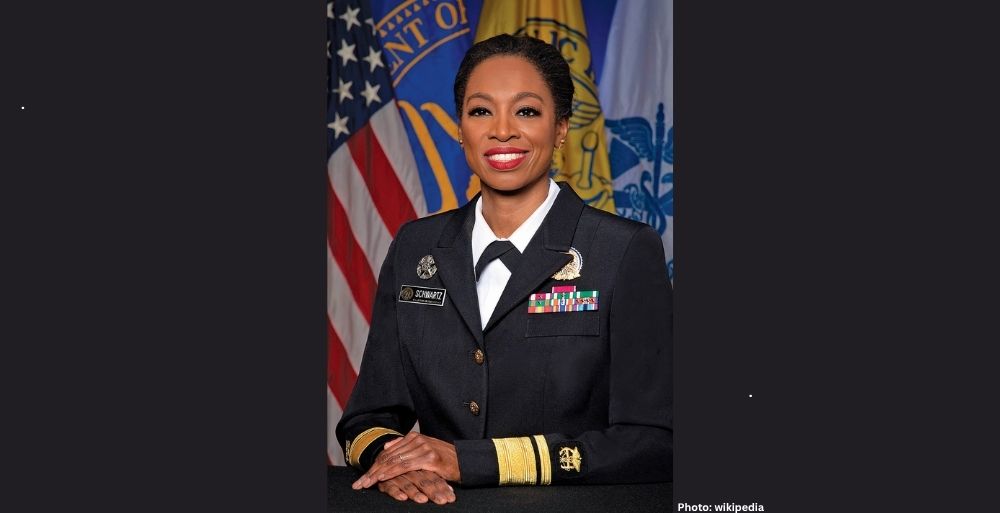
President Trump has nominated Erica Schwartz, a seasoned public health veteran, to lead the Centers for Disease Control and Prevention, marking a potential pivot away from previous vaccine skepticism within his administration as the midterm elections approach.
On Thursday, President Donald Trump announced the nomination of Erica Schwartz as the new director of the Centers for Disease Control and Prevention (CDC). This decision is viewed as a significant indication that the Trump administration may be moving away from a previously skeptical stance on vaccinations, particularly as the midterm elections are on the horizon.
If confirmed, Schwartz will be the fourth individual to head the CDC in less than a year and its second full-time director. The previous Senate-confirmed director, Susan Monarez, was dismissed by Health Secretary Robert F. Kennedy Jr. less than a month into her tenure, following a disagreement regarding vaccine policies.
In a post on Truth Social, Trump praised Schwartz’s qualifications, stating, “Erica graduated from Brown University for College and Medical School, and served a distinguished career as a Doctor of Medicine in the United States Military, the Greatest and Most Powerful Force in the World, and then served as my Deputy Surgeon General during my First Term. She is a STAR!”
Background on Erica Schwartz
Schwartz’s background in public health positions her as a traditional choice for the CDC director role. She has no known public record opposing vaccinations and lacks ties to the Make America Healthy Again (MAHA) movement, which has been characterized by its critical views on vaccine mandates.
Prior to her role as deputy surgeon general, Schwartz served as the chief medical officer for the U.S. Coast Guard, where she was responsible for overseeing disease surveillance programs and formulating policies related to pandemic influenza, Ebola, and other viral outbreaks. Jerome Adams, who served as surgeon general during Trump’s first term, commended Schwartz’s capabilities, describing her as a “battle-tested leader” with the necessary expertise and integrity to lead the CDC effectively.
Adams noted, “If allowed to follow the science without political interference, she’ll excel,” highlighting the importance of maintaining scientific integrity in public health decisions.
New Leadership Team and Agency Challenges
Alongside Schwartz, Trump announced the appointments of three other officials to key positions at the CDC. Sean Slovenski, the former president of Walmart Health, was named Deputy Director and Chief Operating Officer; Jennifer Shuford, the commissioner of the Texas Department of State Health Services, will serve as Deputy Director and Chief Medical Officer; and Sara Brenner, Principal Deputy Commissioner at the FDA, will take on the role of Senior Counselor for Public Health to Kennedy.
Trump emphasized their qualifications, stating, “These Highly Respected Doctors of Medicine have the knowledge, experience, and TOP degrees to restore the GOLD STANDARD OF SCIENCE at the CDC.” This new leadership comes at a time when the CDC has faced numerous challenges, including mass firings, budget cuts, and criticism from within the administration.
Political Context and Vaccine Policy Shifts
Schwartz’s nomination appears to be part of a broader strategy by the White House to recalibrate its messaging on vaccines ahead of the November midterm elections. Recent polling indicates that public sentiment remains largely supportive of vaccines, contrasting with the administration’s previous rhetoric under Kennedy.
A December memo from Trump’s pollster, Tony Fabrizio, cautioned that “skepticism toward vaccine requirements is politically risky,” while suggesting that other elements of the MAHA agenda, such as food safety and agricultural policies, enjoy broader public support.
In the lead-up to Trump’s announcement, Kennedy characterized the new leadership team as capable of revitalizing the CDC, stating during a House appropriations hearing, “This new team is really going to be able to revolutionize CDC and get it back on track and get it doing the job that it does better than any other health agency in the world.”
However, Kennedy’s own stance on vaccines has evolved, as he has recently moderated his rhetoric regarding vaccine safety and efficacy. During congressional hearings, he acknowledged that the measles vaccine could have been life-saving for an unvaccinated child who died from complications related to the disease.
Concerns Over Independence and Future Direction
Despite these changes, some former CDC officials have expressed skepticism about the agency’s ability to operate independently under Kennedy’s leadership. Debra Houry, a former chief medical officer at the CDC, raised concerns about the lasting influence of political appointees aligned with Kennedy’s previous anti-vaccine advocacy. She stated, “As long as the secretary is in place, it’s unclear to me what will change,” suggesting that the shifts in leadership might only be cosmetic.
Houry noted that the ongoing presence of Kennedy allies within the Department of Health and Human Services (HHS) limits the potential for substantial reforms at the CDC, indicating that the agency might be changing its public messaging rather than its underlying policies.
As the midterm elections approach, the implications of Schwartz’s nomination and the evolving dynamics at the CDC remain to be seen. The administration’s efforts to balance public health messaging with political realities present a complex challenge for both the CDC and the broader public health landscape.