Huawei’s groundbreaking headlight technology enables electric vehicles in China to project full-color movies, marking a significant advancement in automotive technology and highlighting the disparity between innovations in the Chinese and American automotive markets.
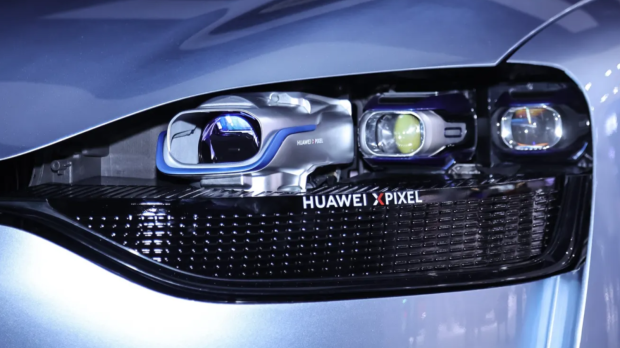
BEIJING – During the Huawei Qiankun Technology Conference, held at the Beijing Auto Show last week, Huawei unveiled a revolutionary headlight technology known as XPixel, which allows electric vehicles (EVs) to project full-color movies and interactive visuals. This latest advancement underscores the rapid evolution of automotive technology in China, contrasting sharply with the current state of headlight innovations in the United States.
The XPixel technology transforms a car’s headlights into a dynamic display, enabling users to watch movies or shows on nearby surfaces, effectively turning the vehicle into a mobile entertainment hub. This feature creates a unique experience reminiscent of a drive-in movie theater, offering a novel way to enhance the driving and passenger experience.
The underlying technology of XPixel has been in development for approximately three years and has already been integrated into models such as the Huawei Stelato S9. This year marks a significant upgrade with the introduction of full-color capabilities, as announced by Huawei executives during the event.
Technological Features and Integration
Huawei’s XPixel system is designed not only for entertainment but also to enhance driver assistance functionalities. The technology can project visual guidance for lane changes, displaying a clear path on the road. Moreover, it has the capacity to instruct pedestrians when it is safe to cross in front of the vehicle, enhancing safety for both drivers and pedestrians. Additionally, the system can project interactive games, catering especially to younger passengers during trips.
The first vehicle to showcase the new full-color XPixel technology will be the Aito M9, with plans for subsequent integration into several other models, including the Qijing GT7 shooting brake and the Luxeed V9 MPV. These advancements signal Huawei’s commitment to pushing the boundaries of automotive technology while enhancing user experience in electric vehicles.
Comparative Analysis with U.S. Automotive Technology
The introduction of advanced headlight technology in China highlights a significant gap between the two countries regarding automotive innovation. Historically, U.S. automotive regulations have restricted the deployment of new technologies, particularly in headlight design. Until recent changes in 2022, the Federal Motor Vehicle Safety Standards limited the use of adaptive driving beams, which adjust their beam patterns to prevent blinding oncoming drivers. The regulatory landscape has only recently begun to accommodate such advancements.
As the U.S. begins to adopt more sophisticated headlight technologies, including adaptive beams, it faces a significant challenge in catching up to the rapid innovations being developed and implemented in China. The disparity emphasizes the divergent regulatory environments and market dynamics in the two countries, where Chinese manufacturers often enjoy fewer restrictions, enabling them to deploy cutting-edge technologies at a lower cost.
Market Implications and Consumer Perspectives
The advancements in China’s EV sector, particularly with technologies like XPixel, have broader implications for the global automotive market. As Chinese manufacturers introduce innovative features that enhance both safety and entertainment, the competitive landscape for electric vehicles is evolving. U.S. consumers may feel a sense of envy as they witness the rapid technological developments present in Chinese vehicles, especially as American manufacturers strive to remain competitive in this fast-paced environment.
The cost-effectiveness of the technology being implemented in Chinese vehicles raises important questions about pricing strategies for American EV manufacturers. The ability to offer high-tech features such as movie projection at a competitive price could significantly reshape consumer expectations and demand in the U.S. market. As EVs become increasingly popular, the pressure on American manufacturers to innovate and enhance their offerings will intensify.
Future Prospects and Industry Evolution
The unveiling of Huawei’s full-color headlight projection technology represents a pivotal moment in the evolution of electric vehicles, illustrating how swiftly the automotive industry is advancing in China. The convergence of entertainment and driver assistance technologies within vehicles is positioned to redefine the driving experience, providing greater interactivity and engagement for drivers and passengers alike.
As U.S. regulatory frameworks continue to evolve, American manufacturers face the critical challenge of innovating and adapting to emerging trends while addressing the significant advancements made by their Chinese counterparts. The race to integrate sophisticated technologies into vehicles will only accelerate as global competition intensifies, making it imperative for American automotive companies to prioritize research and development in order to meet the growing demands of consumers.
In conclusion, Huawei’s introduction of XPixel technology not only signifies a leap forward in automotive capabilities but also serves as a reminder of the competitive dynamics shaping the global electric vehicle market. The integration of entertainment features into vehicles is likely to become a defining characteristic of future automotive developments, prompting manufacturers worldwide to rethink their design and technology strategies.