
Charity Navigator recognition highlights EFA’s governance and effectiveness as the organization approaches five decades of bringing sight, hope, and opportunity to underserved children
MORGANTOWN, WV: For nearly half a century, the Eye Foundation of America (EFA) has pursued an ambitious humanitarian vision: “A World Without Childhood Blindness.” Now, that mission has received significant independent recognition, with EFA earning a coveted Four-Star Rating from Charity Navigator, a distinction highlighting the organization’s financial health, accountability, effectiveness and reliability.
The recognition comes at an important moment for EFA, whose mission work began in 1977, and which will mark 50 years of service in 2027. The organization’s philanthropic efforts across the globe have reached children in more than 30 countries through partnerships, community outreach, school-based vision screening, distribution of spectacles and sight-saving medical interventions.

For EFA President Dr. Leela Raju, the Four-Star distinction is more than an institutional accolade. It is an affirmation of the trust between the foundation, its donors, and the communities it serves.
“Our Four-Star Charity Navigator rating is further validation that our supporters can trust our commitment to good governance, but also that we’re using our donors’ gifts effectively,” Dr. Leela Raju said. “We hope it will introduce our work to new supporters who can help us advance our mission for a World Without Childhood Blindness.”
A Four-Star Validation of Trust
The rare rating designates EFA as an official Charity Navigator “Give with Confidence” charity. The Charity Navigator evaluates nonprofit health and performance across four areas: Leadership & Planning, Accountability & Finance, Culture & Compensation, and Impact & Measurement.
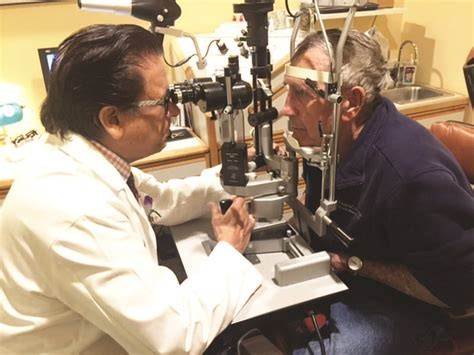
That makes the recognition particularly meaningful for an organization whose mission depends not simply on raising funds, but on converting philanthropy into accessible eye care in communities where specialized medical treatment can be scarce or prohibitively expensive.
Charity Navigator describes EFA’s mission as providing affordable and accessible medical eye care and treatment, with the goal of eliminating avoidable blindness, especially among children. It also describes the foundation’s focus on reaching areas of greatest need, including rural and remote communities.
Millions of Encounters With the Gift of Sight
Behind the rating are numbers that illustrate the scale of EFA’s work. The foundation’s website reports 4.5 million vision screenings, 390,000 eyeglasses provided, 380,000 vision surgeries and 44,800 retinopathy-of-prematurity interventions.
Those numbers tell only part of the story. For a child struggling to see a classroom blackboard, a pair of eyeglasses can influence education and opportunity. For a child with a serious eye condition, timely detection and treatment can make an even more consequential difference.
EFA describes its fundamental objective simply: no one should suffer avoidable blindness because of where they live or because care is unaffordable. Its work consequently emphasizes communities where healthcare may be inaccessible or financially beyond the reach of families.
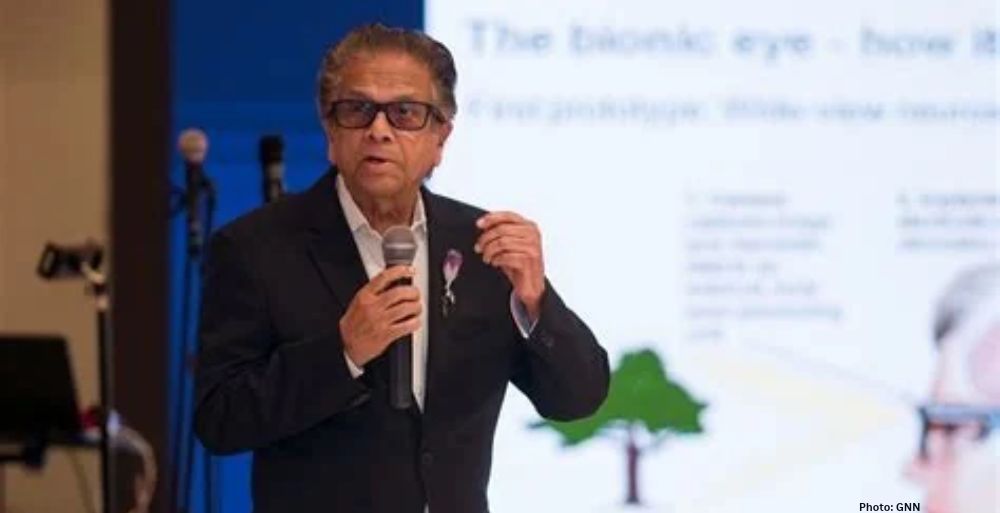
That philosophy echoes the message consistently articulated by EFA founder and ophthalmologist Dr. V.K. Raju. “Every child deserves to see the world with clarity and purpose,” Dr. Raju said at EFA’s 2026 charity gala. “Let us join hands to eradicate childhood blindness and unlock a brighter future for generations to come.”
From Medical Care to Sustainable Capacity
EFA’s model extends beyond individual interventions. Reporting on its 2026 fundraising gala described an approach encompassing eye camps, permanent hospitals in developing countries, training healthcare professionals and educating communities about preventive eye care and healthy lifestyles. Teachers are trained to recognize early warning signs of eye problems, while patients can receive free or subsidized surgery and follow-up care.
This combination of treatment, prevention, education and professional capacity-building is central to EFA’s effort to make eye care sustainable rather than episodic.
The challenge is especially important as new technologies expand what medicine can accomplish. At the 2026 gala, Dr. V.K. Raju pointed to advances such as gene therapy and stem therapy in addressing inherited and degenerative eye diseases, but cautioned that scientific breakthroughs alone cannot solve the problem.
“The greatest challenge is ensuring these life-changing treatments are accessible and affordable to the millions of children who need them most,” he said.
That observation captures one of the central realities of global healthcare: a treatment’s existence means little to a vulnerable child who cannot reach or afford it.
Philanthropy Behind the Mission
Supporters have responded substantially to that call. At EFA’s April 18, 2026 charity gala in Somerset, New Jersey, the foundation raised $900,000 to support its mission of combating preventable childhood blindness. The gathering brought together medical professionals, philanthropists, business leaders and community advocates. [americanba…online.com]
The fundraising illustrates why donor confidence matters. An organization attempting to reach underserved populations across geographic and economic barriers needs both charitable resources and public trust.
The Four-Star announcement, therefore, comes as EFA seeks to expand the constituency supporting its work. The foundation’s own statement stresses both responsible governance and effective use of donor gifts, linking organizational accountability directly to its humanitarian mission.
Transforming Accountability Into Measurable Impact
The Eye Foundation of America’s recognition for organizational excellence comes against an enormous global challenge. The IAPB Vision Atlas estimates that two million children worldwide live with blindness, while tens of millions more experience moderate, severe or mild vision impairment. Approximately 450 million children have eye conditions requiring treatment, demonstrating why early screening and accessible care remain critical.
For the Eye Foundation of America, those statistics have translated into decades of sustained action. Founded in 1977 by Dr. V.K. Raju, EFA reports 4.5 million vision screenings, 390,000 eyeglasses distributed, 380,000 vision surgeries and 44,800 interventions for retinopathy of prematurity, a potentially blinding disease affecting premature infants.
The foundation’s model combines school and community screenings, corrective eyeglasses, pediatric surgery and ROP treatment with physician training, public education and partnerships designed to strengthen access to eye care.
That record places the foundation’s Four-Star Rating in a broader perspective. Accountability and responsible stewardship matter because they enable charitable resources to reach the children and communities for whom timely eye care can change an entire life.
“Every child deserves to see the world with clarity and purpose,” Dr. Raju has said.
For EFA, that principle has become both a humanitarian mission and a measurable record of service, transforming millions of encounters with eye care into opportunities for sight, education and a more hopeful future.
Toward a World Without Childhood Blindness
EFA plans to celebrate its 50 years of service and impact on January 29, 2027, at The Rockefeller Foundation in New York City, according to Dr. V K Raju, the visionary statesman and the world-renowned philanthropist behind the Eye Foundation.
But the milestone is more than an anniversary. It provides an opportunity to measure what began as a mission in 1977 against the millions of screenings, hundreds of thousands of eyeglasses and surgeries, and tens of thousands of ROP interventions the foundation reports today.
The larger significance of the new Four-Star recognition lies precisely there.
Awards and ratings do not restore a child’s sight. Doctors, nurses, healthcare workers, volunteers, donors and accessible systems of care do. But credible external evaluation can strengthen the trust that allows those networks to expand.
For the Eye Foundation of America, the Four-Star Rating represents a powerful validation at a pivotal point in its journey. It affirms a model built around accountability while reminding supporters that the organization’s ultimate measure of success is not found in stars or scores, but in children, who are able to see, learn, and pursue futures that impaired vision might otherwise have placed beyond their reach.
After nearly five decades, EFA’s objective remains audaciously simple: a world in which geography, poverty, or lack of access to care does not condemn a child to avoidable blindness. Its Four-Star recognition strengthens the credibility behind that vision and the call to donors, physicians, volunteers, and communities to help turn it into reality.
For more details and to support the noble initiatives of the Eye Foundation, please visit:https://eyefoundationofamerica.org