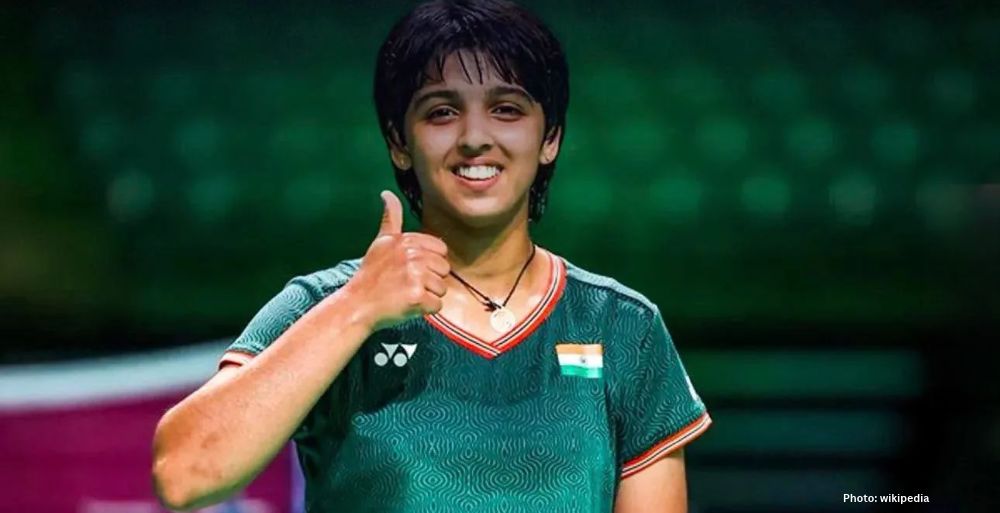
In a gripping semifinal at the Syed Modi India International Super 300, Tanvi Sharma overcame Unnati Hooda’s early lead, advancing to the finals.
LUCKNOW, India – In a highly competitive semifinal match at the Syed Modi India International Super 300 event, Tanvi Sharma displayed remarkable tenacity and skill, rallying to defeat her compatriot Unnati Hooda in three games with scores of 11-21, 21-10, and 21-13. The match, held at the BBD UP Badminton Academy on Saturday, lasted 51 minutes and drew significant attention from a spirited crowd that passionately supported both players.
The atmosphere in the arena was electric, with fans alternating chants of encouragement for each athlete as they exchanged points in a match that highlighted the intensity and skill level present in Indian badminton today. The all-Indian semifinal showcased two young talents, both eager to secure a place in the finals, adding an additional layer of excitement to the contest.
First Game: A Rocky Start
Seventeen-year-old Tanvi Sharma, seeded second in the tournament, began the match with a series of early mistakes. These errors allowed Unnati Hooda, who is 19 years old and seeded third, to build a significant lead. By the first mid-game interval, Hooda was ahead by six points, leading 11-5. This early performance set a challenging tone for Sharma, whose disappointment was palpable as she struggled to find her rhythm.
Hooda capitalized on Sharma’s slow start, using aggressive crosscourt smashes that frequently caught Sharma off-guard. As the first game progressed, Sharma’s inability to adjust her positioning and movement resulted in a widening gap, ultimately leading to her conceding the opener by a margin of 10 points. The scoreboard reflected Hooda’s control over the game, which was a stark contrast to the promise shown by Sharma earlier in the tournament.
Turning Point: The Second Game
During the two-minute break between games, both players received critical advice from their coaches. Upon the resumption of play, Sharma emerged with renewed vigor. A loud roar erupted from her as she won the first point of the second game, signaling a shift in her mentality. She displayed improved agility and tactical awareness, forcing Hooda to chase the shuttle around the court and dictating the pace of the game.
This transformation was striking. Sharma quickly established a commanding lead, reaching an 11-4 advantage at the mid-game interval. Her confidence surged as she executed a series of strategic shots that increasingly put Hooda on the defensive. The once-dominant Hooda now appeared frustrated, visibly reacting to her own mistakes, while Sharma exuded confidence, her body language reflecting her newfound momentum.
As Sharma rallied, the crowd’s support intensified, echoing the excitement of the match. Hooda’s mental composure began to wane, as evidenced by her reaction to unforced errors. In contrast, Sharma thrived under pressure, leveraging Hooda’s mistakes to secure the second game decisively.
The Decisive Final Game
Entering the third game, the tension in the arena was palpable. Sharma maintained her aggressive play, effectively using the strategies that had proven successful in the second game. Hooda, struggling to find her footing, committed several errors that allowed Sharma to extend her lead to 11-6 at the mid-game interval. The shift in momentum was evident, with Sharma appearing more relaxed and composed compared to her opponent, who was visibly affected by the mounting pressure.
The support for Sharma from the stands was unwavering, with fans urging her on. As the match progressed, Sharma’s determination became more apparent. Despite a few falls, her resilience shone through as she quickly recovered and maintained her focus. Hooda, on the other hand, found it increasingly difficult to respond to Sharma’s tactical prowess, culminating in a series of missed shots.
The match concluded dramatically when Hooda’s final lift sailed wide, securing Sharma’s victory. The crowd erupted in applause as Sharma showcased her sportsmanship by congratulating Hooda, who, for the third consecutive year, was eliminated in the semifinals of this prestigious tournament.
Reflections and Future Prospects
After her impressive comeback, Sharma reflected on her performance, attributing her success to a significant shift in her mentality following the first game. “In the first game, I was a bit slow. So that’s why my mentality was also going down. But after the first game, my mentality was totally different and my body language was different. So that’s the big difference today. That’s why I think I won my match,” she explained.
With this victory, Sharma has advanced to the finals, where she will face Thailand’s Supanida Katethong. Notably, Sharma holds a 2-0 advantage over Katethong in their previous encounters, setting the stage for a compelling final match. The Syed Modi International has historically been a critical event for players in the badminton circuit, and for Sharma, this victory not only signifies a personal achievement but also underscores the growing competitiveness within Indian badminton.
As the tournament progresses, the performances of both Sharma and Hooda highlight the bright future of Indian badminton, showcasing the potential for these young athletes to make significant contributions to the sport on the international stage. Their rivalry and development will be closely watched as they continue to compete both domestically and internationally.