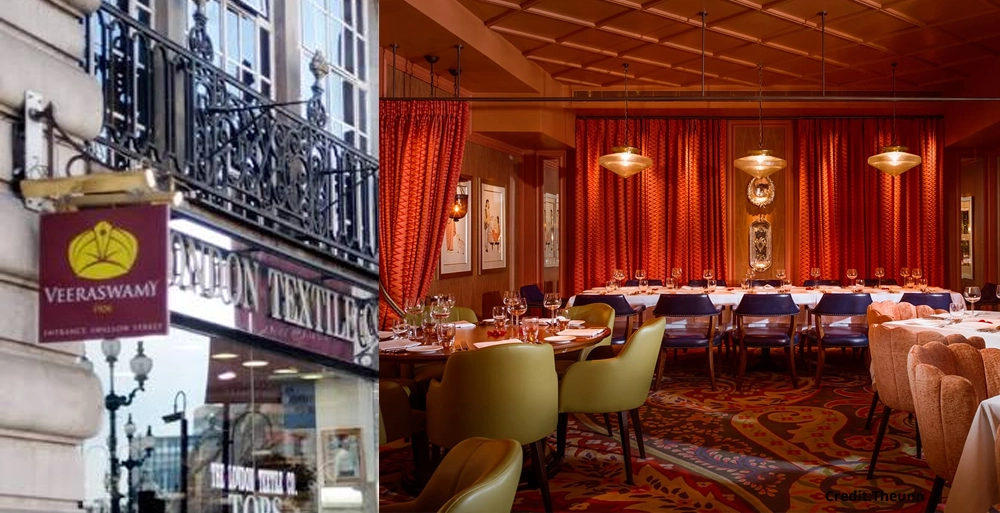
Staff and supporters of Veeraswamy, the UK’s oldest Indian restaurant, have made a heartfelt appeal to King Charles III to assist in preventing the establishment’s closure due to a lease dispute with the Crown Estate.
London, UK – Employees and advocates of Veeraswamy, the oldest Indian restaurant in the United Kingdom, are calling on King Charles III to intervene as they face the potential closure of the historic establishment due to a lease dispute with the Crown Estate. Established in 1926 by Edward Palmer, a descendant of General William Palmer, who served as Military and Private Secretary to Warren Hastings, the first Governor-General of India, Veeraswamy has stood as a culinary landmark in central London for nearly a century.
Situated on Regent Street, the Michelin-starred restaurant has developed a reputation for high-end regional Indian cuisine, serving notable figures including Winston Churchill, Charlie Chaplin, and Marlon Brando. Its longstanding presence and culinary excellence have made it a significant part of London’s diverse food culture.
Ongoing Lease Dispute
Despite its rich heritage, Veeraswamy’s future appears uncertain due to an ongoing legal battle with the Crown Estate, the property management organization associated with the British monarchy. According to reports from The Financial Times, the restaurant is scheduled to appear in court on Thursday, as the Crown Estate informed the owners in 2024 that it would not be renewing the lease. This decision is reportedly part of a plan for a “comprehensive refurbishment” of Victory House, the building that houses Veeraswamy.
Ranjit Mathrani, chair of MW Eat, the restaurant’s parent company, expressed disappointment with the Crown Estate’s approach, stating, “We have done everything to meet their concerns. It is obvious that they do not appear to have sufficient regard for Veeraswamy and its tradition, its background, its role, and its culinary heritage.” Mathrani questioned whether the Crown Estate would treat a restaurant offering a different cuisine with the same disregard, implying that the situation might differ if it involved a high-profile establishment like those owned by celebrity chef Gordon Ramsay.
Crown Estate’s Position
In response to the allegations of bias from Mathrani, a spokesperson for the Crown Estate asserted, “We strongly refute any suggestion that The Crown Estate prefers particular types of cuisine. We are proud to have a diverse dining offer across our West End portfolio, reflecting the diversity of London itself.” This statement underscores the Crown Estate’s commitment to maintaining a variety of culinary options while emphasizing the importance of safety and suitability during proposed renovations.
Community Support and Petitions
As the legal proceedings unfold, community support for Veeraswamy has surged, with thousands of supporters launching petitions urging the royal family to act. More than 20,000 signatures have been gathered in favor of preserving the restaurant, highlighting its importance not only as a dining establishment but also as a cultural landmark that embodies the rich culinary history of London.
The public outcry reflects a broader concern about the preservation of heritage sites amid increasing commercialization in urban environments. Many patrons and heritage advocates view Veeraswamy as more than just a restaurant; it represents a significant thread in the fabric of London’s multicultural identity.
Despite the growing pressure from the community, King Charles III has not yet publicly responded to the situation or taken any action regarding the negotiations between Veeraswamy and the Crown Estate. As the case moves through the legal system, uncertainty looms over the future of this beloved establishment.
Implications for Heritage Restaurants
The outcome of the upcoming court case could have significant implications not only for Veeraswamy but also for other heritage establishments facing similar challenges in an increasingly competitive and commercialized urban landscape. As cities evolve and property markets tighten, many longstanding restaurants and cultural institutions find themselves at risk of displacement or closure due to disputes over leases and renovations.
The case against the Crown Estate may set a precedent for how other heritage dining establishments are treated, particularly those that contribute to the cultural fabric of their communities. Observers note that the preservation of such iconic venues is crucial for retaining the diversity that makes cities vibrant and unique.
In the wake of the lease dispute, advocates emphasize the need for policies that protect local culture and heritage, especially in areas undergoing rapid development. The situation at Veeraswamy serves as a reminder of the delicate balance between urban renewal and the preservation of cultural identity.
As the legal proceedings progress, the fate of Veeraswamy remains uncertain, with the eyes of supporters and stakeholders keenly focused on the court’s decision and the potential for royal intervention. The restaurant’s legacy, which has spanned nearly a century, hangs in the balance, illustrating the broader challenges faced by heritage dining establishments in the contemporary landscape.