Fifty Indian diaspora organizations in the UK have called for an investigation by India’s government into demonstrations that they believe undermine the country’s democratic institutions.
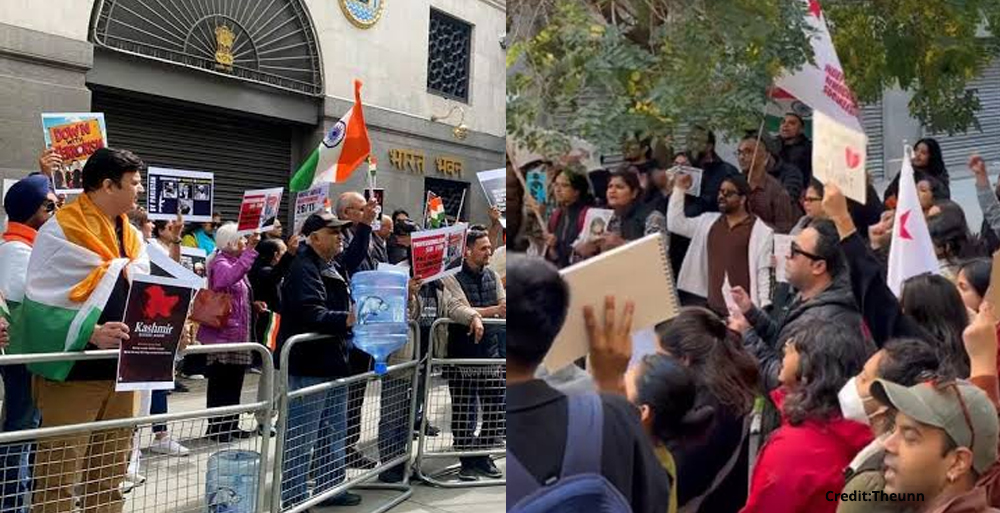
LONDON: In a noteworthy move reflecting increasing tensions over international activism, fifty Indian diaspora and community organizations based in the United Kingdom have addressed an open letter to the President of India. The letter expresses grave concerns regarding demonstrations that took place on October 16 and 17 outside the Indian High Commission in London and the Gandhi statue at Parliament Square. These protests were organized in solidarity with Indian youth demanding the resignation of Chief Election Commissioner Gyanesh Kumar.
The letter characterizes the protests as part of “organized overseas campaigns targeting India’s democratic and constitutional institutions.” This sentiment underscores a growing unease among certain segments of the Indian diaspora regarding the activities of political, ideological, and advocacy networks operating on British soil. The protests were coordinated by groups including the Students’ Federation of India-UK, the South Asia Solidarity Group, and the youth wing of the Indian Overseas Congress.
Allegations of Extremist Coordination
The signatories of the letter have called for a thorough investigation by Indian authorities into credible evidence concerning potential coordination between political advocacy networks and extremist or separatist elements. The letter raises specific concerns about the involvement of Pakistani and Bangladeshi Islamist organizations and pro-Khalistan separatist activists in relation to these demonstrations and the broader anti-India mobilization observed in the UK.
This development comes in the wake of heightened scrutiny of diaspora activities that some perceive as destabilizing to India’s national interests. Notably, prominent YouTuber Dhruv Rathee was reported to have participated in the protests, which further attracted media attention and raised questions about the influence of social media figures on global perceptions of Indian governance.
Concerns Over Violence and Disinformation
The letter also articulates a demand for the Indian government to investigate allegations of incitement to violence, organized intimidation, and the dissemination of deliberate misinformation aimed at undermining India’s democratic processes from abroad. The authors of the letter emphasize that if any wrongdoing is substantiated, appropriate measures should be taken to address these issues. This call to action reflects a broader apprehension within the diaspora that such protests could foster division and unrest.
Furthermore, the organizations urge the United Kingdom to ensure that its democratic freedoms are not manipulated to enable extremism or activities that could threaten communal harmony. This appeal highlights the delicate balance that the UK government must maintain between upholding free speech and preventing the exploitation of such freedoms by groups advocating for separatism or violence.
Historical Context of the Indian Diaspora in the UK
The Indian diaspora in the UK has historically played a crucial role in shaping both nations’ socio-economic and cultural landscapes. The community has contributed significantly to various sectors, including business, healthcare, and education. However, the diaspora has also grappled with complex issues related to identity, integration, and the political dynamics of their home country.
Protests like those observed in London can be seen as part of a larger trend of diaspora activism that intersects with domestic politics in India. Issues such as Kashmir, citizenship laws, and communal violence have frequently mobilized Indian nationals abroad, leading to demonstrations that draw attention to their concerns. The emergence of these protests reflects a growing assertiveness among expatriates who seek to influence policy and public perception regarding India’s governance and international relations.
Potential Implications for Diplomatic Relations
The unfolding situation poses significant implications for diplomatic relations between India and the UK. As the Indian government navigates these complex challenges, the response to the diaspora’s concerns may shape future engagement strategies. Historical grievances and ongoing tensions surrounding separatist movements complicate this relationship, necessitating a nuanced approach to address both domestic security and international diplomacy.
As the discourse around these protests continues, it is crucial to monitor the developments, particularly the Indian government’s strategies in countering perceived threats to its democratic frameworks from abroad. The letter from the diaspora organizations signals that the Indian government may need to bolster its efforts in addressing not only the immediate allegations but also the broader narrative surrounding its governance and international standing.
In summary, the appeal from the fifty Indian organizations in the UK underscores a critical intersection of diaspora activism and international relations, prompting a reassessment of how protests abroad might impact perceptions of India’s democratic integrity and the potential for communal strife. This evolving situation will require careful observation as both the Indian and UK governments respond to the challenges posed by activism in the diaspora community.