The ambitious $500 million adaptation of the Hindu epic ‘Ramayana’ seeks to redefine Indian cinema’s global presence, blending tradition with high-end production techniques.
London — Namit Malhotra, the producer behind one of the most ambitious film projects in Indian cinema history, is preparing to release part one of his two-part adaptation of the Hindu epic, “The Ramayana.” With a staggering budget of $500 million, the film is set to challenge not only traditional narratives but also the global perception of Indian cinema.
Malhotra, reclining in a discreet London office, expressed a sense of confidence and excitement about the project, unperturbed by the financial risks involved. “I’m not motivated by the bean-counter logic of, ‘How much money did we make or not make,” he stated. He emphasized that if the films do not succeed at the box office, the revenue could still be generated through merchandise, theme parks, and other avenues. “This is the story of Lord Ram, OK? There is no version of this where people don’t like (the movies) and it does not drive economic upside,” he added.
The narrative of “The Ramayana” unfolds the tale of Rama, a divine prince tasked with defeating Ravana, a demon king whose ambition posed a threat to the gods. The source text, attributed to the Hindu sage Valmiki, is a more than 2,000-year-old epic poem that details a cosmic struggle between good and evil, featuring a roster of heroes that parallels contemporary cinematic universes. Despite numerous adaptations over the years, including a popular television series in the 1980s, this version aims to reach a global audience and present the story on an unprecedented scale.
Malhotra, who is also the CEO of the British visual effects studio DNEG, has made significant investments of his own resources into this project, stating, “It’s all my money. I have all the risk … I’m going all in.” The film is touted as the most expensive Indian production to date, with costs that rival those of major Hollywood tentpole films. Notably, the highest-grossing Indian film to date, “Dangal,” made $304 million globally, raising questions about the potential profitability of “Ramayana” given its ambitious budget.
Production and Global Strategy
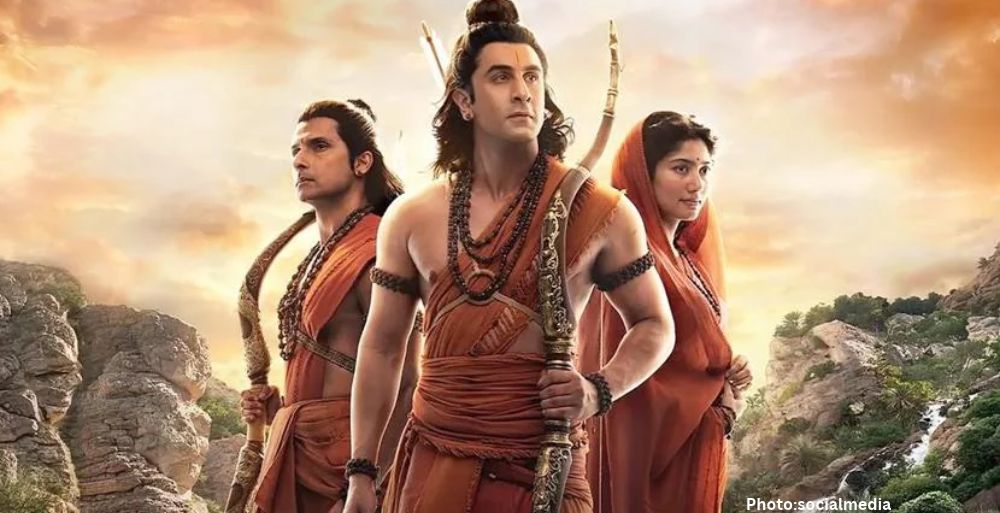
In preparation for the release, Malhotra engaged notable talent from both Indian and international cinema. He recruited Nitesh Tiwari, the director behind “Dangal,” to helm the project, and cast leading actors from various Indian film industries, including Hindi star Ranbir Kapoor as Rama, Kannada actor Yash as Ravana, and Sai Pallavi as Sita. The film also features contributions from renowned composers Hans Zimmer and A.R. Rahman, and the visual effects are produced by DNEG, known for its work on films like “Dune: Part Three.”
The film is characterized by its extensive use of CGI, a necessary element given its fantastical narrative. “I’ve never done a movie which had so much visual effects,” said Yash, who also co-produced the film. A notable innovation in the film’s production is the AI-assisted lip-sync dubbing for international audiences. The actors recorded their lines in English, with technology used to ensure that their mouth movements sync with the dialogue, a process overseen by Brahma AI, a tech company valued at $2 billion.
“Ramayana” is being positioned as India’s response to blockbuster franchises like “Avatar” or “The Lord of the Rings.” However, it is distinct in that it is rooted in a religious narrative, which has led the creative team to approach the material with caution. Tiwari emphasized the importance of respect for the source material, asserting that the screenplay draws from the most popular versions of the “Ramayana” while remaining true to the scriptures.
Cultural Impact and Audience Expectations
The film arrives at a time when adaptations of ancient epics are gaining traction in global cinema, evidenced by recent successes like Christopher Nolan’s “The Odyssey.” “Ramayana,” released just before the festival of Diwali, aims to capitalize on the celebratory mood associated with the holiday, targeting a broad audience across India, not just Hindi speakers. Malhotra noted, “What was very important was for us to really make it feel like (the film is) from India first; that it’s not from Bollywood.”
Critics of recent big-budget adaptations of Hindu epics highlight the need for culturally sensitive storytelling. The 2020 film “Adipurush,” which also drew from the “Ramayana,” faced backlash for its execution and ultimately failed at the box office. The intense scrutiny surrounding “Ramayana” calls for a nuanced portrayal, particularly given the reverence for its central character, Rama, who represents idealized virtues in Hindu culture.
Actor Ranbir Kapoor acknowledged the weight of responsibility that comes with portraying such a significant character, expressing initial doubts about his ability to do justice to the role. “There is a certain professional and personal baggage that I come with,” he stated. “I didn’t have confidence in myself … Will I be able to do justice to it? Will the audience accept me?” Ultimately, he decided to embrace the opportunity, viewing it as a chance to contribute to a story that holds deep cultural significance.
Box Office Performance and Future Prospects
As part one of “Ramayana” premiered, it grossed over $55 million globally on its opening weekend, including $12.2 million from the U.S. market. While it may not surpass the record set by “Dhurandhar: The Revenge,” which earned $115.3 million in its first week, “Ramayana” is positioned to join the ranks of India’s highest-grossing films. The film’s global marketing strategy, particularly a potential release in China, may further influence its box office trajectory, especially considering the success of “Dangal” in that market.
As the film continues to unfold its story, the implications for Indian cinema are significant. Malhotra is optimistic about the film’s reception, stating, “To me, there’s one fundamental truth: that if we do ‘Ramayana’ well, and if people like it, financially we’ll be fine.” With the global cinematic landscape evolving, “Ramayana: Rise of a Legend” represents both a monumental gamble and an opportunity to redefine the narrative of Indian filmmaking on the world stage.