The 2026 U.S. midterm elections will go down as one of the most consequential political rebukes delivered to a sitting president in modern American history. What began as predictions of a Democratic resurgence evolved into what even Republicans described as a “Blue Tsunami.”
Democrats seized control of both the House of Representatives and the Senate, flipping long-Republican strongholds such as Texas, Kansas, South Carolina, Iowa, Ohio, and North Carolina in a stunning rejection of President Donald Trump’s agenda. Democrats are projected to hold at least 54 Senate seats and gained nearly three dozen House seats, ending Republican control of Congress.
House Democratic leader Hakeem Jeffries captured the national mood when he declared:
“From sea to shining sea, the American people have spoken and made clear they’ve had enough of the extremism, enough of the corruption.”
The election was not simply a vote for Democratic candidates. It was a referendum on two years of governance that many Americans viewed as increasingly chaotic, divisive, and destabilizing.
Exit polls showed widespread voter dissatisfaction with the economy, rising living costs, higher fuel prices, aggressive immigration enforcement, corruption, and a series of foreign policy crises that increasingly came to define Trump’s second term.
The central question now is whether this Blue Tsunami is enough to contain the anarchy unleashed by Trumpism, or whether it merely represents a temporary brake on a political movement that continues to reshape American democracy.
Governance Through Disruption
Trump returned to office in 2025 promising economic renewal, lower prices, tighter borders, and fewer foreign entanglements. Instead, many voters concluded they received the opposite.
Perhaps no issue generated more controversy than the administration’s immigration crackdown. Immigration and Customs Enforcement dramatically expanded deportation operations, pursuing what Trump had described as the largest deportation effort in American history. ICE arrests surged, detention facilities expanded, and the number of immigrants held without criminal convictions rose sharply, triggering protests, court challenges, and accusations of governmental overreach.
At the same time, Trump’s Department of Government Efficiency (DOGE) launched an unprecedented downsizing of the federal workforce. More than 260,000 federal employees were reportedly terminated, bought out, or pushed into early retirement, while agencies across government experienced major personnel reductions. Supporters praised the moves as long-overdue reforms. Critics argued they weakened institutional expertise and crippled key public services.
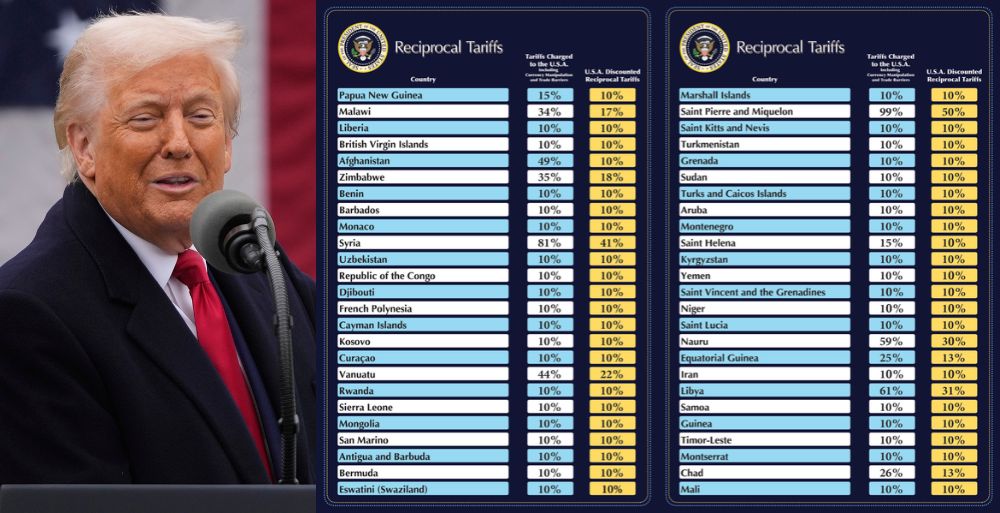
The administration’s economic policies created additional turbulence. Sweeping tariffs imposed on trading partners triggered retaliatory actions and contributed to renewed fears of trade wars. According to NBC exit polling, 65 percent of voters believed Trump’s policies had worsened the economy, while a similar percentage said his tariff policies were hurting the country. Nearly three-quarters of voters rated the economy negatively.
The result was a widespread perception that governance had become an exercise in constant confrontation rather than problem-solving.
Threats to America’s Innovation Leadership
One of the most controversial aspects of President Trump’s second term has been its increasingly restrictive approach toward legal immigration, particularly H-1B visas, international students, researchers, and highly skilled professionals.
Critics argue that these policies threaten a major source of American economic and technological strength. For decades, the United States has attracted the world’s brightest scientists, engineers, physicians, entrepreneurs, and innovators, helping build global leadership in technology, medicine, artificial intelligence, biotechnology, and advanced research.
Legal and high skilled immigrants and their children have played a major role in creating Fortune 500 companies and driving innovation across Silicon Valley, leading universities, and research institutions.
Business leaders and academic experts warn that tighter visa rules and an increasingly hostile immigration climate could encourage top talent to relocate to competing innovation hubs in Canada, Europe, Australia, and Asia.
At a time of intense global competition in AI, semiconductors, quantum computing, and biotechnology, critics contend that limiting skilled immigration risks weakening long-term economic growth, scientific leadership, and America’s competitive edge.
Foreign Policy Setbacks
If domestic controversies damaged the administration politically, foreign policy setbacks may have been even more consequential.
The defining issue of the 2026 campaign became Trump’s war with Iran. What was initially presented as a rapid military operation evolved into a prolonged conflict lasting over nine months, costing billions of dollars, disrupting global energy markets, and contributing to significantly higher gasoline prices. Congress never formally authorized the war, creating constitutional concerns and bipartisan criticism.
As the war dragged on, even some Republican lawmakers rebelled. Reuters reported that members of Trump’s own party characterized the war with Iran as “the worst foreign policy blunder in decades.”
The political consequences were severe. Analysts widely identified the Iran conflict as one of the primary drivers of Republican losses in the midterms. Rising fuel costs, mounting war fatigue, and uncertainty surrounding U.S. objectives became potent issues for Democrats.
Trump’s Venezuela policy generated another wave of criticism. The administration’s military intervention, the capture of Nicolás Maduro, and subsequent claims regarding U.S. influence over Venezuela’s future raised questions even among traditional allies.
Critics argued that the administration appeared more focused on access to Venezuela’s oil resources than on creating a credible democratic transition. Analysts from across the political spectrum described the strategy as improvised and lacking a coherent long-term vision.
Meanwhile, Trump’s effort to engineer peace in Gaza produced limited results. Despite ambitious promises, reconstruction stalled, funding struggled to materialize, and the administration’s “Board of Peace” faced criticism for failing to achieve meaningful progress on the ground. Several policy experts warned that the plan risked institutionalizing instability rather than creating a sustainable peace.
Ukraine represents another foreign policy challenge. Trump repeatedly promised to end the war quickly, yet by late 2026 the conflict remained unresolved. His administration’s increasingly strained relationship with Ukrainian President Volodymyr Zelenskyy, alongside moves viewed by critics as accommodating Russia, generated concerns among U.S. allies and members of both parties. Reuters reported growing fears that deteriorating U.S.-Ukraine relations could undermine Kyiv’s position and strengthen Moscow.
Taken together, Iran, Venezuela, Gaza, and Ukraine created the impression of an administration struggling to translate disruptive rhetoric into effective geopolitical outcomes.
Ethics Concerns and the 2026 Electoral Backlash
The Trump administration has also faced persistent criticism over ethics, transparency, and conflicts of interest. Ethics watchdogs, former officials, and congressional Democrats raised alarm about the influence of family members, wealthy donors, and close political allies in shaping government priorities.
Critics pointed to political appointments, fundraising activities, business relationships, and government contracts that they argued created the appearance of favoritism and blurred the line between public service and private gain.
These concerns, combined with mass deportations, federal workforce reductions, tariff-driven economic uncertainty, and foreign policy challenges in Iran, Venezuela, Gaza, and Ukraine, contributed to a growing perception of governmental dysfunction.
As a result, the 2026 “Blue Tsunami” became more than a routine electoral shift. Many voters saw it as a demand for accountability, institutional stability, and competent governance, signaling that the economic, diplomatic, ethical, and political costs of Trumpism had become too significant to ignore.
A Mandate for Accountability
The Blue Tsunami gives Democrats powerful new tools to check presidential authority and his disruptive policies.
Congressional committees will regain subpoena power, launch investigations, scrutinize executive actions, and exercise budgetary oversight. Senate Democrats have already promised aggressive accountability measures. Senate Democratic leader Chuck Schumer pledged to entangle the administration in “legislative razor wire” whenever it defies the law or the will of the American people.
But elections alone rarely eliminate political movements.
Trumpism is larger than Donald Trump. It reflects deep distrust of institutions, anger over economic inequality, cultural polarization, and a belief among millions of Americans that traditional political elites have failed them. Those sentiments existed before Trump and will likely survive after him.
A Defining Test for American Democracy
The 2026 Blue Tsunami was more than an electoral victory. It was a national judgment on a governing philosophy that many Americans believed elevated disruption over stability, loyalty over expertise, and confrontation over consensus.
By returning Congress to Democratic control, voters restored an essential constitutional counterweight to a presidency increasingly criticized for executive overreach, assaults on institutional norms, restrictions on both legal and undocumented immigration, ethical controversies, and foreign policy failures from Iran and Venezuela to Gaza and Ukraine.
Yet elections can restrain power; they cannot, by themselves, resolve the conditions that produced Trumpism. The deeper drivers of political discontent, economic insecurity, institutional distrust, cultural polarization, and democratic fatigue remain firmly embedded in American society. Unless those underlying grievances are addressed, the forces that propelled Trump’s rise will continue to shape the nation’s political landscape long after any single election cycle.
The ultimate significance of the Blue Tsunami will therefore depend not on the seats Democrats won, but on whether it renews public confidence in democratic institutions and reinforces the principle that governance must be accountable, competent, and rooted in the public interest. Its success will be measured not by partisan triumph, but by democratic resilience.
The Blue Tsunami may have succeeded in checking presidential power, but its lasting legacy will depend on whether it sparks genuine democratic renewal. History may ultimately remember 2026 not as the end of the Trump era, but as the opening chapter in a larger struggle over the character, stability, and future of American democracy.