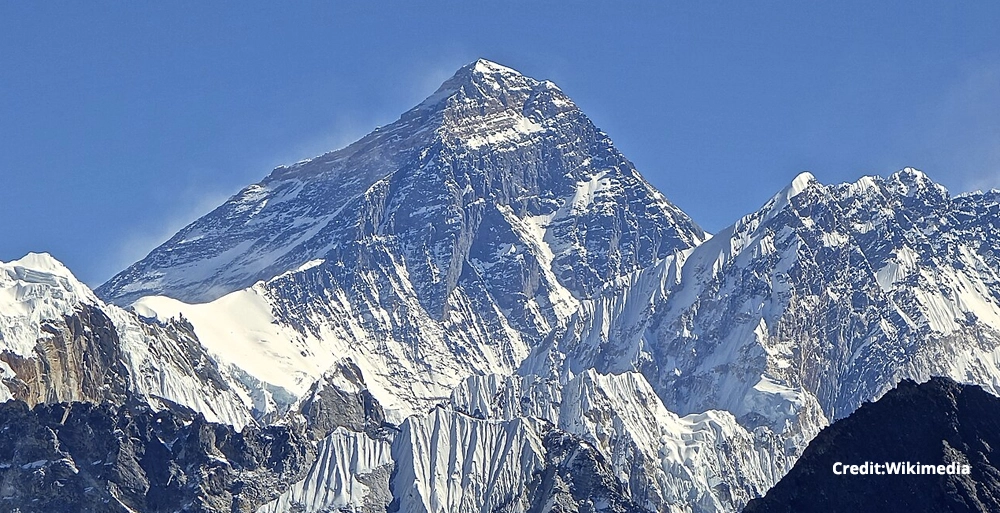
The Himalayas rank as the tallest mountain range globally, featuring an average elevation of 8,650 metres across its three highest peaks, according to a recent ranking by Visual Capitalist.
The Himalayas, a majestic mountain range that includes Mount Everest, the highest peak in the world, has been recognized as the tallest mountain range on Earth. A recent ranking published by Visual Capitalist emphasizes the Himalayas’ dominance, showcasing an average elevation of 8,650 metres based on the heights of its three tallest peaks. This ranking places the Himalayas ahead of other notable mountain ranges including the Karakoram, Pamir, and Hindu Kush.
Key Peaks of the Himalayas
The three highest peaks in the Himalayas—Mount Everest, Kangchenjunga, and Lhotse—are not only among the tallest mountains globally but also play significant roles in the ecology and culture of the region. Mount Everest, standing at an impressive 8,849 metres, is widely known for its challenging climbing conditions and has become a symbol of adventure and endurance. Kangchenjunga, measuring 8,586 metres, holds cultural significance for India as it straddles the border between India and Nepal in the state of Sikkim. Lhotse, at 8,516 metres, ranks as the fourth highest mountain in the world.
While Everest attracts thousands of climbers each year, this popularity has led to issues of overcrowding along its climbing routes, particularly during the peak climbing season in spring. The influx of climbers has raised concerns about environmental impacts and the safety of climbers navigating these congested paths.
Comparative Rankings of Mountain Ranges
In the broader context of global mountain ranges, the Karakoram ranks second with an average elevation of 8,247 metres among its three highest peaks, including K2, which, at 8,611 metres, is recognized as the second-highest mountain in the world. K2 is often considered more technically challenging than Everest due to its steep slopes, high risk of avalanches, and unpredictable weather conditions.
The Pamir Mountains, averaging 7,575 metres, rank third, with Kongur Tagh as its highest peak at 7,649 metres. The Hindu Kush follows in fourth place with an average height of 7,534 metres, its tallest peak being Tirich Mir at 7,708 metres. Other notable ranges, including the Tian Shan, Nyenchen Tanglha, Hengduan, and Kunlun, also feature prominently, each maintaining an average elevation exceeding 7,000 metres.
Interestingly, the Andes Mountains in South America are the highest-ranking mountain range outside of Asia, coming in at ninth place, while the Saint Elias Mountains, spanning Alaska and northwestern Canada, are ranked tenth.
The Himalayan Landscape in India
Within the context of India, the Himalayas and the Karakoram are two of the eight Asian mountain ranges that extend into the Indian territory. The Indian Himalayan region includes several states, namely Jammu and Kashmir, Ladakh, Himachal Pradesh, Uttarakhand, Sikkim, and Arunachal Pradesh. Among these peaks, Kangchenjunga is particularly notable as it lies on the India-Nepal border. Another significant peak is Nanda Devi, which stands at 7,816 metres and is the highest mountain entirely within India.
K2, while part of the Karakoram range, is located in the region of Pakistan-administered Kashmir, which is claimed by India. This geopolitical aspect adds a layer of complexity to the appreciation and understanding of these magnificent mountains.
Accessibility and Tourist Attractions
Visitors to India do not need to embark on a mountaineering expedition to appreciate the grandeur of the Himalayas. Numerous hill stations offer breathtaking views of these peaks. For example, Tiger Hill in Darjeeling, West Bengal, is renowned for its stunning sunrise views of Kangchenjunga, and even Everest can be seen on clear days. Munsiyari in Uttarakhand provides vistas of the Panchachuli peaks and serves as a base for treks toward the Milam and Ralam glaciers. Kausani, also in Uttarakhand, attracts tourists for its panoramic views of Nanda Devi and Trishul.
The Geological Formation of the Himalayas
The Himalayas’ formation is attributed to the collision between the Indian tectonic plate and the Eurasian plate, a geological event that occurred tens of millions of years ago. This tectonic activity has continued, influencing the ongoing uplift of the region and contributing to its geological instability. The dynamic nature of this interaction not only shapes the landscape but also has implications for seismic activity in the region.
In conclusion, the Himalayas not only represent the tallest mountain range in the world but also embody a unique blend of natural beauty, cultural significance, and geological marvel. As these peaks continue to attract explorers and adventurers from around the globe, they also serve as a reminder of the intricate relationship between nature and the forces of change that shape our planet.