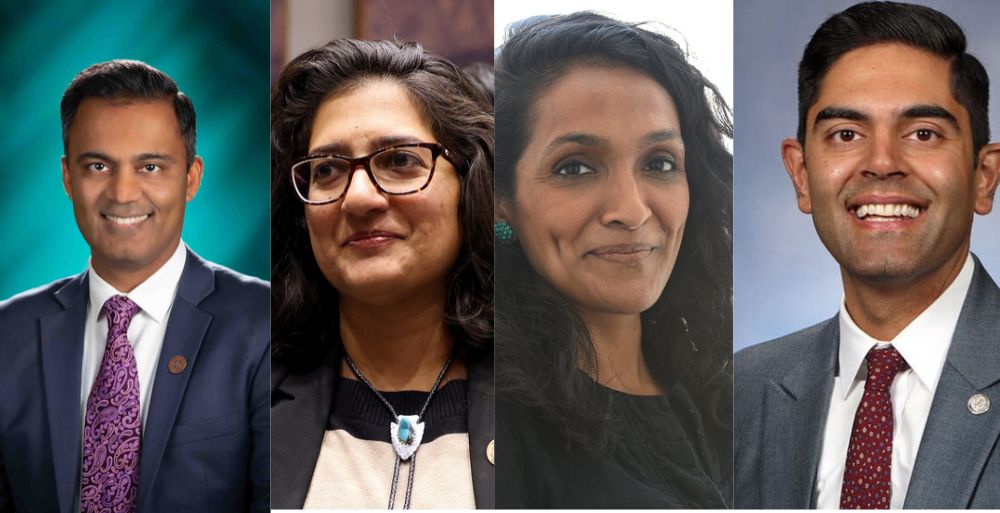
Indian Americans made notable strides in U.S. state politics during the elections held on November 3, 2023, with significant representation among the newly elected officials in key states.
Indian Americans demonstrated considerable electoral success in the November 3 elections, with at least 30 candidates securing positions in state legislatures across the country. This election cycle has been particularly impactful for Indian American Democrats, as their party regained control of both chambers in Michigan and Arizona.
Election Results and Candidate Breakdown
Out of 41 Indian American candidates who ran for state legislative seats, 30 emerged victorious, with two additional candidates leading in races that were still undecided at the time of reporting. Nine candidates were not successful in their bids. The success rate for Indian American Democrats was approximately 85 percent, as they won 28 of the 33 races that had been decided. In contrast, Republicans won two of their six contests, both by incumbents.
Every Indian American incumbent who sought re-election successfully retained their positions. Notably, eight of the 30 winners were unopposed, and women composed half of the successful candidates. Illinois led the states with the highest number of Indian American winners, totaling four, followed closely by New York with three. Washington and Vermont each had two winners.
Significant Wins in Michigan and Arizona
In Michigan, House Minority Leader Ranjeev Puri secured re-election from the 24th District with approximately 66 percent of the vote, as Democrats reclaimed control of the state House. Puri’s victory places him in contention to become the first Indian American and Sikh speaker of the Michigan House, a position he would need support from the Democratic caucus to obtain. Puri expressed gratitude to voters, stating, “The people of Michigan have delivered a House Democratic majority, and we must continue to work for the future of our state.”
Similarly, in Arizona, Senate Minority Leader Priya Sundareshan won re-election from the 18th District, also with around 66 percent of the vote. This win contributed to Democrats flipping both legislative chambers, resulting in their first legislative trifecta in Arizona since the 1960s. Sundareshan is expected to pursue the role of Senate president, contingent upon election by the Democratic caucus, and expressed optimism about the party’s future governance, stating, “We are ready to lead Arizona into a new era of progress starting in January.”
Continued Success Across the Nation
In California, a closely watched mayoral race was unfolding, with Los Angeles City Council member Nithya Raman holding a lead over Mayor Karen Bass, although major news networks had not declared a winner by the evening of November 4. Raman was leading with approximately 52 percent of the vote, while Bass had around 48 percent. The margin between the two candidates was a narrow 27,000 votes.
In Georgia, Jyot Singh made history by winning the 97th House District with around 68 percent of the vote, marking him as the first Indian American and Sikh American elected to the Georgia State Legislature. In Texas, Pooja Sethi won the open 47th House District with about 63 percent of the vote, describing herself as the first Indian American woman and first Asian American Democratic woman elected to the Texas Legislature.
Several Indian American Democrats were pivotal in flipping legislative seats, such as Nabeela Syed in Illinois, who defeated incumbent Republican Darby Hills in a highly competitive race, securing around 57 percent of the vote. In New York, Lisa Kaul achieved victory over Republican Rob Rolison with about 55 percent.
Incumbent Victories and Newcomers
Indian American incumbents also demonstrated strong performance nationwide, with Ram Villivalam in Illinois winning re-election with around 73 percent of the vote. Other notable winners included Jay Chaudhuri in North Carolina, who secured approximately 75 percent, and Renuka Mayadev in Wisconsin, who won re-election with about 90 percent of the vote.
Despite the successes, there were setbacks for some Indian American candidates. Notably, Vivek Ramaswamy lost the Ohio governor’s race to Democrat Amy Acton, garnering around 44 percent of the vote. In New York, Republican Saritha Komatireddy received approximately 38 percent against Attorney General Letitia James.
Emerging Trends and Future Implications
The election results reflect a growing influence of Indian Americans in U.S. politics, particularly within the Democratic Party, where they have secured significant victories in state legislatures. As Indian American leaders step into prominent roles, such as potential speakers of their respective state houses, this trend could reshape policy discussions and representation in the coming years.
With several Indian American candidates successfully winning local government races, including Sim Gill in Salt Lake County and Mona Singh in North Carolina, the community’s political footprint is expanding. However, challenges remain, as indicated by losses in certain high-profile races, highlighting the competitive nature of the current political landscape.
As Indian Americans continue to make strides in state and local elections, the implications for future policy and representation will be closely observed, marking a significant chapter in the evolving narrative of American politics.