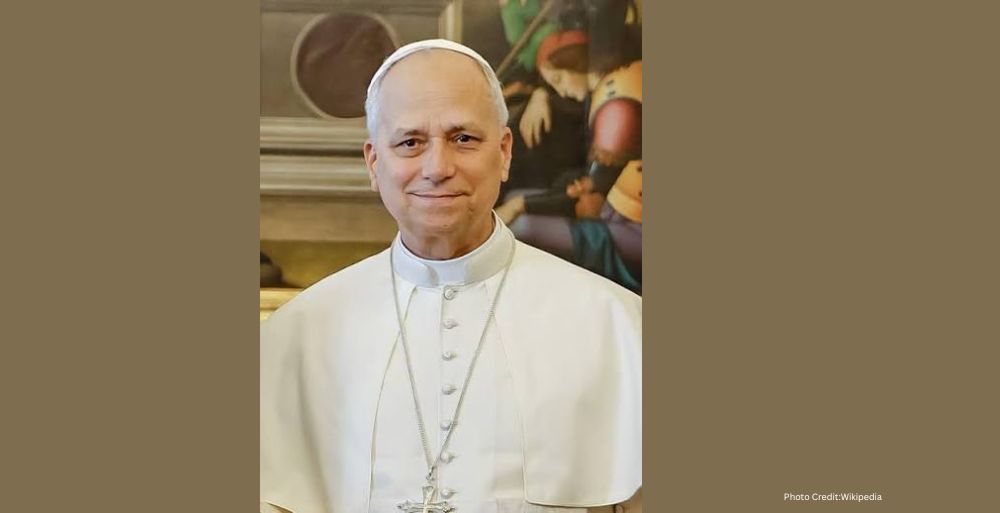
ROME — Denouncing the growing use of religious rhetoric to validate military conflict across the globe, Pope Leo XIV declared Tuesday that “there is no such thing as a holy war,” asserting that “only peace is holy.”
The American pontiff delivered the warning via video address to an international gathering of faith leaders convened in the historic Italian hill town of Assisi. Pope Leo had originally been scheduled to attend in person but addressed delegates remotely as he continues his recovery from October 13 lung cancer surgery.
The summit marked the 40th anniversary of the historic 1986 interreligious peace meeting convened by St. John Paul II. Participants included Archbishop of Canterbury Sarah Mullally, the spiritual leader of the worldwide Anglican Communion, alongside senior Christian, Muslim, and Buddhist dignitaries.
Rebuking Religious Justifications for Armed Conflict
Addressing what he termed a “troubling revival of war as an instrument of international politics,” Pope Leo urged participants to counter militaristic nationalism and religious chauvinism.
“Precisely in these times marked by a culture of power, there is a need to cultivate the spirit of Assisi,” Pope Leo stated. “War can never be waged in the name of God. We must rebuild peace everywhere, not prepare for more wars.”
The Pontiff’s remarks arrive amid rising controversy over faith-based wartime rhetoric:
- Russia and Ukraine: The Russian Orthodox Church has framed Moscow’s invasion of Ukraine as a metaphysical “holy war” against Western moral decay.
- Middle East Warfare: Political and military leaders connected to the broader Iran conflict have consistently utilized religious framing to justify combat operations.
- United States: U.S. Defense Secretary Pete Hegseth and other Western officials have invoked Christian theology when discussing military strength and strategic objectives.
Pope Leo has repeatedly challenged these arguments, notably in his inaugural encyclical Magnificent Humanity, where he wrote that waging violence under the banner of faith constitutes an attack on religion itself.
Vatican Delivers Aid to Ukraine Amid Oleshky Ceasefire
Parallel to the Assisi summit, the Holy See announced a major acceleration of humanitarian relief in Ukraine following a localized ceasefire in the heavily damaged southern city of Oleshky.
- Aid Shipments Dispatched: The papal almoner, Monsignor Luis Marín de San Martín, launched a three-day mission to Ukraine on Tuesday, accompanying convoys carrying food, thermal blankets, and winter clothing destined for Kyiv, Zaporizhzhia, Dnipro, and Fastiv.
- Direct Papal Diplomacy: The relief corridor follows personal phone diplomacy by Pope Leo. The pontiff initiated a call from his hospital bed on October 16 to Russian President Vladimir Putin appealing for the Oleshky ceasefire and humanitarian access, followed by an October 19 discussion with Ukrainian President Volodymyr Zelenskyy.
Responding to claims from the White House that the Oleshky ceasefire was negotiated by U.S. First Lady Melania Trump, the Vatican’s foreign minister, Archbishop Paul Richard Gallagher, declined to engage in political disputes over credit.
“I think it’s one of those situations in which it doesn’t matter who actually brought it about or who takes the credit,” Archbishop Gallagher said Tuesday. “It’s the fact that hopefully it is real, it will last, it will allow for evacuation and it will allow the arrival of humanitarian aid to help the people who are left behind.”
The aid push comes after Cardinal Matteo Zuppi, the papal peace envoy, completed his third mission to Moscow on September 30. While Zuppi has prioritized family reunifications and the return of displaced Ukrainian children, Archbishop Gallagher confirmed that neither Moscow nor Kyiv has requested formal Holy See mediation for broader peace negotiations at this stage.