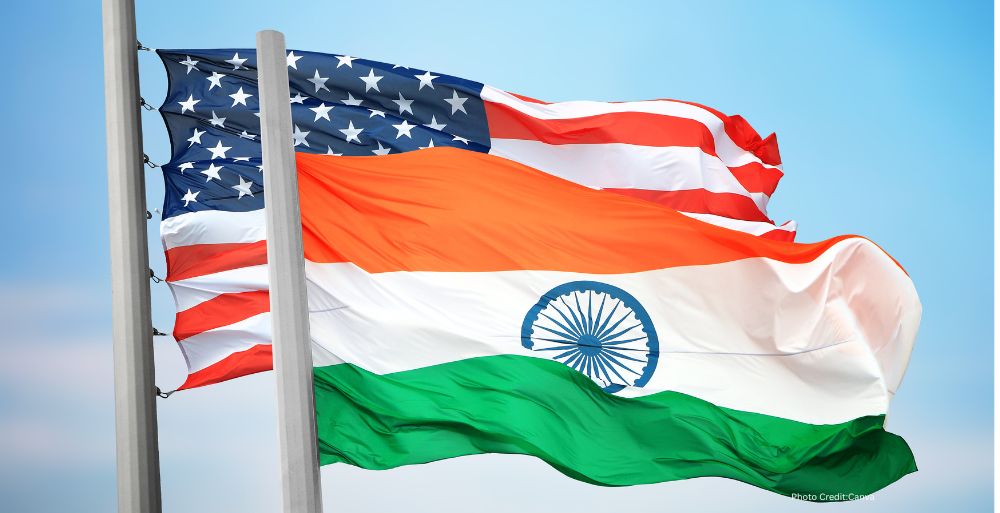
A bipartisan bill introduced in the U.S. House aims to establish a formal dialogue between American lawmakers and their Indian counterparts, marking the third attempt to create such a group.
On October 15, 2023, a bipartisan initiative was introduced in the U.S. House of Representatives by Republican Congressman James Gallagher of California. The bill, designated H.R. 10819, aims to create a United States-India Interparliamentary Group that would facilitate annual dialogues between U.S. Congress members and Indian parliamentarians. This initiative has garnered support from fellow Republican Bill Huizenga of Michigan and Democratic Congressman Shri Thanedar, also from Michigan, who is of Indian descent.
Details of the Proposed Bill
The proposed legislation has been referred to the House Committee on Foreign Affairs for further consideration. If enacted, H.R. 10819 would establish a group comprising up to 12 members of Congress tasked with meeting annually with representatives from India’s Lok Sabha and Rajya Sabha. The meetings would focus on addressing mutual issues and enhancing collaboration on matters relevant to U.S.-India relations, which have become increasingly critical in a globalized world.
Gallagher has stated that the bill is grounded in the Necessary and Proper Clause of the U.S. Constitution, which empowers Congress to pass laws deemed necessary for executing its enumerated powers. This constitutional basis underscores the lawmakers’ commitment to furthering diplomatic ties between the U.S. and India, a partnership viewed as strategically significant in various global contexts.
Historical Context and Previous Attempts
This latest effort to establish an interparliamentary group is noteworthy as it marks the third attempt within the last two decades. Previous attempts were made in 2007 and 2009 by Democratic Congressman Jim McDermott of Washington, who introduced similar legislation known as the United States-India Interparliamentary Exchange Act. Both of these prior efforts failed to progress to a vote in Congress, highlighting the challenges of institutionalizing such dialogues amidst shifting political priorities.
Previous proposals included provisions for a budget of up to $100,000 per fiscal year to cover the group’s operating expenses. The current bill echoes this financial consideration, emphasizing the need for transparency and accountability, as the interparliamentary group would be required to submit an annual report to Congress detailing its expenditures and activities.
Structure and Appointment Process
Under the current proposal, the structure of the interparliamentary group would involve appointing six members by the House Speaker, which would include both co-chairs of the Congressional Caucus on India and Indian-Americans. The remaining six members would be appointed by the Senate President pro tempore. This framework aims to ensure balanced representation from both chambers of Congress, facilitating a diverse exchange of perspectives and fostering cooperation on key issues.
Broader Implications for U.S.-India Relations
The establishment of this interparliamentary group is viewed as a strategic move amid evolving dynamics in U.S.-India relations. In recent years, bilateral relations have grown increasingly important, particularly in areas such as trade, defense cooperation, and technology exchange. A formalized dialogue mechanism could potentially enhance collaboration on these fronts, particularly in addressing shared global challenges such as climate change, regional security, and economic growth.
Bill Huizenga, one of the bill’s co-sponsors and leader of the U.S.-Canada Interparliamentary Group, expressed optimism about the potential benefits of this initiative. He noted that direct engagement between lawmakers from both countries is crucial for effectively addressing mutual priorities. Such engagements can lead to deeper understanding and more informed policymaking across both legislatures, enhancing the effectiveness of bilateral initiatives.
Recent Diplomatic Engagements
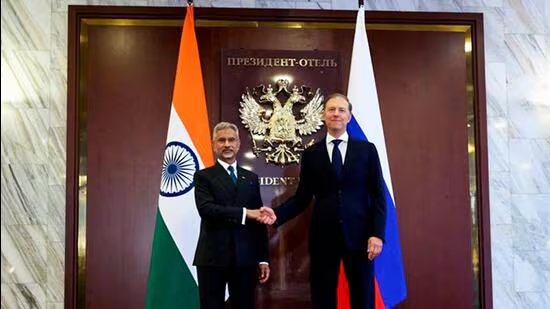
In a demonstration of ongoing diplomatic efforts, Gallagher and Thanedar were part of a congressional delegation that met with Indian Foreign Secretary Vikram Misri in New Delhi on September 27, 2023. This meeting underscores the commitment of U.S. lawmakers to engage with Indian officials and gain insight into the complexities of U.S.-India relations, particularly as geopolitical tensions rise in the Indo-Pacific region. The discussions during this meeting likely laid important groundwork for future collaborations and highlighted shared interests, including counterterrorism and economic partnerships.
Conclusion: A Renewed Focus on Dialogue
The introduction of H.R. 10819 signifies a renewed focus on establishing a structured framework for dialogue between the United States and India. As both nations navigate an increasingly complex international landscape, the proposed interparliamentary group could serve as a vital mechanism for enhancing mutual understanding and cooperation. By fostering direct dialogue between lawmakers, the initiative aims to address pressing global issues collaboratively, reinforcing the strategic partnership between the U.S. and India. This renewed effort reflects a broader recognition of the importance of legislative dialogue in shaping foreign policy and enhancing diplomatic relations.