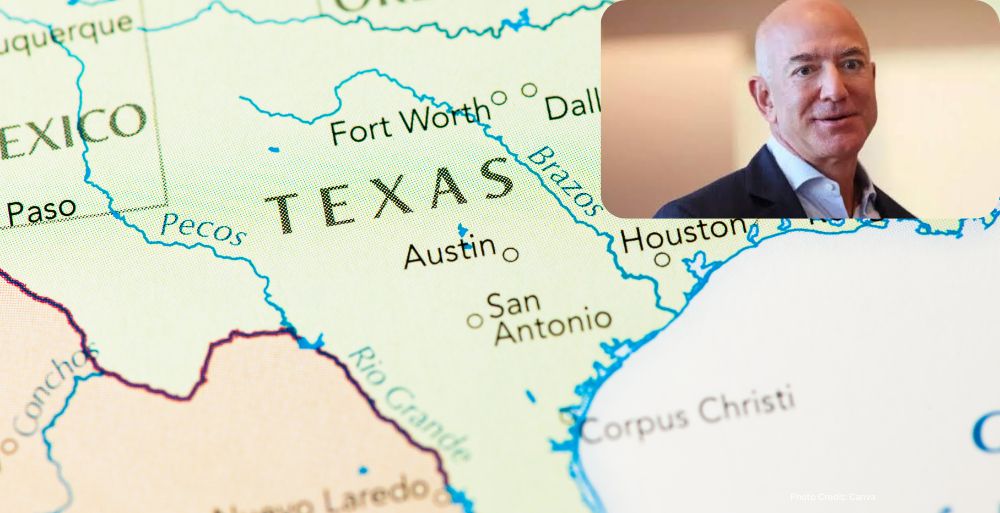
A detailed examination of Jeff Bezos’ acquisition of 165,000 acres in West Texas, the establishment of Blue Origin, and the company’s strides in space tourism, culminating in its first human spaceflight in 2021.
In West Texas, Amazon founder Jeff Bezos embarked on a substantial venture over two decades ago, beginning in 2004 with the acquisition of ranchland intended for his private spaceflight endeavors. By 2005, he had amassed 165,000 acres near Van Horn, a remote area that would later become the launching pad for Blue Origin’s ambitious space projects.
Origins of Blue Origin and Land Acquisition
Founded in 2000, Blue Origin initially operated with limited public visibility. The company was part of a growing interest in private space exploration that included other companies like SpaceX. However, its aspirations became more evident when Bezos began purchasing land in the sparsely populated area surrounding Van Horn, a small town in Culberson County, Texas. This location was strategically selected to facilitate rocket launches and testing, benefiting from its remote and unpopulated environment, which minimized the risks associated with such activities.
In 2003, reports emerged that local ranchers were contacted by a Seattle-based attorney representing a buyer, later revealed to be Bezos himself. The offers made to landowners were reportedly substantial, prompting some to sell their properties. By 2005, Bezos had consolidated a significant amount of land, which he named Corn Ranch. This initiative was part of a broader vision to develop the technology necessary for human spaceflight.
Bezos articulated a vision for Blue Origin that included not only the development of spaceflight technology but also the potential for humans to live and work beyond Earth. John Conoly, then a longtime judge in Culberson County, expressed optimism about Bezos’ commitment to the project, stating, “I have every confidence in the world he will do what he says he will do.” Conoly highlighted Bezos’ capability to attract some of the best minds in the industry, reflecting a local trust in Bezos’ ambitious plans.
Milestones in Human Spaceflight
The West Texas site ultimately served as the launch location for Blue Origin’s New Shepard spacecraft. On July 20, 2021, the company achieved a significant milestone by completing its first crewed flight, marking a turning point in the landscape of commercial space travel. The mission included Bezos, his brother Mark Bezos, aviation pioneer Wally Funk, and 18-year-old Oliver Daemen, symbolizing a diverse mix of experiences and ages in the journey toward space.
During the flight, the crew experienced several minutes of weightlessness before safely returning to Earth via parachutes. The mission lasted approximately 10 minutes and notably saw Funk become the oldest person to travel to space at age 82, while Daemen became the youngest. Jeff and Mark Bezos also made history as the first siblings to fly into space together, showcasing the personal milestones intertwined with Blue Origin’s corporate achievements.
Bob Smith, then CEO of Blue Origin, described the flight as a “monumental day for Blue Origin and human spaceflight,” emphasizing the professionalism and expertise of the team involved and underscoring the significance of this achievement as just the beginning of their journey. This successful mission not only provided a proof of concept for future flights but also served as a marketing moment for Blue Origin’s ambitions in the burgeoning field of commercial space tourism.
Bezos’ Vision for the Future of Space Travel
The success of Blue Origin’s inaugural crewed mission is part of a broader strategy to develop reusable rockets and democratize access to space for individuals beyond government astronauts. Prior to carrying passengers, Blue Origin had conducted numerous uncrewed tests with New Shepard to refine its rocket and capsule systems. In November 2015, Blue Origin successfully landed a rocket booster vertically, showcasing a reusable approach that could revolutionize space travel.
The New Shepard rocket was specifically designed for suborbital flights, while Blue Origin’s larger New Glenn rocket aims to support missions into Earth orbit and beyond. Bezos has consistently articulated a long-term vision wherein millions of people could potentially live and work in space, furthering human exploration and habitation beyond Earth. The company has also explored opportunities related to lunar missions and the development of advanced rocket engines.
However, the feasibility of commercial space tourism raises questions regarding affordability and accessibility. Early participants in these flights have predominantly been affluent individuals, which leads to ongoing discussions about whether private spaceflight can eventually become accessible to a broader audience. Critics have raised concerns about the environmental impact of increased rocket launches and the socio-economic implications of space tourism remaining an elite activity.
Conclusion
Jeff Bezos’ journey in West Texas, marked by the acquisition of vast land and the establishment of Blue Origin, illustrates his commitment to advancing human spaceflight. While significant milestones have been achieved, including successful crewed flights and the development of reusable rocket technology, the pathway ahead for commercial space tourism remains complex. The industry faces ongoing debates about its viability for the general public, the environmental sustainability of frequent space travel, and the social implications of making space accessible to all.