Punjab Chief Minister Bhagwant Mann announced that Pakistan has withdrawn from the upcoming Men’s Asian Champions Trophy 2026, with Bangladesh set to take its place due to political hurdles affecting the team’s travel.
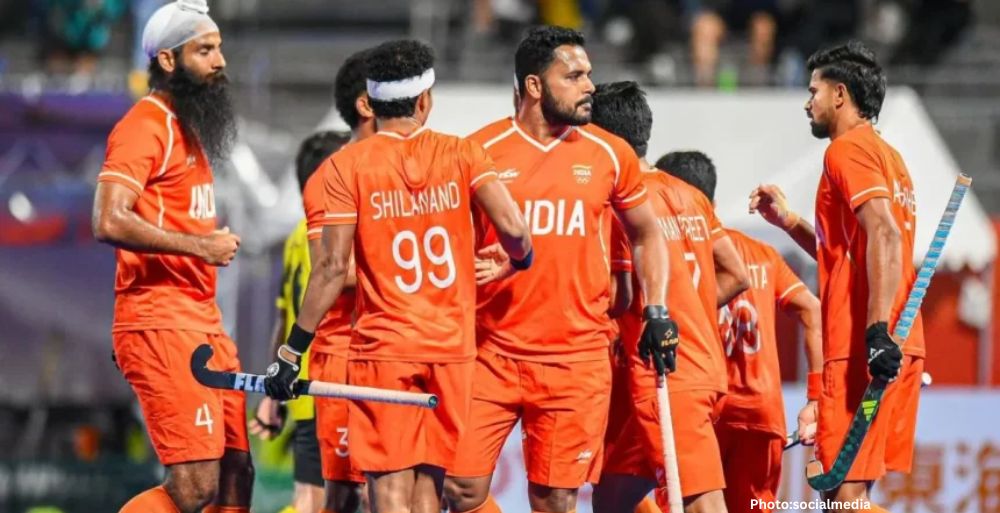
CHANDIGARH – In a notable shift within the landscape of international field hockey, Punjab Chief Minister Bhagwant Mann confirmed on Saturday that Pakistan has officially withdrawn from participating in the Men’s Asian Champions Trophy 2026, scheduled to take place in Punjab from October 27 to November 5. Bangladesh will replace Pakistan in the tournament.
During a press conference, Mann expressed disappointment at the absence of the Pakistan team, stating, “We wanted the Pakistan team to come and had scheduled an India-Pakistan contest on November 1, Punjab Day. But due to some political hurdles, the Pakistan team would not be able to play here. In its place, Bangladesh will now participate.” This match was highly anticipated, particularly given the historical rivalry between India and Pakistan in hockey.
Political Context of Withdrawal
The withdrawal is attributed to complications regarding travel clearances for the Pakistan team, as noted by the Pakistan Hockey Federation. Reports indicate that the federation has requested either the relocation of the tournament or a neutral venue for Pakistan’s matches, citing the “sensitive bilateral situation” that continues to affect relations between India and Pakistan. Such political dynamics have historically influenced sporting events, often resulting in cancellations or changes in participation.
On September 14, Mann announced that Punjab would host the Asian Champions Trophy for the first time, a development viewed with optimism by local sports authorities. The matches are slated to be held in Jalandhar, where league matches will take place, while Mohali is expected to host the semi-finals and finals. The potential for high-stakes matches has brought significant attention to Punjab’s sporting infrastructure.
Infrastructure and Future Aspirations
Mann emphasized the readiness of local venues, stating, “Both stadiums in Jalandhar and Mohali are ready to host the matches.” This readiness is part of a broader strategy by the Punjab government to establish the state as a prominent hub for international sports events. The infrastructure investments and event management capabilities are seen as vital components in promoting Punjab’s profile on the global sporting stage.
Additionally, Mann expressed aspirations for Punjab to host matches for the 2030 Hockey World Cup, which India has been designated to organize. “Our government is preparing not just two stadiums, but a message for the sporting world. We have the infrastructure, the talent, and the sporting culture to host big international events,” he affirmed. Such ambitions underscore a commitment to sports development and the potential economic benefits from hosting international competitions.
Historical Context of the Asian Champions Trophy
The Asian Champions Trophy is an annual field hockey tournament that features top teams from across Asia. Historically, Pakistan has been a significant competitor in this tournament, with a rich legacy in field hockey that includes multiple Olympic medals and World Cup victories. Matches between India and Pakistan in this context have often drawn large audiences, reflecting the intense rivalry that extends beyond the field.
The absence of Pakistan from this year’s tournament illuminates the ongoing complexities of India-Pakistan relations, where political tensions frequently spill over into the realm of sports. The historical context of these two nations showcases how sportsmanship can sometimes become entangled with national politics, affecting opportunities for athletes and fans alike.
Implications for Regional Sports and Diplomacy
The replacement of Pakistan with Bangladesh not only alters the competitive dynamics of the tournament but also raises questions about the future of sports diplomacy in the region. The shift underscores how political relations can directly influence sporting events, limiting opportunities for athletes and fans alike. The hope remains that future engagements can foster greater cooperation and understanding through sports, potentially serving as a bridge in otherwise strained relations.
As Punjab prepares for the tournament, the focus will be on ensuring that matches proceed smoothly and that the region can effectively showcase its capabilities to host international events. The local government is likely to leverage this platform to enhance Punjab’s reputation within the global sporting community, emphasizing a commitment to sports development and infrastructure investment.
In conclusion, the withdrawal of Pakistan from the Men’s Asian Champions Trophy 2026 due to political hurdles highlights not only the fragility of sports diplomacy in South Asia but also the importance of robust infrastructure and planning in hosting international events. As Bangladesh steps in to compete, the tournament will proceed, albeit with a notable absence that reflects the broader geopolitical climate. The hope is that such events can one day transcend political divides, offering a space for competition and camaraderie among nations.