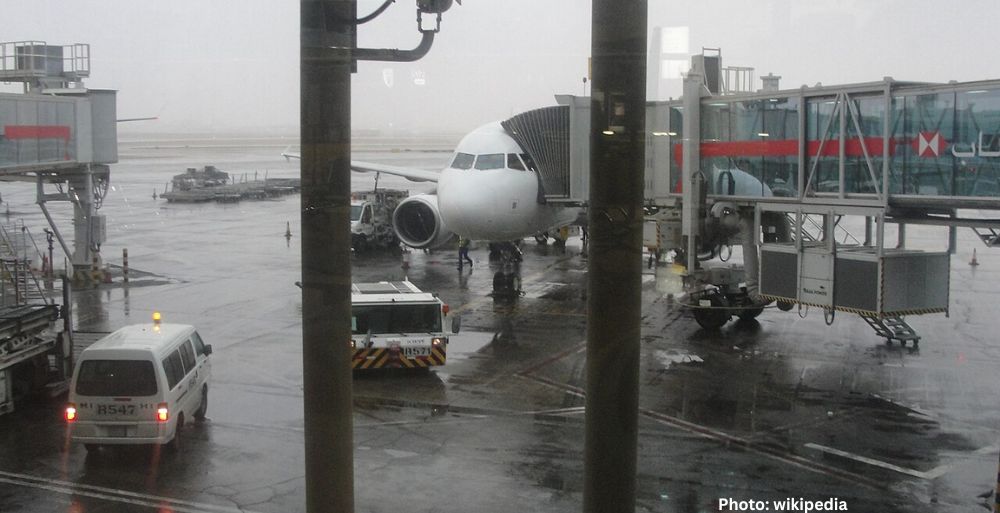
Saudi Arabia has temporarily halted all flights to and from King Khalid International Airport in Riyadh until next Saturday due to a series of Houthi missile attacks that resulted in casualties and raised concerns about national security.
RIYADH, Saudi Arabia — In response to renewed missile strikes from Houthi forces, the Kingdom of Saudi Arabia has suspended all flights at its main international airport in Riyadh. This decision, announced on Monday, follows a recent wave of attacks that left one person dead and over 300 injured. The suspension will remain in effect until at least next Saturday, affecting numerous airlines, including Gulf Air and Bahrain Air, which have already canceled several flights.
On Saturday, a Houthi missile strike resulted in the deaths of 13 people at the airport, prompting immediate concerns about safety and security. Eyewitness accounts reported chaos as passengers were engulfed in smoke and debris while waiting to board their flights. CCTV footage aired by Saudi state television captured the harrowing moments when the missile struck, further highlighting the vulnerabilities of the airport’s security infrastructure.
Context of the Attacks
The recent missile attacks are part of an ongoing conflict that has plagued Saudi Arabia since its military intervention in Yemen in 2015. The Houthi insurgency, which has received support from Iran, has escalated its military operations, targeting key infrastructure across Saudi cities. This latest incident marks a significant deterioration in security for the kingdom, which has been attempting to project stability amid internal and external pressures.
Saudi Arabia’s Energy Minister, Abdulaziz bin Salman, addressed the ongoing challenges at the 25th World Petroleum Congress (WPC) taking place in Riyadh, asserting that “fear has no place in the Saudi lexicon.” He emphasized the resilience of the Saudi energy sector, stating that the nation is committed to protecting its energy resources despite the risks posed by Houthi attacks. Amin Nasser, the CEO of Saudi Aramco, echoed these sentiments, highlighting the need for enhanced protective measures and acknowledging that market dynamics cannot shield nations from geographic vulnerabilities.
Escalating Military Response
In light of the recent attacks, the Saudi military is conducting an urgent review of its air defense capabilities. The need for interceptor missiles has become increasingly apparent to safeguard critical infrastructure, including government buildings and oil facilities. The Houthis have threatened to continue targeting airports across Saudi Arabia, raising the stakes for national security.
In the wake of the missile strike on Saturday, schoolchildren and non-essential office workers were advised to work from home as a precautionary measure. The Houthis have also launched strikes in other areas, including Khamis Mushait and King Fahd International Airport in Dammam, causing extensive damage to fuel tanks and aircraft.
Political Implications and International Diplomacy
The political landscape in Saudi Arabia is complex, particularly as Crown Prince Mohammed bin Salman has remained largely out of the public eye since the latest attacks. His leadership has faced significant scrutiny over the prolonged conflict in Yemen, which has continued to destabilize the region and hinder efforts to diversify the Saudi economy away from oil dependency.
Internally, the conflict remains intense, with fighting persisting in Taiz, a significant population center in Yemen. Saudi airstrikes have been reported, with claims of 124 raids on Houthi positions occurring on a single day. The governor of Taiz, Nabil Shamsan, has issued urgent appeals for humanitarian assistance, citing severe shortages in medical supplies due to the ongoing conflict.
Internationally, diplomatic efforts are underway to address the conflict. Iranian Foreign Minister Abbas Araghchi has expressed a willingness to mediate between Saudi Arabia and the Houthis. However, Houthi representatives have rejected offers for a ceasefire, indicating that the situation remains precarious. Mohammed al-Bukhaiti, a member of the Houthi Political Bureau, asserted that any proposed settlement must be comprehensive, cautioning that the conflict could escalate further without timely resolution.
Future Prospects
As the situation develops, the United Nations Security Council is expected to discuss a resolution that could designate the Houthis as a foreign terrorist organization. This potential designation would have far-reaching implications for the humanitarian situation in Yemen, which is already experiencing one of the world’s worst humanitarian crises.
The Southern Transitional Council (STC), a key player in Yemen’s political landscape, has called for increased military action against the Houthis, advocating for a broader offensive beyond southern Yemen. This request aligns with Saudi Arabia’s strategic interests, as the kingdom seeks to bolster the internationally recognized government against Houthi advances.
The ongoing conflict in Yemen remains a significant concern for regional stability, and the recent missile attacks underscore the urgent need for effective diplomatic solutions. As Saudi Arabia grapples with its security challenges, the international community watches closely, aware that the implications of this conflict extend far beyond the region.