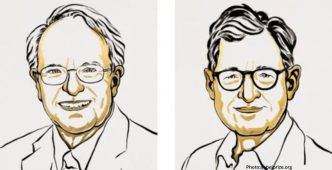
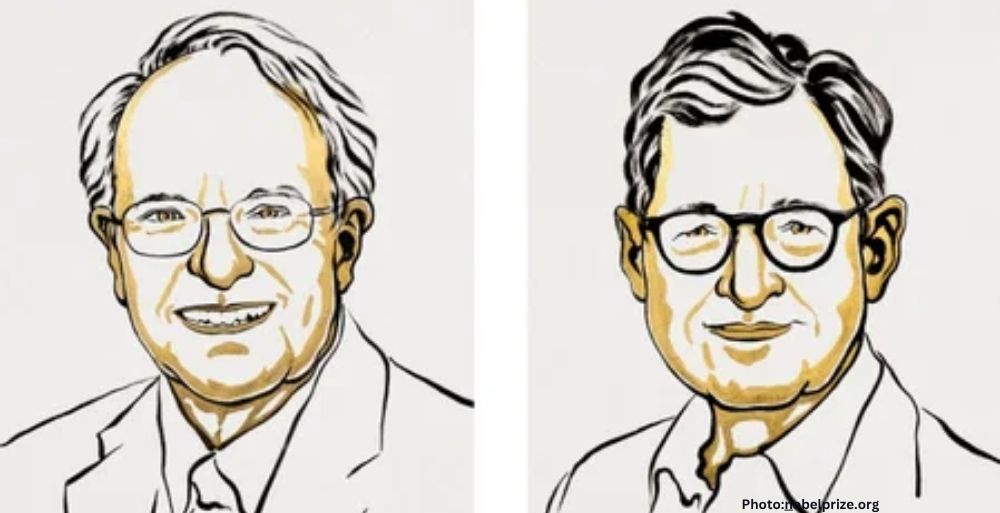
The Royal Swedish Academy of Sciences awarded the 2026 Nobel Prize in Economic Sciences to Robert E. Hall and Michael Woodford for their groundbreaking work in developing macroeconomic models that enhance economic stabilization efforts during booms and recessions.
New Delhi, Oct 12 — The Royal Swedish Academy of Sciences announced on Monday the recipients of the 2026 Sveriges Riksbank Prize in Economic Sciences in Memory of Alfred Nobel, commonly referred to as the Nobel Prize in Economics. American economists Robert E. Hall from Stanford University and Michael Woodford from Columbia University have been recognized for their significant contributions to the development of macroeconomic models that have empowered policymakers to stabilize economies amidst fluctuations.
The Nobel Committee emphasized that Hall and Woodford’s research has provided a robust theoretical foundation for fiscal and monetary policies, allowing governments and central banks to implement timely and effective interventions during periods of economic instability. Their innovative models are grounded in microeconomic principles, focusing on the decision-making processes of households and businesses, and illuminating the collective impact these decisions have on the broader economy.
Historical Context of Their Work
The work of Hall and Woodford gained prominence during the economic turmoil of the 1970s, a decade marked by the oil price shocks that led to a unique combination of high inflation, sluggish growth, and rising unemployment across many advanced economies. This period raised significant questions regarding traditional Keynesian economic models, which seemed inadequate in addressing the complexities of the time. The shortcomings of these models prompted a need for new frameworks capable of accommodating the changing economic landscape.
Responding to the limitations of classical economic theories, Hall and Woodford restructured macroeconomic concepts to incorporate expectations and forward-looking behavior among consumers and businesses. Their research posits that individuals and firms consider future economic conditions when making decisions related to spending, saving, investment, and pricing. This insight allows policy signals from governments and central banks to shape economic expectations and ultimately influence economic activity.
Impact on Economic Policy
The Academy noted that the models developed by Hall and Woodford have been widely adopted by central banks and governments globally, serving as critical tools in crafting responses to economic downturns and external shocks. These models have proved invaluable in navigating crises such as energy shortages and abrupt changes in consumer behavior. John Hassler, Chair of the Committee for the Prize in Economic Sciences, remarked, “The Laureates’ work has provided us with a stable theoretical foundation for the models that are now used by central banks and governments around the world.” He further emphasized that their contributions have significantly enhanced policymakers’ ability to respond effectively to economic disruptions.
The real-world applicability of Hall and Woodford’s models has been demonstrated in various economic crises over the past few decades. For instance, during the global financial crisis of 2008, central banks implemented monetary policies informed by their research, which included unconventional measures such as quantitative easing. These strategies were pivotal in stabilizing financial markets and restoring economic growth.
Furthermore, Hall and Woodford’s emphasis on expectations has influenced how policymakers communicate with the public and financial markets. Clear communication strategies, often termed as forward guidance, have become integral to central banking, allowing institutions to manage expectations about future economic conditions, which in turn helps to stabilize markets.
Biographical Background
Robert E. Hall, born in 1943 in Palo Alto, California, earned his PhD from the Massachusetts Institute of Technology (MIT) in 1967. He has since established a distinguished academic career at Stanford University, where he has influenced generations of economists and contributed extensively to the field of macroeconomics. His research spans various topics, including business cycles, labor economics, and the dynamics of economic growth.
Michael Woodford, born in 1955 in Chicopee, Massachusetts, received his PhD from MIT in 1983 and is currently a professor at Columbia University in New York. Woodford is well-regarded for his work on the intersection of macroeconomics and monetary policy, and his research has been instrumental in shaping modern economic thought. His collaboration with Hall represents a significant advancement in the understanding of macroeconomic dynamics.
Prize Details and Implications
The Nobel Prize in Economic Sciences awarded to Hall and Woodford comes with a monetary award of 12 million Swedish kronor, which will be divided equally between the two laureates. This recognition not only honors their individual achievements but also underscores the importance of their collaborative efforts in advancing economic theory and practice.
As global economies continue to face challenges, including the ongoing impacts of the COVID-19 pandemic, rising inflationary pressures, and geopolitical uncertainties, the insights derived from Hall and Woodford’s research are expected to play a critical role in shaping future economic policies and strategies aimed at fostering stability and growth. Their contributions serve as a reminder of the evolving nature of economic thought and the necessity for ongoing innovation in response to new economic realities.
The awarding of the Nobel Prize also highlights the crucial role of academia in informing public policy and the importance of rigorous economic research in addressing real-world problems. As policymakers grapple with complex issues, the frameworks established by Hall and Woodford provide essential guidance for navigating an unpredictable economic landscape.