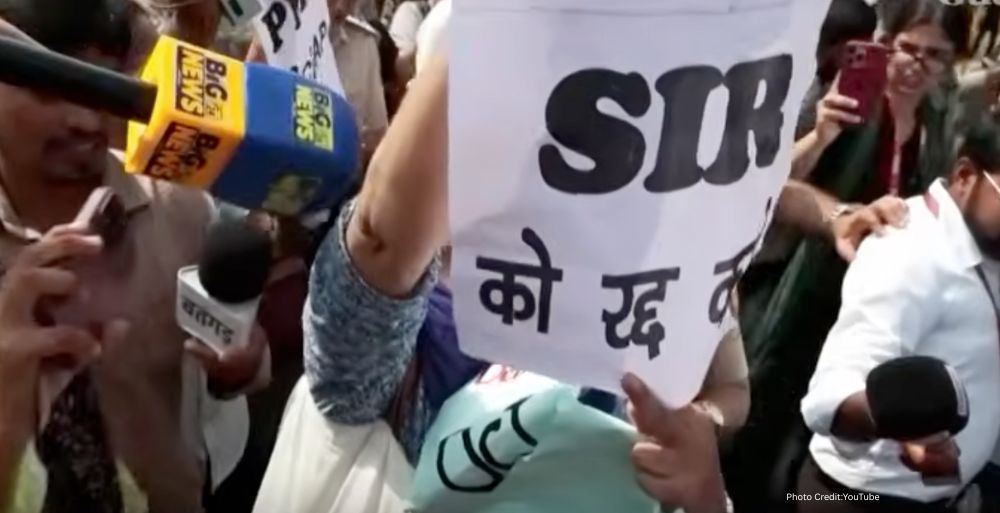
More than 2,000 protesters were detained in Delhi as authorities clamped down on demonstrations against Chief Election Commissioner Gyanesh Kumar over controversial voter list revisions that opposition leaders claim favor the ruling Bharatiya Janata Party (BJP).
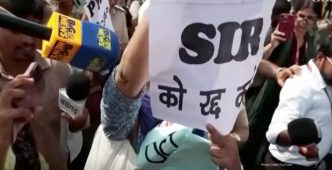
NEW DELHI, Oct 10 (Reuters) – In a significant show of force, Delhi police detained over 2,000 protesters on Saturday to prevent a planned demonstration demanding the resignation of Chief Election Commissioner Gyanesh Kumar. The protest was organized by the Cockroach Janta Party (CJP), a youth movement critical of the recent revisions to voter lists, which many critics allege disproportionately benefit the ruling Bharatiya Janata Party (BJP) led by Prime Minister Narendra Modi.
In anticipation of the rally, security measures were heightened across the Indian capital, with thousands of police and paramilitary personnel deployed. Authorities suspended mobile internet services in the central business district and closed dozens of metro stations and markets to thwart the gathering at Jantar Mantar, a historically significant site for protests in India.
A senior official from the Home Ministry, speaking on condition of anonymity, confirmed to Reuters that more than 2,000 individuals were detained in Delhi. In addition, local media reported that around 400 people were apprehended in Mumbai, India’s financial hub, as part of the same crackdown.
Witnesses reported small demonstrations across various locations in Delhi, including a crafts market and a memorial dedicated to Mahatma Gandhi, where protesters expressed their demands for Kumar’s resignation. “This is violating the rights of the people, and the country will not tolerate this anymore,” said Yogendra Solanki, a protester who was taken into custody.
Key Leaders Among the Detained
Among those detained was Abhijeet Dipke, the founder of the Cockroach Janta Party, along with senior leaders Saurav Das and Ashutosh Ranka. The police detained them upon their arrival in Delhi from Mumbai. Footage from the incident showed Dipke defiantly challenging the officers, stating, “I have come to be arrested, arrest me … I am not afraid of you guys.” An officer responded, urging him to cooperate.
The CJP condemned what they termed the “authoritarian detention” of their leaders and demanded their immediate release, pledging to continue their protests until Kumar resigns. “We will continue our protest tomorrow, the day after … until Gyanesh Kumar resigns. We will be on the streets,” said CJP leader Ajinkya Shinde in a statement to reporters.
Furthermore, reports indicated that authorities refused to provide information regarding the detained leaders’ well-being, even amidst news of Dipke’s grandmother’s death. Police claimed they informed Dipke about the situation and offered assistance for him to return home for the funeral.
Political Implications and Context
The protests represent a significant challenge to Modi’s administration, particularly against the backdrop of allegations that election authorities improperly revised voter rolls before recent state elections. The unrest has intensified following a report from the Indian Express, which revealed that two election commissioners raised concerns regarding Kumar’s voter-list revisions that resulted in the removal of approximately 130 million names from the lists.
Kumar has not publicly addressed these allegations, but both the Election Commission and the BJP deny any wrongdoing. The BJP maintains that its electoral victories are a result of Modi’s popularity and the country’s economic progress, accusing opposition parties of spreading misinformation regarding the electoral process.
The ongoing protests come just months after demonstrations over exam paper leaks led to the resignation of Modi’s education minister, illustrating a growing discontent among the populace. These events also unfold as India approaches a series of crucial state elections set to begin in early 2027.
Rahul Gandhi, leader of the opposition Congress party, indicated that Modi’s adversaries would not relent in their efforts. “We will continue to fight for the rights of the people,” he stated. In response, senior BJP member Ravi Shankar Prasad acknowledged the right to protest but criticized the opposition for allegedly “weaponizing” street demonstrations following electoral defeats.
Opposition leaders argue that the deletions from the voter rolls significantly impacted the outcomes of recent state elections won by the BJP, casting a shadow over the integrity of voting in the world’s largest democracy. According to data from the Election Commission, the removals included 63 million individuals who had relocated, 30 million who could not be traced, and 28 million who had passed away. The Commission asserts that these removals were part of a standard verification process and that any eligible voter who was mistakenly deleted has the option to re-enroll.