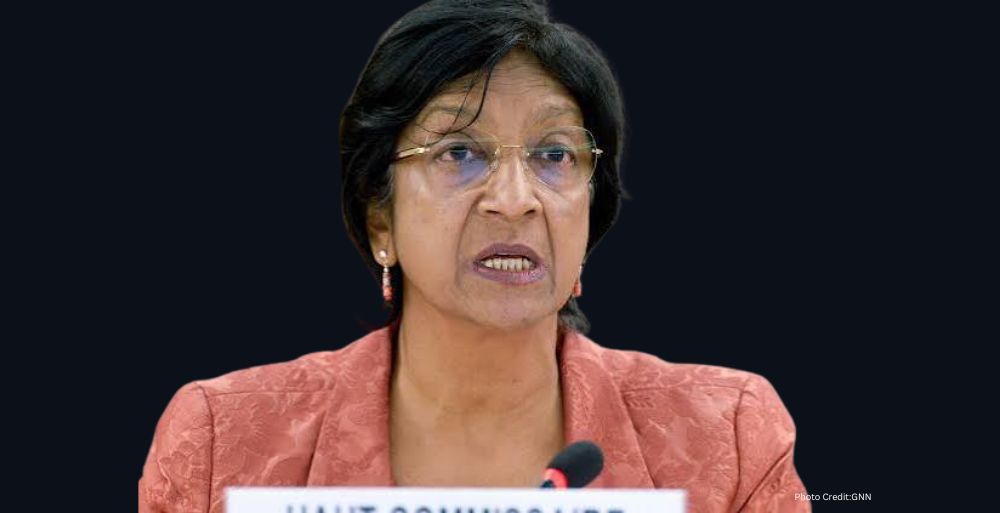
The Nobel Peace Prize has been awarded to Navanethem ‘Navi’ Pillay, a distinguished South African legal advocate, for her tireless commitment to upholding international law in an era characterized by power politics.
South African jurist and human rights pioneer Navanethem “Navi” Pillay has been awarded the 2026 Nobel Peace Prize, honoring her decades-long fight for accountability, human rights, and the global rule of law. The announcement was made in Oslo by Norwegian Nobel Committee Chair Jørgen Watne Frydnes, who hailed the 85-year-old former UN High Commissioner for Human Rights as “one of the great defenders of international legal principles in our time.”
Pillay received news of the honor in Germany while attending the Nuremberg Forum at the historic Nuremberg Court—a symbolic cradle of modern international jurisprudence.
A Career Defined by Justice and Accountability
Pillay’s legal career spans more than five decades, beginning during South Africa’s apartheid era where she worked as a defense lawyer alongside figures such as Nelson Mandela. She later made history as the first Black woman appointed to South Africa’s High Court.
Her international footprint expanded through landmark judicial and diplomatic appointments:
-
International Criminal Tribunal for Rwanda (ICTR): Pillay served as a judge and eventually president of the tribunal established following the 1994 Rwandan genocide, setting vital precedents for prosecuting war crimes and genocide.
-
International Criminal Court (ICC): She served as an ICC judge, helping shape the institution’s early jurisprudence.
-
UN High Commissioner for Human Rights: Leading the office from 2008 to 2014, she prioritized the protection of marginalized populations and victims of state violence.
Defending Legal Institutions Amid Geopolitical Strain
The Nobel Committee emphasized that Pillay’s selection comes at a critical juncture where international legal frameworks face unprecedented pressure from power politics. Frydnes warned that global institutions are increasingly coming under political attack, underscoring the urgent need to reinforce a rules-based order.
Pillay dedicated her award to survivors of international crimes and front-line defenders of justice. Reflecting on her career and her recent 85th birthday, she rejected calls to step back: “Why would you need courage to speak the truth? You interpret the law and you look at all the facts.” In a lighter moment during her acceptance speech, she drew laughter from attendees by joking that enthusiastic applause might prompt her to share the prize with Donald Trump, nodding to his long-standing ambition for the award.
Global Reactions and Political Fallout
The committee selected Pillay from a pool of 287 candidates, a field that included figures such as Russian dissident Yulia Navalnaya, Ukrainian child-rescue advocate Mykola Kuleba, and Ugandan climate activist Vanessa Nakate.
The announcement prompted contrasting reactions across the globe:
-
Widespread Praise: South African President Cyril Ramaphosa lauded Pillay’s triumph, placing her legacy alongside fellow South African Nobel laureates Nelson Mandela and Desmond Tutu. Agnès Callamard, Secretary General of Amnesty International, called the award an ideal statement against efforts to erode international justice, particularly attacks targeting the ICC. Haakon Gjerløw, acting director of the Peace Research Institute Oslo, noted the choice signals the enduring necessity of courageous individuals in defending legal norms.
-
Official Condemnation from Israel: The Israeli government strongly denounced the Nobel Committee’s decision, accusing it of politicizing the peace prize. The controversy stems from Pillay’s leadership of a UN commission that concluded in September 2025 that Israel had committed acts of genocide and incitement to genocide in Gaza—findings that Israeli officials rejected as a biased distortion of the conflict.
The 2026 Nobel Peace Prize stands as both a recognition of Pillay’s career and a global defense of international legal institutions during a period of intense geopolitical polarization.