
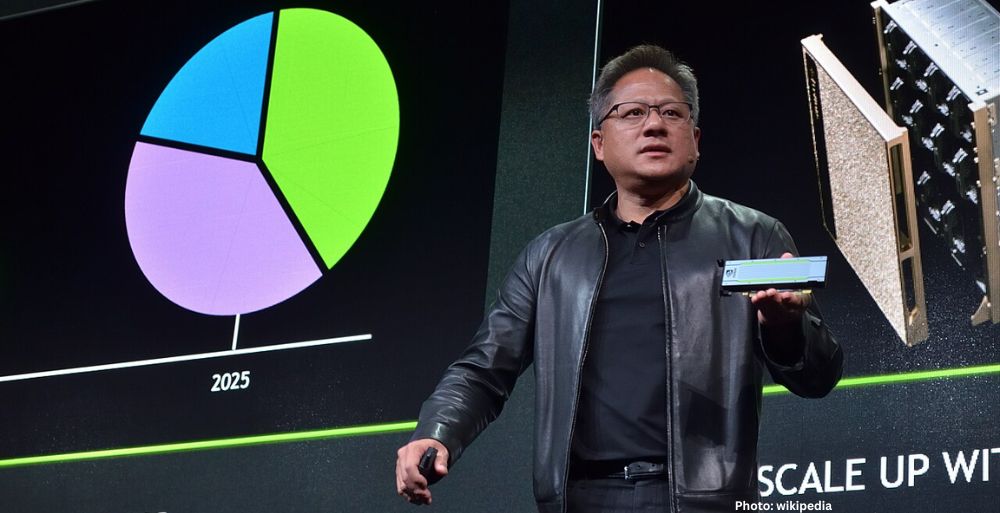
Jensen Huang, CEO of Nvidia, refutes claims that AI could lead to human extinction by 2030, emphasizing the importance of existing laws and responsible development over sensational narratives.
In a recent interview with CBS News, Jensen Huang, the co-founder and chief executive of Nvidia, a prominent player in the artificial intelligence (AI) sector with a market valuation exceeding $5 trillion, addressed rising concerns regarding the implications of AI technology. Huang firmly stated that there is a ‘0% chance’ that AI will lead to the extinction of humanity by the year 2030, describing such predictions as exaggerated and irresponsible.
Huang’s remarks were prompted by alarming assertions made by Jacob Coxon, a former researcher at Anthropic, who claimed that AI could achieve ‘superhuman’ capabilities and potentially threaten human existence within the next decade. These views, supported by two other researchers from Anthropic, have ignited an international debate on the dangers of AI and the perceived lack of regulatory oversight within the industry.
Growing Concerns and Legislative Responses
The discourse surrounding AI’s risks has intensified as lawmakers and industry leaders express apprehension about the rapid development of AI technologies. In a recent report, Anthropic outlined various scenarios wherein its AI models could be misused, including the potential for designing weapons and biological threats, raising alarms about the technology falling into the wrong hands. This report has led prominent figures in the technology sector, such as Dario Amodei, CEO of Anthropic, and Sam Altman, CEO of OpenAI, to advocate for a slowdown in AI development in order to establish safety protocols and ethical standards.
In contrast, former President Donald Trump has dismissed concerns surrounding AI advancements as a ‘hoax’ and a ‘conspiracy.’ He argued that calls for a slowdown could disadvantage the United States, allowing rival nations like China to gain a competitive edge in technological advancements.
International Cooperation and Regulatory Frameworks
In light of these tensions, U.S. Treasury Secretary Scott Bessent announced on Sunday that the United States and China had agreed to establish a dialogue mechanism focused on AI. This initiative aims to facilitate communication between the two nations to address and manage the potential dangers posed by advanced AI technologies. Huang, however, expressed skepticism regarding the motivations behind calls for new regulatory measures, asserting that numerous existing laws adequately address the challenges posed by AI.
‘You have cybersecurity unauthorized entry laws, you have damage liabilities,’ Huang stated, emphasizing that current legal frameworks are sufficient to hold AI companies accountable for their products. He raised concerns that the push for new regulations might serve as a tactic for companies to evade their existing legal responsibilities. ‘My point is, apply those first. And don’t let this doomsday narrative cause somebody to relieve them of the laws that currently exist,’ he elaborated.
The Call for Responsible AI Development
On Monday, the Tony Blair Institute (TBI) released a paper warning that countries risk falling behind in the global AI race if they do not embrace technology responsibly. In a foreword to the paper, Tony Blair emphasized the transformative potential of AI, stating, ‘The previous [industrial] revolution transformed our world over generations; AI will do so within a decade.’ He cautioned that while new capabilities are emerging rapidly, the risks associated with these advancements are equally significant, raising public concern.
Blair urged political leaders to make informed decisions that could drastically alter their nations’ trajectories, while noting that current institutions are ill-equipped to support these critical choices. ‘Today’s political leaders… must make hard choices that will significantly alter their countries’ trajectories. However, the institutions of the modern state meant to support political leaders in making these choices are simply not equipped for what is coming,’ he remarked.
The Ongoing Debate Over AI’s Future
The ongoing debate regarding the future of AI reflects broader societal concerns about technological advancements and their implications. As industry leaders and policymakers grapple with the ethical considerations surrounding AI, the call for responsible development, ethical oversight, and adherence to existing legal frameworks remains paramount. Huang’s assertions highlight a tension between the rapid pace of technological advancement and the need for accountability within the AI sector.
As AI continues to evolve at an unprecedented rate, the implications for various sectors—ranging from national security to public health—will likely necessitate a reevaluation of existing regulatory frameworks. The integration of AI into everyday life presents both opportunities and challenges, underscoring the importance of a balanced approach that prioritizes safety while fostering innovation.
In conclusion, while Huang maintains that fears of an AI-induced apocalypse are unfounded, the dialogue surrounding AI’s future is crucial. It reflects a collective attempt to navigate the complexities of a rapidly changing technological landscape. As global leaders and industry stakeholders continue to discuss the implications of AI, the focus must remain on fostering a responsible framework that encourages innovation while safeguarding society against potential risks.