A recent settlement involving the cancellation of offshore wind projects will allocate $900 million to a Louisiana liquefied natural gas initiative, benefiting a major donor to former President Donald Trump.
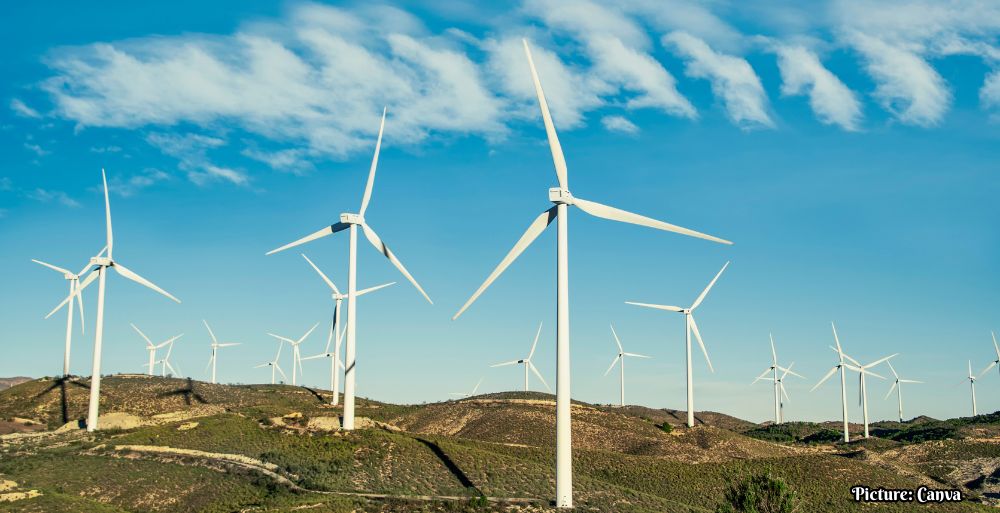
The Trump administration’s recent decision to cancel several offshore wind projects in favor of promoting fossil fuel energy has led to significant financial implications for a prominent donor to the former president. The settlement grants the German energy company RWE a total of $1.2 billion from a federal fund, contingent upon the company relinquishing its offshore wind leases in New York, California, and Louisiana. In return, RWE is expected to invest in unspecified oil, gas, or nuclear energy projects.
Of this payout, $900 million will be allocated towards purchasing a stake in a substantial liquefied natural gas (LNG) project based in Louisiana, as confirmed by statements from RWE and Woodside Energy, the lead owner of the project. Notably, this stake is being acquired from a private equity fund managed by Michael Dorrell, an Australian billionaire known for his close connections to Trump’s inner circle. Dorrell has contributed a total of $1 million to Trump’s inaugural committee and has been vocal about his lifestyle, which includes owning a mansion on a private island near Mar-a-Lago.
Details of the Settlement
Administration officials have distanced themselves from the selection of the Louisiana LNG project for investment, asserting that RWE made its decisions independently. White House spokeswoman Taylor Rogers characterized allegations of a conflict of interest as unfounded, stating, “This story is a brazen attempt to insinuate a conflict-of-interest that does not exist.” The Department of the Interior also clarified that no directives were issued regarding which company RWE should invest in, emphasizing that the settlements were voluntary agreements.
Political Reactions and Implications
The connections between the settlement and Dorrell have ignited strong reactions among lawmakers, particularly those scrutinizing the administration’s actions concerning offshore wind projects. Representative Jared Huffman, a Democrat from California and the leading figure on the House Natural Resources Committee, expressed significant disapproval. He condemned the settlements as an “insane waste of taxpayer funds” and raised concerns about their legality. Huffman indicated that he intends to expand his ongoing investigation to include the financial benefits that Dorrell’s firm may receive from the settlement.
The settlement agreement mandates that RWE provide audits demonstrating that its investments align with the administration’s expectations. However, the specifics regarding investment targets remain ambiguous. RWE has stated that it concluded there was “no path forward” for wind development in the United States, leading to its decision to pivot towards LNG investments instead.
Concerns Over LNG Project Viability
Experts have raised questions regarding the effectiveness of the $900 million investment in advancing the Louisiana LNG project. Woodside Energy, the majority owner of the project, reported that the transaction does not affect the project’s ownership structure or governance arrangements. Furthermore, analysts warn that the project might be at risk due to a lack of secured contracts for the gas it is intended to produce, which is typically crucial before final investment decisions are made on large LNG export terminals.
Ira Joseph, a scholar specializing in gas markets at the Center on Global Energy Policy at Columbia University, noted that the RWE investment appears to allow Stonepeak, Dorrell’s firm, to offload some of its financial exposure in a project viewed as risky. Joseph remarked, “In terms of the pure volume of gas or energy that will be created, this does not add anything.”\
Broader Legislative Efforts
Democratic lawmakers have indicated their commitment to holding energy companies accountable for the settlements, with some suggesting that they may ultimately be required to return the payouts to the U.S. Treasury. Several states have initiated a federal lawsuit challenging the legality of these agreements, reflecting a growing concern among legislators regarding the administration’s commitment to renewable energy initiatives and the potential ramifications of favoring fossil fuels.
The fallout from the settlement continues to unfold, with Huffman making it clear that he intends to pursue the recovery of the $900 million. He stated, “I would not even cash the check,” expressing a firm resolve to ensure that taxpayer dollars are not misappropriated. This controversy underscores the complex interplay of politics, energy policy, and campaign finance in an evolving landscape marked by competing interests.
Historically, the Trump administration has prioritized fossil fuel development, often at the expense of renewable energy initiatives. This shift in policy has drawn criticism from environmental advocates and some lawmakers who argue that it undermines efforts to address climate change. The current settlement is emblematic of broader trends in energy policy under the Trump administration, showcasing the tensions between fossil fuel interests and renewable energy development.
As the administration pivots towards fossil fuels, the implications for future energy policy remain uncertain. Critics warn that this approach could entrench dependency on fossil fuels and hinder progress towards sustainable energy solutions. The ongoing scrutiny of the RWE settlement and the connections to political donors could further complicate efforts to navigate the energy transition in the United States.
In conclusion, the RWE settlement illustrates the intricate relationships between energy policy, political contributions, and corporate interests. As lawmakers continue to investigate the financial implications of this deal, the future of energy policy in America hangs in the balance, shaped by both political and economic forces.