A report from Iranian state media claims a $10 million bounty has been placed on Barron Trump, the 20-year-old son of former President Donald Trump, amid ongoing tensions between the U.S. and Iran.
Iranian state media has recently asserted that there is a $10 million bounty on Barron Trump, the youngest son of former President Donald Trump, according to a report from Euronews. This announcement comes in the context of heightened political and military tensions between the United States and Iran, nearly six months into a conflict that has seen significant escalations.
The claim was made during a broadcast on Channel 3, a network affiliated with Iran’s Islamic Revolutionary Guard Corps (IRGC). The segment, which was titled “Where and how should we kill Barron Trump?”, reportedly included information regarding the location of Barron Trump’s university and detailed the positions of Secret Service agents and escort vehicles protecting him. The footage suggested that his whereabouts were “fully monitored,” raising serious security concerns.
In addition to the bounty claim, the broadcast alleged that an unnamed young woman had managed to evade Secret Service protection and met privately with Barron Trump, supposedly relaying information about him to the creators of the video. The claims included an assertion that he communicates privately via an Xbox platform. However, Euronews noted that it could not independently verify these assertions.
Attempts to engage with the White House for comment on the situation have yielded no response as of the time of reporting.
Background on Barron Trump
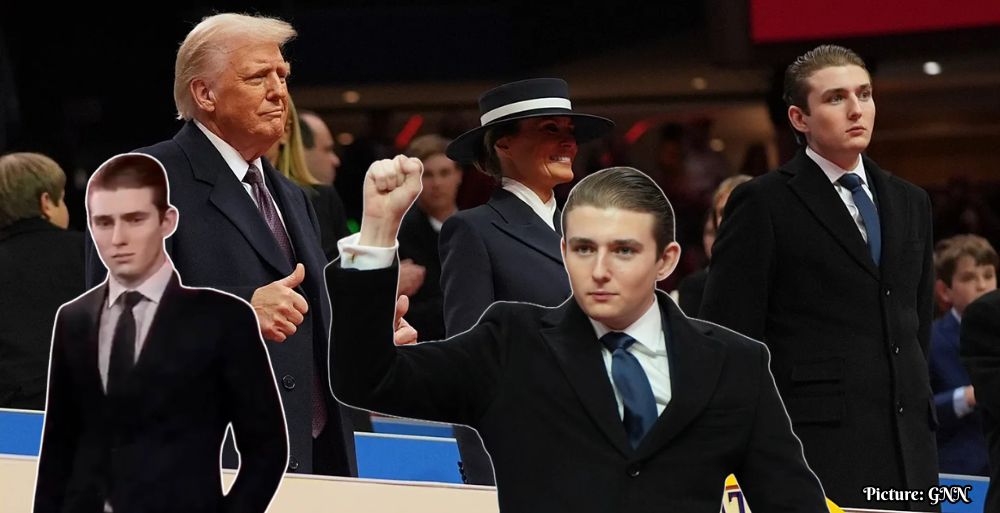
Barron Trump, who is currently a college student, has maintained a relatively low public profile compared to his older brothers, Donald Jr. and Eric Trump. He has participated in select official events, such as attending the UFC cage match at the White House in June and the State of the Union address in February. This low visibility has not precluded him from becoming a target of threats, particularly from Iranian sources.
In a previous instance last month, a video linked to Iranian interests threatened both Barron and First Lady Melania Trump. This video, titled “Where to kill Melania”, presented a mock-up of the First Lady’s motorcade and incited “freedom fighters” to take action against her, concluding with a message directed at Barron Trump: “Wait for us!” In response to the earlier threats, a spokesperson for the Secret Service indicated that the agency is aware of such videos and investigates any perceived threats against its protectees.
Historical Context of U.S.-Iran Relations
The threats against the Trump family are situated within a broader historical context of antagonism between the United States and Iran. U.S. officials have long warned that Iran and its proxies might seek retribution for the 2020 U.S. drone strike that killed Iranian General Qassem Soleimani. This event has prompted increased security measures for Donald Trump and several former administration members, though Iranian officials have consistently denied any plots to assassinate the former president.
Recent legal actions underscore the real concerns regarding threats against Trump. In 2023, Asif Merchant, a Pakistani businessman, was convicted for allegedly acting on behalf of Iran to carry out assassinations, with Donald Trump cited as a potential target. Additionally, federal authorities charged an Iranian national, Farhad Shakeri, in 2024 with plotting to develop a plan to kill Trump. These developments illustrate the heightened stakes involved in U.S.-Iran relations amid ongoing military conflict.
Current Conflict Insights
The recent reports of threats against Barron Trump coincide with a significant escalation in U.S.-Iran hostilities. The U.S. military’s actions early in the conflict included the killing of Iran’s supreme leader, Ayatollah Ali Khamenei, and various other senior officials. Donald Trump has publicly stated that many Iranian leaders have been eliminated, suggesting a diminished capacity for negotiation on Iran’s part.
As of now, the Pentagon reports that 18 U.S. service members have lost their lives in this ongoing conflict, with hundreds more injured. Conversely, thousands of Iranians have reportedly been killed, according to HRANA, a U.S.-based human rights organization. Public sentiment appears to be shifting, as recent polls indicate that a majority of Americans are opposed to the continuation of the war.
In conclusion, the claim of a bounty on Barron Trump is emblematic of the dangerous and unpredictable nature of U.S.-Iran relations today. As tensions remain high and the conflict shows no signs of resolution, the implications for the Trump family and U.S. national security continue to unfold.