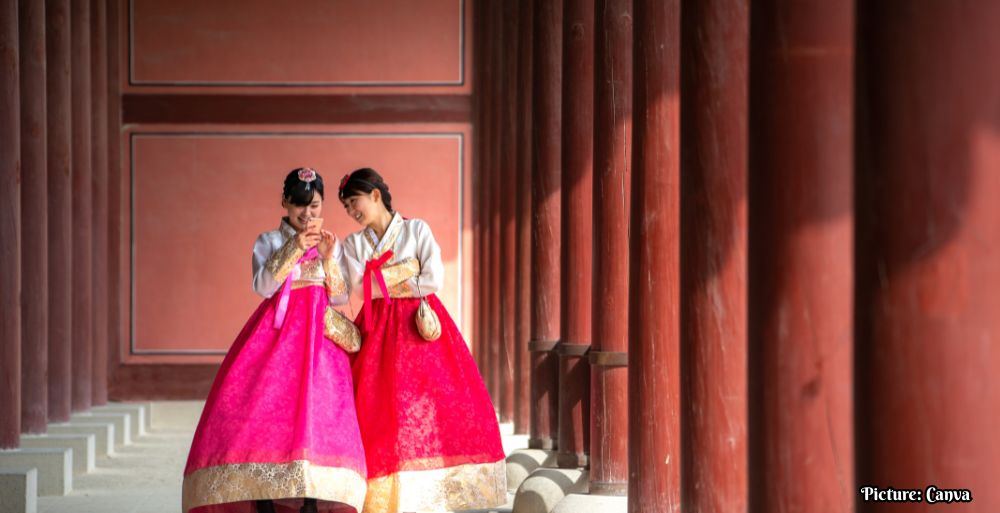
South Korean women are projected to become the first national population with an average life expectancy exceeding 90 years by 2030, according to recent studies, although this estimate carries substantial uncertainty.
In a groundbreaking analysis by researchers at Imperial College London, it is projected that by the year 2030, South Korean women could achieve an average life expectancy of 90.8 years. However, the study also underscores a significant caveat: there is only a 57 percent probability that this threshold will actually be crossed. This study, initially published in The Lancet, draws on mortality data from 35 industrialized nations and has spurred discussions about the implications of longevity in South Korea.
Historical Context and Methodology
The projection stems from a comprehensive analysis conducted in 2017, which utilized mortality data available up until 2014. Researchers, including Vasilis Kontis, James Bennett, and others, examined national death counts and population estimates to model age-specific mortality rates through 2030. At the time of the study, South Korean women ranked 29th in global life expectancy, with an average increase of 3.7 years per decade since 1985.
To develop their projections, the researchers employed an ensemble of 21 different mortality models to provide a more nuanced forecast of life expectancy. Each model was tested against historical data, and those with smaller errors received greater weight in the final analysis. This methodological rigor aimed to incorporate uncertainty in forecasting, although the researchers explicitly acknowledged that their projections were not definitive predictions.
Understanding Life Expectancy Estimates
Life expectancy at birth is often misconstrued as the specific age a newborn is likely to reach. Instead, it represents a statistical summary of mortality rates across all ages during a defined year. The 2030 estimate poses a hypothetical question: how long would a newborn live if she were subjected to the projected mortality rates throughout her life? Such estimates are inherently hypothetical, as real-life factors—including medical advancements, behavioral changes, and social determinants of health—will continue to evolve.
Importantly, an average life expectancy of 90.8 years does not imply that most women will die at that age or that every woman will gain an additional four years of life. Rather, it reflects a composite of varied life experiences. The study anticipates that more than half of the projected gains in longevity for women will arise from improved survival rates after the age of 65.
Probability and Uncertainty in Projections
The central estimate of 90.8 years does not represent a fixed outcome; rather, it reflects a range of possible futures. The model indicated a 57 percent chance of exceeding the 90-year mark, contrasted with a 43 percent chance of remaining below it. This suggests that while crossing the threshold is more likely than not, certainty remains elusive. Notably, the researchers estimated a 90 percent probability that South Korean women’s life expectancy would exceed the previous highest recorded figure of 86.7 years, achieved in 2012.
While South Korea is currently a leading candidate for top life expectancy in 2030, the competition remains tight, with France, Japan, and Spain following closely behind. However, the probability distributions for these countries overlap, indicating that outcomes are not guaranteed.
Current Life Expectancy Data and Projections
As the year 2030 approaches, more recent data provides insights into the trajectory of life expectancy in South Korea. According to the latest official life table from December 2024, female life expectancy stands at 86.6 years, a modest increase from 2023. In comparison, male life expectancy is recorded at 80.8 years, maintaining a female advantage of 5.8 years. However, this current figure falls short of the 90.8-year estimate derived from the 2017 model by 4.2 years.
To achieve the 90-year threshold by 2030, South Korea would need to see an average annual increase in life expectancy of 0.7 years from 2024 to 2030. This projection underscores the challenges faced in closing the gap, particularly as life expectancy typically does not rise in a linear fashion.
Recent National Forecasts and Comparisons
In light of the evolving data, South Korea has released a new population projection that utilizes updated mortality data from 1970 to 2021. This latest forecast estimates that female life expectancy may reach 88.1 years by 2030, with varying scenarios predicting a range between 87.0 and 89.0 years. Even the most optimistic scenario falls short of the earlier 90.8-year projection.
The divergence between these projections does not imply inaccuracies in the original Lancet analysis, as the studies employed different methodologies and time frames. However, it does necessitate a shift in understanding the 90.8 figure: it represents a notable past projection rather than a consensus expectation moving forward.
Future Implications
If South Korean women were to exceed a life expectancy of 90 years in 2030, it would mark a historic milestone, being the first recorded instance of such a national average for women. However, it is crucial to recognize that this achievement would not imply that the overall population averages 90 years nor that most deaths occur at that age. The milestone would nonetheless signify significant advancements in public health and longevity.
Crossing this threshold would challenge previous notions of mortality and underscore the potential for widespread improvements in survival across various age groups, particularly in later life. However, the study’s findings emphasize that the probability of achieving this milestone remains uncertain, highlighting the complexities inherent in predicting future health outcomes.