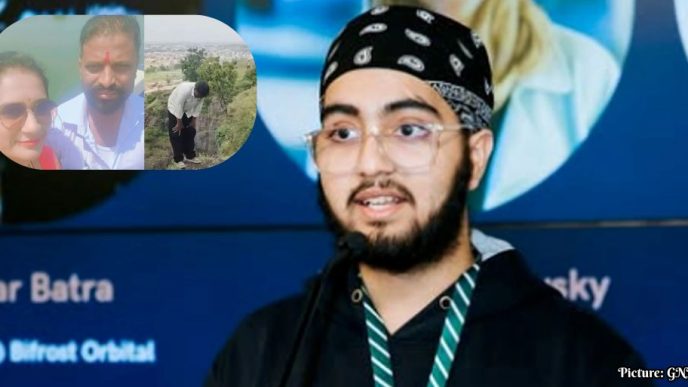
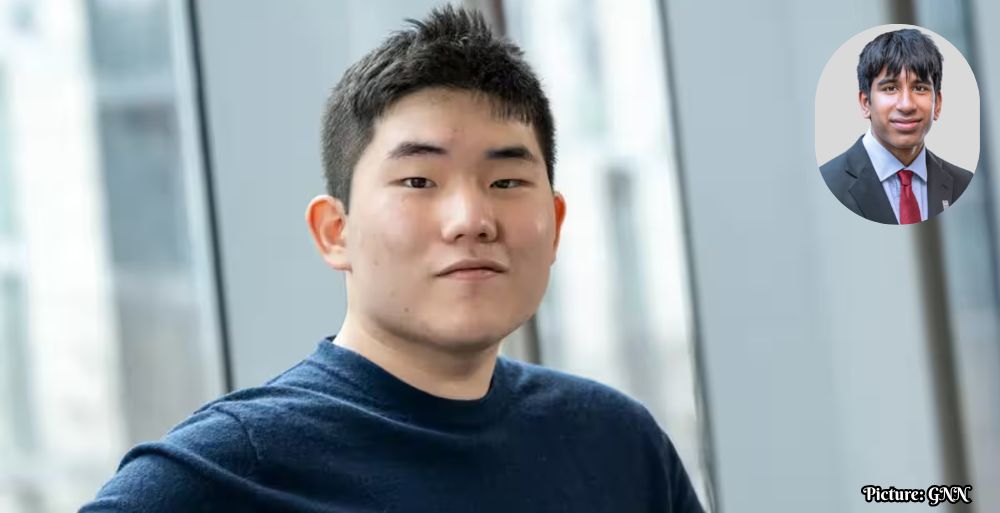
Mythreya Dharani, an 18-year-old student from Princeton, New Jersey, has developed an innovative AI model designed to predict how tumors will respond to the chemotherapy drug cisplatin. His work has earned him recognition as a top finalist in the prestigious 2026 Regeneron Science Talent Search, highlighting the potential of youth-led research in personalized medicine.
Mythreya Dharani, an 18-year-old senior at Princeton High School in New Jersey, is making waves in the scientific community with his groundbreaking research project that aims to revolutionize cancer treatment. Dharani has created an artificial intelligence (AI) model capable of predicting the responses of individual tumors to the chemotherapy drug cisplatin, a common treatment for various types of cancer. His innovative work has positioned him as one of the top 40 finalists in the 2026 Regeneron Science Talent Search (STS), a prestigious competition that seeks to identify and inspire promising young scientists across the United States.
The Regeneron STS, which annually attracts nearly 1,900 high school seniors, culminates in a public exhibition of research projects and a formal awards ceremony where the top winners are announced. The competition emphasizes not only the academic achievements of its participants but also their potential to contribute meaningfully to global scientific challenges.
The Significance of Personalized Medicine
Dharani’s research is particularly timely and relevant given the increasing focus on personalized medicine in cancer treatment. By integrating machine learning algorithms with genomic data, his AI model assists healthcare providers in selecting optimal treatment plans tailored to the individual characteristics of a patient’s tumor. This approach not only enhances the effectiveness of treatments but also seeks to mitigate the adverse side effects often associated with conventional chemotherapy regimens.
According to the American Cancer Society, cisplatin is used to treat various cancers, including testicular, bladder, and lung cancers, but its efficacy can vary significantly based on the tumor’s genetic makeup. Dharani’s model aims to bridge the gap between generic treatment protocols and individualized patient care, thus embodying the principles of precision medicine.
A Multifaceted Research Background
In addition to his work on cancer treatment, Dharani’s scientific interests extend into physics. Previously, he developed a machine learning algorithm to analyze particle collision data for a different project within the Regeneron STS. This initial research involved addressing the challenges posed by measurement errors in high-energy particle collision experiments. To tackle these issues, he designed a three-part system that improves data analysis efficiency while accounting for potential discrepancies.
His model consists of three networks: the first is tasked with identifying symmetrical patterns typical of particle collisions; the second detects and corrects measurement errors; and the third extracts valuable insights from these errors. This innovative approach enables researchers to delve deeper into the fundamental concepts of symmetry in quantum field theory, a core aspect of modern physics.
Extracurricular Engagement and Mentorship
Beyond his academic and research pursuits, Mythreya Dharani is actively involved in extracurricular activities that reflect his commitment to education and community engagement. As the co-captain of his school’s varsity debate team, he has developed critical skills in argumentation and public speaking, essential tools for effective communication in any scientific discipline.
Additionally, he volunteers as an instructor with the UCLA Math Circle, where he teaches advanced mathematics to elementary and middle school students. His dedication to mentoring younger students demonstrates his belief in the transformative power of education and his desire to inspire the next generation of scientists. By sharing his knowledge and passion for science, Dharani aims to cultivate interest in STEM fields among younger generations.
Looking Forward: Implications for the Future of Science
The recognition that comes with being a finalist in the Regeneron Science Talent Search holds significant implications for Dharani’s future endeavors. It not only provides validation for his current research but also opens doors for further exploration in the fields of physics and medicine. As he continues to refine his AI model and broaden his understanding of tumor responses to chemotherapy, Dharani is poised to contribute to the evolving landscape of cancer treatment.
His journey serves as a powerful reminder that groundbreaking scientific discoveries can emerge from high school science projects, challenging the traditional notion that substantial scientific contributions require advanced degrees or extensive resources. Furthermore, Dharani’s story underscores the vital role of mentorship and educational support in nurturing young talent within the scientific community.
A Broader Impact on Cancer Research
Mythreya Dharani’s research holds the potential to impact cancer treatment significantly, particularly as the medical community increasingly embraces personalized approaches to healthcare. By improving the accuracy of predictions regarding tumor responses to chemotherapy, his AI model could help clinicians make more informed decisions, ultimately leading to better patient outcomes.
As the healthcare landscape continues to evolve with advancements in technology and data analytics, young innovators like Dharani exemplify the spirit of inquiry and creativity that drives scientific progress. His work not only highlights the importance of individual contributions but also reinforces the notion that the next significant breakthrough in science could very well originate from a high school project.
In conclusion, Mythreya Dharani’s achievements in developing an AI model to predict tumor responses to cisplatin reflect the promising future of personalized medicine and the critical role of young scientists in addressing global health challenges. As he advances his research, he inspires peers and future researchers alike, emphasizing that innovation knows no age and that the pursuit of knowledge can lead to profound societal impacts.