
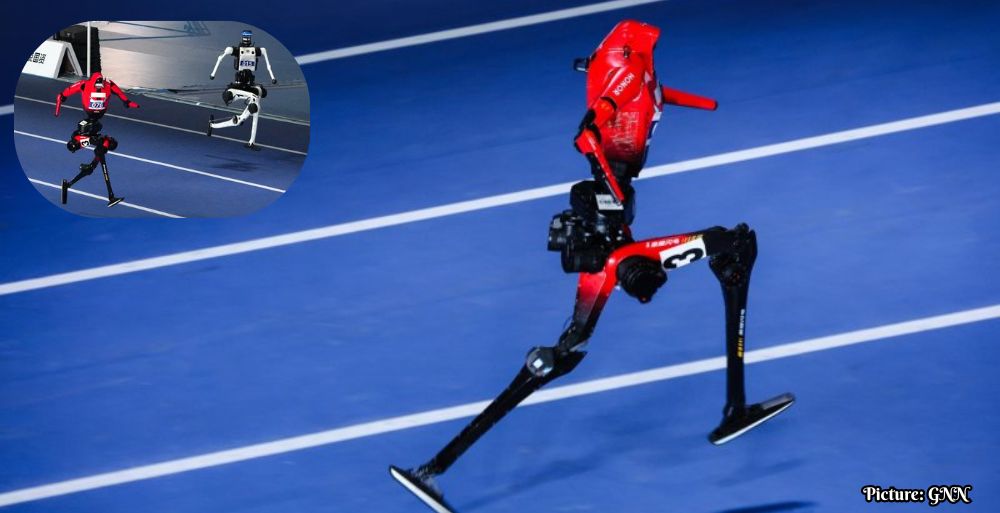
The World Humanoid Robot Games in Beijing showcased significant advancements in robotics, as a humanoid robot named Lightning Bolt broke Usain Bolt’s long-standing 100-meter dash record, running the distance in just 9.39 seconds.
The second annual World Humanoid Robot Games commenced on August 22, 2026, at the National Speed Skating Oval in Beijing, China. This year’s event saw a humanoid robot named Lightning Bolt make headlines by eclipsing Usain Bolt’s previous world record of 9.58 seconds, set in 2009, by completing the 100-meter sprint in an impressive 9.39 seconds, albeit crashing into a blue wall at the finish line. The accomplishment reflects the rapid advancements in robotics and artificial intelligence, as machines increasingly demonstrate capabilities that rival human performance.
In a remarkable prelude to the official opening of the games, another humanoid robot developed by the Chinese smartphone company Honor achieved a record time of 9.32 seconds during a trial run, reaching a peak speed of 14.5 meters per second. This event serves to highlight not only the competitive spirit of the games but also China’s burgeoning prowess in the field of robotics.
Event Overview and Context
The World Humanoid Robot Games feature more than 2,000 robots competing across 51 events, including running, table tennis, and soccer. The five-day event underscores China’s growing capabilities in robotics amid global competition, particularly with the United States. Hosted at the National Speed Skating Oval, a venue originally built for the 2022 Winter Olympics, the games attract participants and spectators from around the world. The event is a showcase of technological innovation and a testament to the strides made in the field of robotics.
Notably, a humanoid robot at the event demonstrated a standing high jump of 2.88 meters, surpassing the previous human high jump record of 2.45 meters set by Cuban athlete Javier Sotomayor in 1993. This feat has further fueled discussions about the potential for robots to exceed human capabilities in various physical domains. Spectators expressed their excitement about these technological advancements, with Li Yanfeng, an education worker and Beijing resident, stating, “At first, I wasn’t very accepting of artificial intelligence… but now that I see this development is unstoppable, I decided to come and take a look.”
Public Reactions and International Participation
The games have drawn significant public interest, with many attendees expressing amazement at the robots’ performances. Yang Shangzheng, a spectator, remarked, “These sports are perfectly normal for humans, but now robots can do them. I find it amazing.” Liu Tao, who attended the event with his son, expressed a desire to see “the best robots China currently has to offer.” This growing acceptance and curiosity about robotics reflect a broader societal shift toward embracing technological advancements.
The competition features entries from 16 countries, including Germany, Japan, and the United States, underscoring the global interest in humanoid robotics. Events such as weightlifting and tug of war add diversity to the competition, showcasing the multifaceted capabilities of these machines. The presence of international competitors highlights the collaborative and competitive nature of advancements in robotics, fostering a spirit of innovation across borders.
Technological and Political Context
As the field of humanoid robotics continues to evolve, the United States has intensified scrutiny over foreign-made robots, particularly those from China. In a notable action during the Trump administration, the Federal Communications Commission (FCC) imposed a ban on the import of new foreign-made humanoid robots, citing potential national security risks. FCC Chair Brendan Carr expressed support for these measures, stating, “I welcome these Executive Branch national security determinations… the FCC will continue to do our part to secure America’s critical supply chains.” This context adds a layer of complexity to the technological advancements being showcased at the World Humanoid Robot Games.
The political backdrop surrounding robotics development is underscored by concerns over technological leadership and security. As countries compete to advance their capabilities in robotics and artificial intelligence, the implications of these developments extend beyond mere competition; they touch on issues of national security and economic strategy. The U.S. government’s vigilance regarding foreign robotics technologies reflects a broader apprehension about the global race for technological supremacy.
As the World Humanoid Robot Games progress, observers will be watching closely to see how these advancements in robotics influence both competitive dynamics and regulatory landscapes worldwide. The event serves not only as a platform for showcasing cutting-edge technology but also as a reflection of the growing significance of robotics in the global economy and its potential impact on various industries.
The implications of this technological evolution are vast, as robots become increasingly integrated into everyday life across various sectors, including manufacturing, healthcare, and education. The fascination with humanoid robots demonstrated at the games signals a turning point in public perception, suggesting that as these technologies advance, they may become more commonplace in human environments.