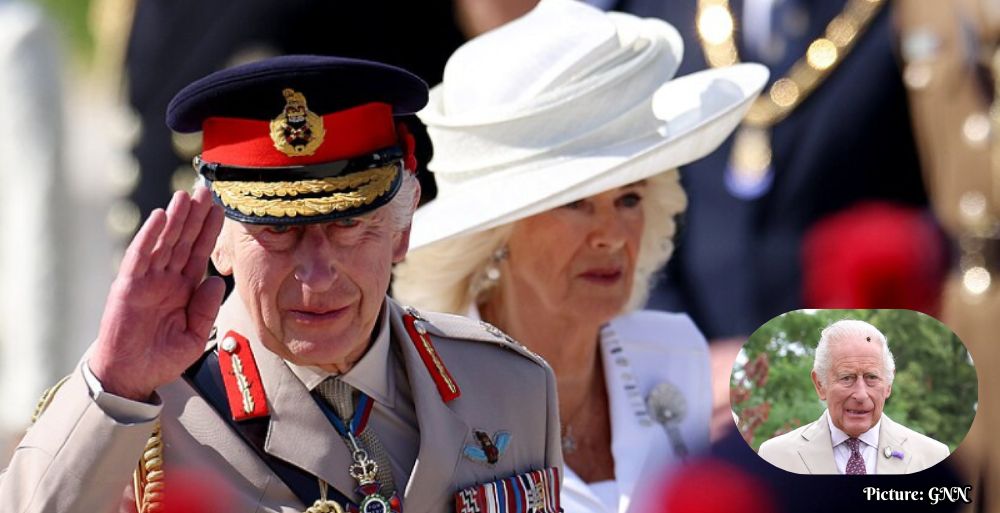
King Charles III is under scrutiny following the alteration of his title from ‘Defender of the Faith’ to a more inclusive phrasing, raising questions about the monarchy’s role in a multi-faith society and the implications for the Church of England.
King Charles III has recently come under fire from various commentators and religious leaders after the Sovereign Grant Annual Report, released in June 2023, replaced the traditional title of ‘Defender of the Faith’ with a new description. This change emphasizes the monarch’s role as ‘Supreme Governor of the Church of England and protects the space for Faith within the multi-faith nation.’ Critics argue that this modification represents a significant shift in the monarchy’s relationship with Christianity and the historical significance of the title.
Historical Context of the Title
The title ‘Defender of the Faith’ has its origins in the early 16th century, initially bestowed upon King Henry VIII by Pope Leo X in 1521. This title signified the monarch’s commitment to the Catholic Church, which later transformed into a symbol of the Church of England following Henry’s break with Rome. Over the centuries, it has come to represent the British monarch’s role as the leader of the Church of England and a protector of Christianity in the UK.
In recent decades, the religious landscape of Britain has evolved significantly, with an increasing number of citizens identifying with various faiths or no faith at all. The new wording in the Sovereign Grant Annual Report has been interpreted by some as an attempt to modernize the monarchy’s image in recognition of this diversity. However, critics argue that it undermines the historical and religious significance inherent in the role of the monarch.
Criticism from Religious Leaders
One of the most vocal critics of this change is Gavin Ashenden, a former chaplain to Queen Elizabeth II. Ashenden has publicly condemned King Charles III for what he perceives as a neglect of his oath as ‘Defender of the Faith,’ stating that the king is effectively “deserting Christians.” He argues that the revision dilutes the monarchy’s commitment to Christianity and diminishes its importance in British identity.
Royal commentator Richard Fitzwilliams echoed these sentiments, describing the new phrasing as “weak and woke.” He suggested that a more effective approach would have been to retain ‘Defender of the Faith’ alongside a phrase recognizing Britain’s multi-faith character, arguing that the Church of England should not be weakened further. Fitzwilliams emphasized the unique position of the Church of England within the structure of European monarchies, particularly noting that it is the only European monarchy to maintain the tradition of a coronation.
Charles’s Ecumenical Approach
In contrast to the criticisms, some experts argue that King Charles III’s approach reflects a broader understanding of faith in a diverse nation. Christopher Andersen, author of the biography “Kate!”, highlighted that Charles has long demonstrated a “powerful ecumenical streak.” Andersen noted that Charles’s interest in various religions, such as Islam, Buddhism, and Hinduism, dates back to his student days at Cambridge in the 1970s, suggesting that this inclusive vision is necessary for a contemporary monarchy.
Andersen remarked, “Charles has long believed that no one religion has all the answers,” implying that the king is striving to create a more inclusive environment for all faiths within the UK. He also pointed out that the newer generation of royals, including Prince William and Catherine, Princess of Wales, may have differing views regarding the traditional title of ‘Defender of the Faith,’ which could indicate a potential shift in how future monarchs perceive their roles in relation to faith.
Generational Perspectives on Faith
Andersen recounted a notable moment during Prince William’s enrollment at Eton College in 1995, when he hesitated to identify his religion on the enrollment forms. This anecdote illustrates the ambivalence that younger royals may feel toward traditional religious affiliations and raises questions about how future monarchs will navigate their roles concerning faith. William’s uncertainty during such a formative moment could suggest an evolving perception of religious identity among the monarchy.
Ian Pelham Turner, a royal broadcaster, further emphasized that while King Charles III is a “deep thinker” regarding religion, Prince William appears less engaged with church matters. In contrast, Catherine has reaffirmed her Christian beliefs, especially during personal challenges, such as her recent health struggles. This divergence in perspectives highlights the complexities within the royal family regarding faith and its significance.
Implications for the Church of England
The ongoing debate about the title change raises critical questions about the future of the Church of England and its relationship with the monarchy. Fitzwilliams noted that the Church is already facing challenges, including declining attendance and influence. He warned that further weakening the ties between the monarchy and the Church could have detrimental effects on both institutions.
He referenced Queen Elizabeth II’s analogy comparing the Church to an umbrella that allows other faiths to flourish, indicating the delicate balance the monarchy must maintain in promoting inclusivity while upholding the Church’s significance. As the UK becomes increasingly pluralistic, the monarchy’s approach to religion may need to evolve accordingly to reflect the values and beliefs of a diverse populace.
Conclusion
The criticism of King Charles III’s revised title exemplifies the complexities of modern monarchy in an ever-evolving religious landscape. As discussions surrounding the role of the monarchy and the Church of England continue, the royal family faces the challenge of balancing traditional values with contemporary expectations regarding faith and inclusivity.