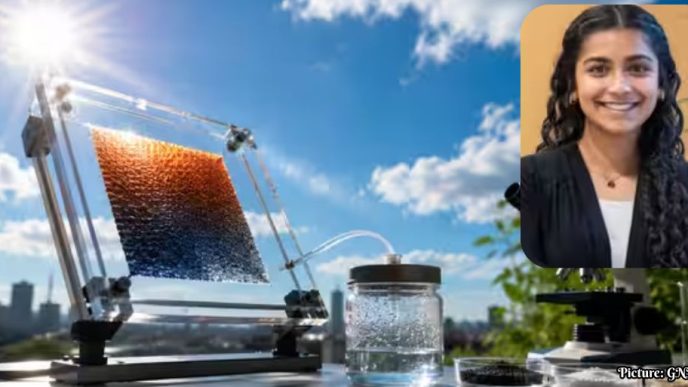

A 17-year-old student from California, Arnav Kodavati, is transforming discarded food into biodegradable paper towels, offering a new solution to food waste and sustainability challenges.
In a notable endeavor to tackle environmental sustainability, 17-year-old Arnav Kodavati from California has developed a method for producing biodegradable paper towels from discarded food scraps. This initiative was showcased at the International Science and Engineering Fair (ISEF), where it received significant attention for its innovative approach to recycling food waste into a functional everyday product.
Kodavati’s project explores the potential of utilizing cellulose-rich fibers found in food waste, transforming materials that typically end up in landfills into sustainable alternatives to conventional paper towels. Traditional paper towels contribute significantly to environmental degradation due to their single-use nature and the resources required for their production.
Understanding the Value of Food Waste
Food waste, often dismissed as mere refuse, is actually a rich source of cellulose and other plant-based polymers. According to the USDA, approximately 30-40% of the food supply in the United States is wasted, amounting to around 133 billion pounds of food annually. Much of this waste contains valuable materials that could be repurposed rather than discarded.
Kodavati’s methodology begins with the drying and grinding of food scraps into smaller particles, followed by a series of chemical treatments designed to extract cellulose-rich fibers while removing unwanted components. This critical transformation enables the repurposing of what is typically regarded as waste into a viable raw material for production.
In a video presentation accompanying his project, Kodavati elaborates on the intricate steps involved in developing these biodegradable sheets. He walks viewers through the process of converting discarded food into cellulose fibers, showcasing the significant potential of these materials when effectively utilized.
The Science Behind the Sheets
To create effective paper towels, the engineered sheets must meet two essential criteria: rapid liquid absorption and structural integrity when wet. Achieving this dual functionality is challenging. To address this, Kodavati combined the recovered cellulose fibers with pectin—a natural polymer commonly found in fruits—and treated the mixture with calcium chloride. This treatment enhances the internal structure of the sheet, allowing it to maintain its form even when saturated with liquid.
Testing indicated that the prototypes could absorb approximately 5 to 6 milliliters of liquid per 5-by-5-centimeter sheet while also retaining adequate wet strength. The introduction of calcium-based crosslinks significantly improved the material’s structural integrity, with wet strength measurements increasing from about 0.19 newtons in uncrosslinked material to as much as 0.34 newtons in the treated versions. Such enhancements are critical as they ensure that the biodegradable paper towels can perform effectively in real-world conditions.
Market Viability and Economic Considerations
One of the primary challenges facing sustainable products is their market viability, particularly in terms of cost. According to Kodavati’s project estimates, the production cost for 100 sheets of these biodegradable paper towels could be around $2.98, which positions it competitively against existing sustainable alternatives, typically priced at approximately $3.40 for the same quantity. It is important to emphasize that these figures are projections and do not yet reflect market availability.
Scaling up production introduces additional challenges, such as the inherent variability in food waste composition and the need for consistent quality control. As Kodavati’s project evolves, addressing these factors will be crucial for transitioning from a laboratory concept to a viable commercial product. The cost of collecting, transporting, and processing food waste must also be factored into any future production model.
Broader Applications and Future Directions
The potential applications for Kodavati’s biodegradable material extend beyond paper towels. The combination of recovered cellulose, plant-derived binders, and calcium-based reinforcements could be adapted for various disposable products, including wipes, packaging materials, and absorbent mats. Each application would necessitate distinct properties, such as increased stiffness for packaging or varying levels of softness and strength for wipes.
Moreover, the project underscores the importance of innovative thinking in the pursuit of environmental sustainability. It exemplifies how youth engagement in science and technology can lead to impactful solutions for pressing global issues. As discussions surrounding sustainability and waste management continue to evolve, projects like Kodavati’s highlight the potential for new materials to emerge from our existing waste streams, fostering a more circular economy.
Conclusion: A Step Towards Sustainability
Arnav Kodavati’s exploration into converting food waste into biodegradable paper towels represents a promising step toward addressing environmental challenges associated with waste and sustainability. His project serves as a reminder of the untapped potential within our waste systems to create functional, eco-friendly alternatives that could reshape consumer habits in the future. The innovation and dedication displayed by young scientists like Kodavati could pave the way for a more sustainable future, encouraging further research and investment in alternative materials derived from waste.
As the world grapples with the implications of climate change and resource depletion, projects like this are essential to promoting a more sustainable lifestyle. The shift toward utilizing waste resources not only presents an opportunity to revolutionize product design but also cultivates a mindset that prioritizes environmental responsibility. With growing awareness and support for such initiatives, the future of sustainable products could very well depend on the creativity and ingenuity of young innovators like Kodavati.