
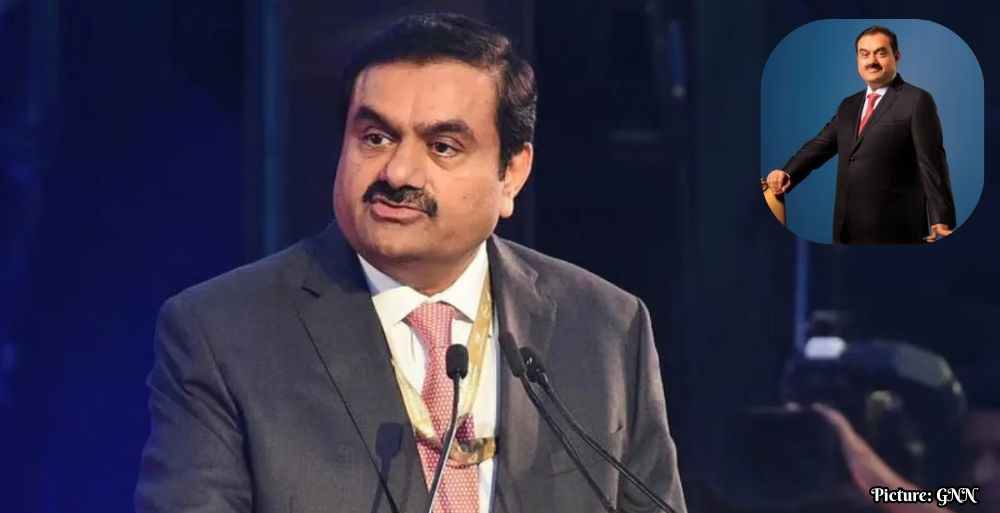
A U.S. District Judge has dismissed criminal charges against Indian billionaire Gautam Adani, raising concerns about the Justice Department’s decision-making process and the implications of his investment pledge in the U.S.
NEW YORK, Aug 10 (Reuters) – A federal district judge in Brooklyn dismissed criminal charges against Indian billionaire Gautam Adani on August 7, 2024, while expressing significant reservations about the Justice Department’s rationale for abandoning the fraud and bribery case. The ruling delivered by U.S. District Judge Nicholas Garaufis has ignited discussions regarding the motivations behind the dismissal, particularly in light of Adani’s announced commitment to invest $10 billion in the United States, which he proposed in November 2024.
The Justice Department’s decision to discontinue this high-profile prosecution adds to a pattern observed during the latter years of the Trump administration, wherein federal prosecutors have sought to drop several notable white-collar criminal cases. Adani was charged with conspiring to bribe Indian government officials to secure approval for a solar energy project and subsequently misleading U.S. investors regarding the anti-corruption practices of his conglomerate, the Adani Group, which has consistently denied any wrongdoing.
Concerns Raised by Judge Garaufis
In his ruling, Judge Garaufis stated he found no direct evidence that Adani’s pledge to invest influenced the decision to dismiss the case. However, he did express concerns regarding the involvement of Principal Associate Deputy Attorney General Trent McCotter, who reportedly engaged with Adani’s defense team in discussions that led to the dismissal. Judge Garaufis characterized these actions as “irregularities” that could undermine the integrity of prosecutorial decision-making. “The irregularities in the decision to dismiss the indictment are concerning,” Garaufis remarked, suggesting that McCotter prioritized his judgment over the professional opinions of multiple federal officials involved in the investigation.
A spokesperson for the Justice Department defended the decision, citing a July 4 court filing in which McCotter explained that the dismissal followed consultations with both defense attorneys and other Justice Department lawyers, along with his own research and analysis.
Adani’s Statement and Ongoing Civil Matters
In response to the court’s ruling, Gautam Adani expressed his gratitude through a statement posted on X, where he noted, “I welcome the U.S. Court’s decision with humility and deep respect for the judicial process.” Nevertheless, Judge Garaufis clarified that his dismissal should not be interpreted as an endorsement of the Justice Department’s decision or an opinion on the merits of the case. The judge has requested further information from the Justice Department to aid in reviewing whether to dismiss charges against other defendants associated with the case.
Adani faced allegations in 2024 that he had agreed to bribe Indian officials, facilitating his company’s approval for a solar energy project. Despite the serious nature of these claims, Adani has not appeared in a U.S. court to respond to the allegations directly.
Legal Context and Financial Settlements
In the July 4 court filing, McCotter characterized the case as largely foreign in nature, challenging to prove, and inconsistent with the agency’s current enforcement priorities. This decision comes on the heels of separate civil charges from the U.S. Securities and Exchange Commission (SEC), in which Gautam Adani agreed to a $6 million settlement, while his nephew, Sagar Adani, consented to pay $12 million to resolve related allegations. Furthermore, Adani Enterprises Limited has reached a separate agreement with the U.S. Treasury Department, settling for $275 million due to alleged violations of Iran sanctions.
McCotter also addressed media speculation alleging that Adani’s investment promise played a role in the case’s dismissal. In a sworn declaration filed in court on July 15, Adani confirmed his previous commitment to invest $10 billion in the United States and noted that his legal team had communicated with the Justice Department, suggesting that this pledge could potentially facilitate a resolution to the ongoing issues.
Public Perception and Broader Implications
Judge Garaufis reflected on the broader implications of investment offers on judicial proceedings, suggesting that it is ultimately up to the public to assess the impact of such offers on the fair administration of justice and the rule of law. “It is up to the public to decide what effect offers of this kind have on the equal administration of justice and the rule of law,” he concluded.
The dismissal of charges against Adani not only highlights the complexities involved in prosecuting high-profile foreign nationals but also raises questions regarding U.S.-India relations, particularly in the context of foreign investments and international business dealings. The case underscores the challenges that law enforcement agencies face when navigating international legal frameworks while simultaneously balancing domestic economic interests. As the U.S. continues to engage with India as a key economic partner, the resolution of such cases will likely influence future discussions surrounding foreign direct investment and regulatory oversight.
Moreover, this case sheds light on the evolving landscape of prosecutorial discretion in high-stakes financial crimes, with the recent trend of federal prosecutors reconsidering the viability of pursuing complex international cases. Legal experts may view this dismissal as part of a larger narrative about the shifting priorities of the Justice Department, particularly in terms of resource allocation and strategic focus in combating corruption and financial misconduct.