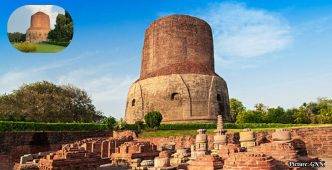
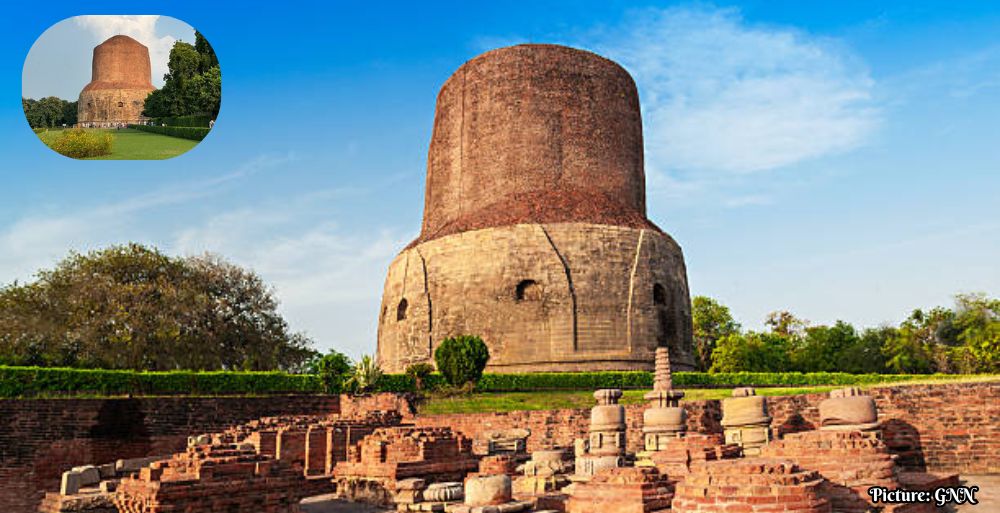
The ancient Buddhist site of Sarnath in Uttar Pradesh has been inscribed on the UNESCO World Heritage List, highlighting its significance in India’s cultural and spiritual heritage.
NEW DELHI— The ancient Buddhist site of Sarnath, located in the Indian state of Uttar Pradesh, has officially been inscribed on the UNESCO World Heritage List. This significant recognition, announced on July 29, 2023, during the ongoing 48th session of the World Heritage Committee in Busan, South Korea, is seen as a pivotal moment for India, celebrating its rich cultural, spiritual, and civilizational heritage.
Prime Minister Narendra Modi expressed his pride in the UNESCO designation, underscoring Sarnath’s deep connections to Lord Buddha. He articulated that the site embodies teachings of wisdom, compassion, and harmony that resonate not only within India but across the globe. In a post shared on X, Modi remarked, “Sarnath has a close association with Lord Buddha, whose timeless message of wisdom, compassion and harmony inspires the world,” emphasizing the site’s role in promoting Buddhist ideals.
Historical Significance of Sarnath
Sarnath holds a unique and revered place in Buddhist history as the site where Lord Buddha delivered his first sermon after attaining enlightenment. This event, known as the Dharmachakra Pravartana or the “turning of the Wheel of Dharma,” marks the inception of Buddha’s teachings and the establishment of the Buddhist Sangha, or community. This historical moment has made Sarnath a central pilgrimage site for Buddhists worldwide, drawing visitors seeking spiritual insight and connection.
The site also houses the renowned Lion Capital of Ashoka, which was discovered at Sarnath and later adopted as the National Emblem of India. The inscription by UNESCO acknowledges not only the archaeological importance of Sarnath but also highlights the universal values represented by Buddha’s teachings, which advocate for peace, compassion, and harmony. As such, Sarnath is positioned as a critical intersection of history, spirituality, and culture.
Government and Diplomatic Reactions
The Ministry of External Affairs of India stated that the inclusion of Sarnath on the World Heritage List is a celebration of India’s extensive cultural heritage and offers an opportunity for people worldwide to engage with Buddha’s teachings of peace and non-violence. This recognition is expected to enhance global awareness and appreciation of India’s contributions to religious and philosophical thought.
Vishal V. Sharma, India’s Ambassador and Permanent Representative to UNESCO, expressed gratitude for the collaborative efforts that led to this achievement. He acknowledged the contributions of the Indian government, the Ministry of Culture, the Archaeological Survey of India (ASI), and the World Heritage Centre in securing the recognition. Sharma emphasized that Sarnath remains a site of reflection for over 500 million Buddhists worldwide, inspiring values such as truth, non-violence, mindful living, and responsible global citizenship.
Sharma noted, “Sarnath remains a site of reflection for over 500 million Buddhists worldwide and inspires the youth to seek truth, embrace non-violence, pursue mindful living, and become responsible global citizens committed to inclusive social transformation.” His comments underscore the continued relevance of Sarnath in promoting ethical living and community engagement among younger generations.
Implications for Cultural and Spiritual Tourism
The UNESCO designation is anticipated to significantly boost Sarnath’s profile as a global destination for cultural and spiritual tourism. Officials expect that this recognition will foster increased international interest, allowing visitors to experience a site that embodies India’s lasting contributions to global thought and philosophy. Sarnath’s inclusion on the World Heritage list is seen as a catalyst for tourism growth, potentially leading to enhanced infrastructure and services in the region.
The recognition also carries implications for local economies, as increased visitation is likely to create jobs and stimulate business opportunities in sectors such as hospitality, retail, and transportation. Furthermore, the spotlight on Sarnath may encourage the preservation of its cultural heritage, ensuring that future generations can appreciate its historical significance.
Broader Cultural Impact
As the UNESCO World Heritage Committee continues its deliberations, Sarnath’s addition to the prestigious list signifies not only a victory for heritage preservation but also an opportunity for broader engagement with the ideals of Buddhism and the values that continue to inspire people worldwide. The acknowledgment of Sarnath enhances India’s standing in the international community as a custodian of cultural heritage and a promoter of peace and understanding.
In conclusion, the inscription of Sarnath on the UNESCO World Heritage List is a momentous occasion for India, reflecting a celebration of its ancient Buddhist heritage and its ongoing relevance in contemporary society. The recognition is poised to bolster tourism, enhance cultural exchange, and foster a deeper understanding of India’s spiritual and cultural narratives. As more people visit Sarnath to explore its historical and spiritual significance, the site is likely to continue serving as a beacon of hope, compassion, and unity in an increasingly complex world.