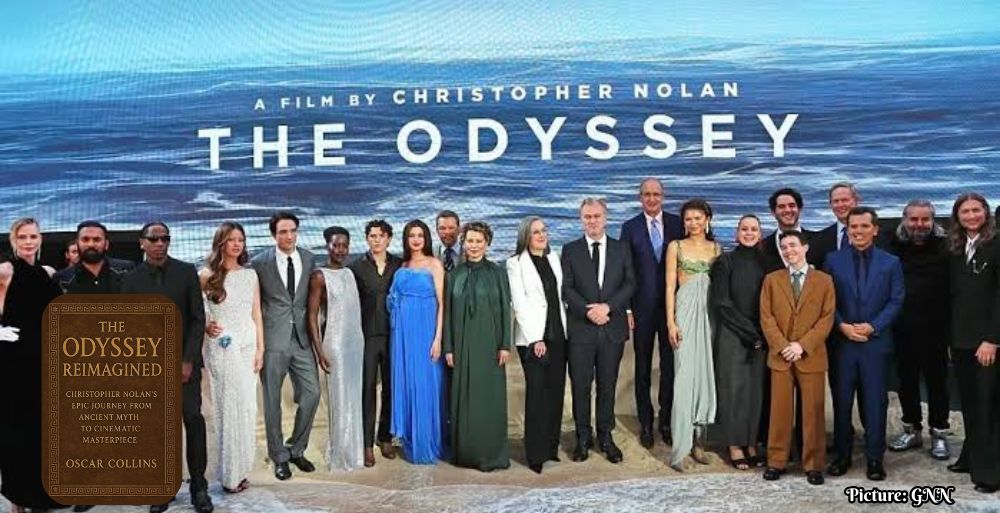
As audiences prepare for the premiere of Christopher Nolan’s adaptation of The Odyssey, experts highlight the epic’s enduring significance in addressing contemporary challenges and fostering resilience.
Winston-Salem, NC – With the highly anticipated premiere of Christopher Nolan’s cinematic adaptation of The Odyssey set for July 17, 2026, questions about the enduring relevance of Homer’s 2,700-year-old epic are at the forefront of cultural discussions. Professor Michael Sloan, a Classics professor at Wake Forest University, posits that the journey of Odysseus serves as an essential framework for understanding psychological resilience in an increasingly complex and uncertain world.
The Enduring Relevance of Homer
Professor Sloan emphasizes that the significance of The Odyssey extends far beyond its status as an ancient mythological tale. It delves into fundamental questions of human existence, morality, and the quest for belonging. He asserts that Homer’s epic remains a living dialogue, and its themes of overcoming adversity and processing trauma continue to resonate with modern audiences. As demonstrated by the upcoming film adaptation, these themes not only captivate the public imagination but also provide guidance on navigating life’s challenges and defining the concept of home and happiness.
The Odyssey’s exploration of resilience is particularly relevant in today’s society, where individuals frequently grapple with personal and collective crises. The character of Odysseus is portrayed as a complex hero who confronts numerous moral dilemmas and existential questions throughout his journey. This complexity allows contemporary viewers to reflect on their own struggles and the moral choices they face in their lives.
The ‘Third Age’ of Technology
In his analysis, Professor Sloan draws parallels between the genesis of The Odyssey and the current technological landscape, which he refers to as the “Third Age” of Technology, marked by the rapid rise of artificial intelligence (AI). Just as Homer’s work emerged from the invention of the written word and Shakespeare’s from the advent of the printing press, today’s society is navigating the challenges posed by AI—technology that often threatens to overshadow authentic human expression.
In this context, the struggles of Odysseus become even more vital. They remind us of the deeply human convictions that guide our responses to modern dilemmas. As AI continues to shape communication and information dissemination, the moral and psychological challenges faced by Odysseus serve as a poignant reminder of the importance of maintaining our humanity amidst technological advancements.
The Power of Narrative
Amidst a landscape inundated with statistics and automated information, Professor Sloan highlights the enduring human appetite for storytelling. He argues that wisdom conveyed through a captivating narrative often has a more profound impact than mere data. The Odyssey encapsulates this phenomenon through its rich tapestry of adventure and moral complexity, resonating across generations and fostering resilience in its readers and viewers.
The $250 million budget allocated for the film adaptation reflects Hollywood’s recognition of the timeless themes embedded in Homer’s narrative. As audiences flock to theaters, the film promises to reignite interest in the original text and its relevance to contemporary challenges. The cinematic portrayal of Odysseus’s journey is expected to provide a fresh lens through which to examine the epic’s enduring lessons on resilience and human strength.
The Role of The Odyssey in Modern Discourse
Professor Sloan’s insights extend beyond literary analysis; they underscore the importance of engaging with ancient texts as a means of navigating the complexities of modern life. In a world where technology increasingly mediates human experience, the lessons derived from Odysseus’s journey can serve as a beacon of hope and resilience for individuals facing their own storms.
Moreover, the resurgence of interest in The Odyssey aligns with a broader cultural trend of revisiting classic literature through modern adaptations. Such adaptations not only serve to entertain but also to provoke deeper reflection on human experiences that remain relevant today. As scholars and audiences engage with these narratives, they are invited to explore their own lives through the lens of ancient wisdom.
Conclusion
The upcoming release of Christopher Nolan’s The Odyssey stands as a testament to the enduring power of storytelling. Professor Sloan’s compelling analysis reinforces the notion that ancient texts continue to offer valuable insights into the human experience, particularly in times of uncertainty. As we navigate the complexities of the modern world, the lessons of Odysseus’s journey resonate as a powerful reminder of resilience, adaptability, and the quest for belonging—a narrative as vital today as it was over two millennia ago.