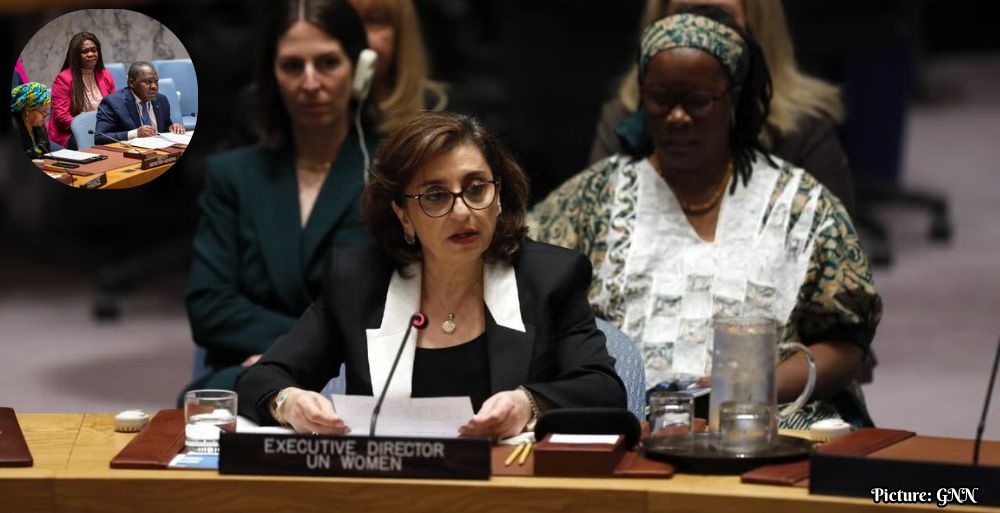
The UN Security Council’s recent discussions on Women, Peace, and Security have exposed significant divisions regarding gender rights, notably around the contentious issue of sexual and reproductive health.
The United Nations Security Council convened on December 7, 2026, to engage in discussions centered on Women, Peace, and Security (WPS), a framework established by Security Council Resolution 1325 in 2000. This session highlighted the growing global tensions surrounding gender issues, particularly the intersection of women’s rights and reproductive health. The Colombian Minister of Foreign Affairs articulated concerns that various governments are actively restricting sexual and reproductive rights, thereby marginalizing women in decision-making processes and fostering an environment that legitimizes hate speech against them.
Throughout the session, delegates from various nations acknowledged the essential role women play in peacebuilding and the unique threats they face in conflict situations. However, the dialogue was marked by accusations from feminist groups, who claimed that their advocacy for abortion rights is being obstructed within the Security Council. This assertion reflects a broader trend where humanitarian law is being utilized to promote abortion as a fundamental human right, a position reinforced by several reports from the UN Secretary-General.
Global Backlash Against Gender Justice
Kaavya Asoka, the director of the NGO Working Group on Women, Peace, and Security, issued a stark warning to the council about what she termed “an intensifying, organized, and well-funded global backlash against gender justice and women’s rights.” Asoka emphasized that well-established international norms regarding gender equality, the prevention of gender-based violence, and the promotion of women’s participation are increasingly under threat, with efforts to contest and remove these principles from council decisions. Although she refrained from naming specific countries, her remarks were widely interpreted as a critique of the United States and Russia, both of which have expressed opposition to the inclusion of “sexual and reproductive health and rights” in council resolutions.
In response to these criticisms, the U.S. delegation reminded the council of its historical leadership in this arena, particularly under the Trump administration, which marked the U.S. as the first nation to enact comprehensive legislation on women, peace, and security in 2017. The U.S. representative emphasized that the country remains the largest single donor to humanitarian efforts globally, underscoring its commitment to protecting women and girls in conflict and disaster scenarios, particularly those affected by sexual violence. This assertion aims to position the U.S. as a key player in advocating for women’s rights, despite criticisms regarding its approach to reproductive rights.
Diverse Feminist Perspectives
Several delegations also highlighted their distinct feminist approaches to foreign policy. Luxembourg, for instance, spoke on behalf of the “Feminist Foreign Policy Plus” group, which comprises 19 member countries. This coalition has publicly supported universal access to sexual and reproductive health and rights, even in the presence of pro-life nations such as Rwanda, Morocco, and Liberia among its members. This situation exemplifies the complexities and contradictions that can arise within international coalitions advocating for women’s rights, raising questions about the sincerity and effectiveness of such alliances.
Despite the fact that only a minority of women globally identify as feminists, the term has increasingly been employed in progressive dialogues at the UN to represent all women’s advocacy groups. This conflation has sparked debates about representation and inclusivity within feminist movements, particularly in light of Asoka’s insistence on the necessity for establishing and enforcing quotas for women’s participation in decision-making processes. These calls for quotas reflect a growing recognition of the need to ensure that women’s voices are not only heard but actively included in shaping policies that affect their lives.
The Role of NGOs in Gender Advocacy
The NGO Working Group on Women, Peace, and Security, represented by Asoka, includes several organizations that are vocally pro-abortion, such as the Global Justice Center, Amnesty International, and the Women’s Refugee Commission. Additionally, Outright International, which advocates for LGBTQ+ rights, is also a member. The group’s consensus-based approach means that all members align with the group’s controversial positions, regardless of their individual areas of expertise. This dynamic raises important questions about the effectiveness and representation of feminist advocacy at the UN.
The discourse surrounding gender issues within the Security Council reflects a broader global struggle over women’s rights, particularly regarding reproductive health. As discussions continue to evolve, the council must navigate the complex interplay of competing interests, ideologies, and the pressing need for inclusive policies that genuinely represent the diverse voices of women worldwide. The ongoing tensions highlight the necessity for a balanced approach that respects differing views while striving to uphold fundamental human rights for all women.
In conclusion, the recent discussions at the UN Security Council underscore the critical challenges and opportunities present in the ongoing fight for gender equality and women’s rights. As nations grapple with their positions on reproductive health and rights, the potential for significant policy shifts remains, emphasizing the importance of continued advocacy and dialogue in this vital area of international relations.